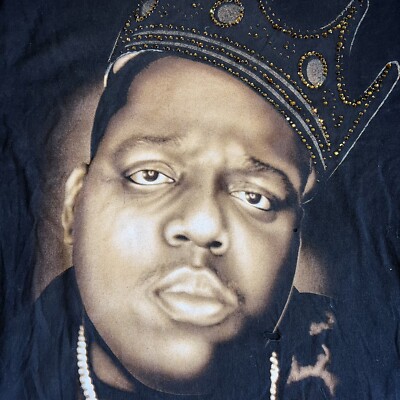
More than two decades after his death, The Notorious B.I.G. is still widely referred to as the “King of New York.” In a city known for producing countless rap legends, holding that symbolic crown for so long says a great deal about his influence. His music, storytelling, and cultural impact helped shape the identity of hip-hop coming out of New York City.
Below are the main reasons why Biggie continues to hold that title.
Biggie’s music reflected the raw reality of growing up in Brooklyn. His lyrics told detailed stories about poverty, ambition, street life, and survival. What made his storytelling special was how vivid and cinematic it felt.
His debut album:
Ready to Die
is widely considered one of the greatest hip-hop albums ever made. Tracks like “Juicy” and “Big Poppa” combined autobiographical storytelling with commercial appeal, helping Biggie become a major voice of East Coast rap in the mid-1990s.
Technically speaking, Biggie revolutionized rap delivery. His flow was smooth and effortless, yet incredibly complex. He could switch rhythm patterns mid-verse while maintaining perfect clarity and timing.
Key characteristics of his rap style included:
multi-syllabic rhyme schemes
conversational storytelling
rhythmic variation inside a single verse
natural charisma and confidence
Many rappers who emerged in the late 1990s and 2000s cite Biggie as a major influence on their style.
In the early 1990s, West Coast rap dominated the mainstream hip-hop scene. Biggie helped shift attention back to New York and the East Coast.
Working with producer and label founder Sean Combs, Biggie became the flagship artist of Bad Boy Records.
Together they created a sound that blended gritty street rap with polished production, making East Coast hip-hop commercially competitive again.
Biggie’s second album:
Life After Death
was released shortly after his death and became one of the most successful hip-hop albums ever released.
The double album debuted at No.1 on the Billboard charts and produced several iconic hits, including “Hypnotize” and “Mo Money Mo Problems.”
Critics praised the album for its diversity—ranging from hardcore street rap to polished radio hits—demonstrating Biggie’s versatility as an artist.
One of the most iconic images in hip-hop history is the photograph of Biggie wearing a crown. Taken just days before his death, the portrait quickly became symbolic of his position in rap culture.
Today, that image appears in murals, galleries, posters, and street art across New York and around the world. It visually represents what many fans believe:
Biggie wasn’t just a rapper—he was hip-hop royalty.
Despite having released only two studio albums before his death, The Notorious B.I.G. left an impact that most artists spend entire careers trying to achieve. His storytelling ability, technical rap skills, and cultural influence helped define an entire era of hip-hop.
In a city famous for producing legendary rappers, Biggie’s legacy still stands above the rest.
For many fans, critics, and artists alike, the crown he once wore still carries the same meaning today:
Biggie Smalls remains the King of New York.