“Welcome to Hell”: Inside the Escalation That Could Redefine War in the Middle East
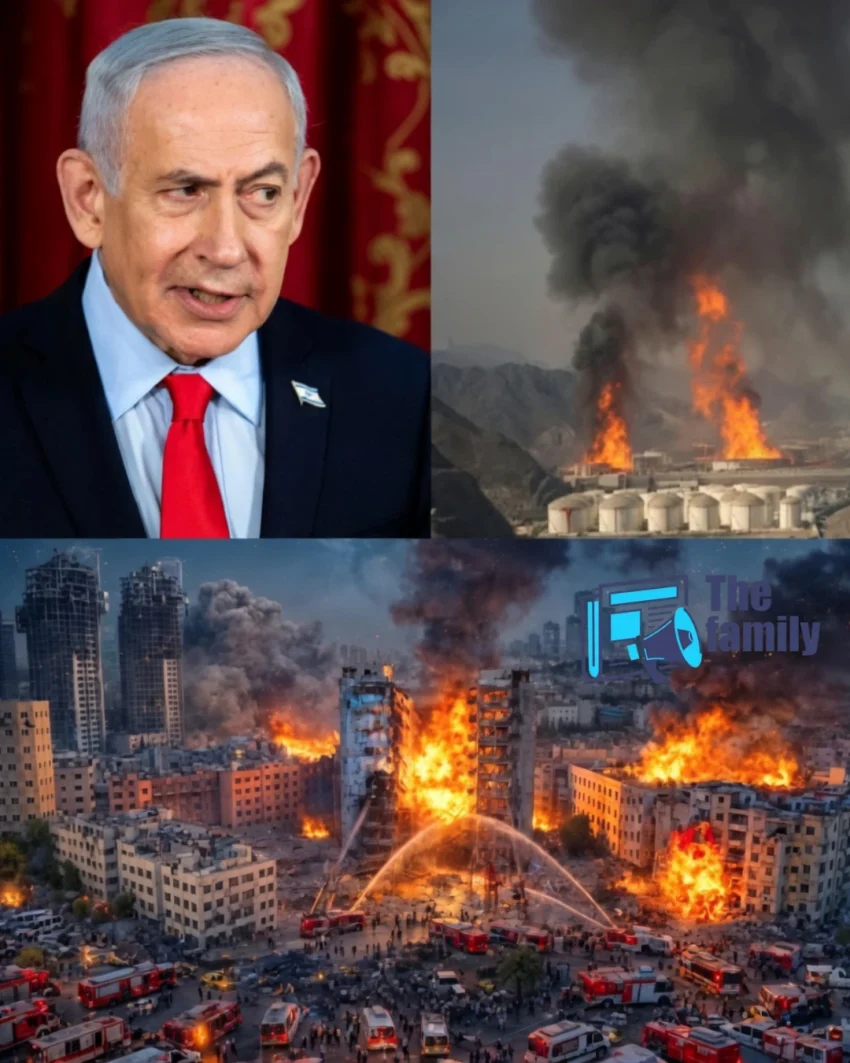
In the language of geopolitics, there are moments when rhetoric begins to blur into reality—when warnings, once dismissed as posturing, start to align with events unfolding on the ground. The phrase “Welcome to Hell,” recently circulated in Iranian state-linked narratives, appears to mark one of those moments. Whether understood as psychological warfare or a signal of strategic intent, it coincides with a phase of escalation that analysts suggest could push the Middle East toward one of its most volatile turning points in decades.
At the center of this evolving crisis lies a widening confrontation involving Iran, Israel, and the United States—a triangle of power whose interactions are increasingly shaping the trajectory of events across the region. What began as a cycle of strikes and counterstrikes now shows signs of evolving into a multi-domain conflict, spanning air, sea, infrastructure, and potentially ground operations.
For weeks, officials and observers described the situation as “contained”—a term suggesting limits, boundaries, and an underlying expectation that escalation could be managed. That assumption now appears increasingly fragile.
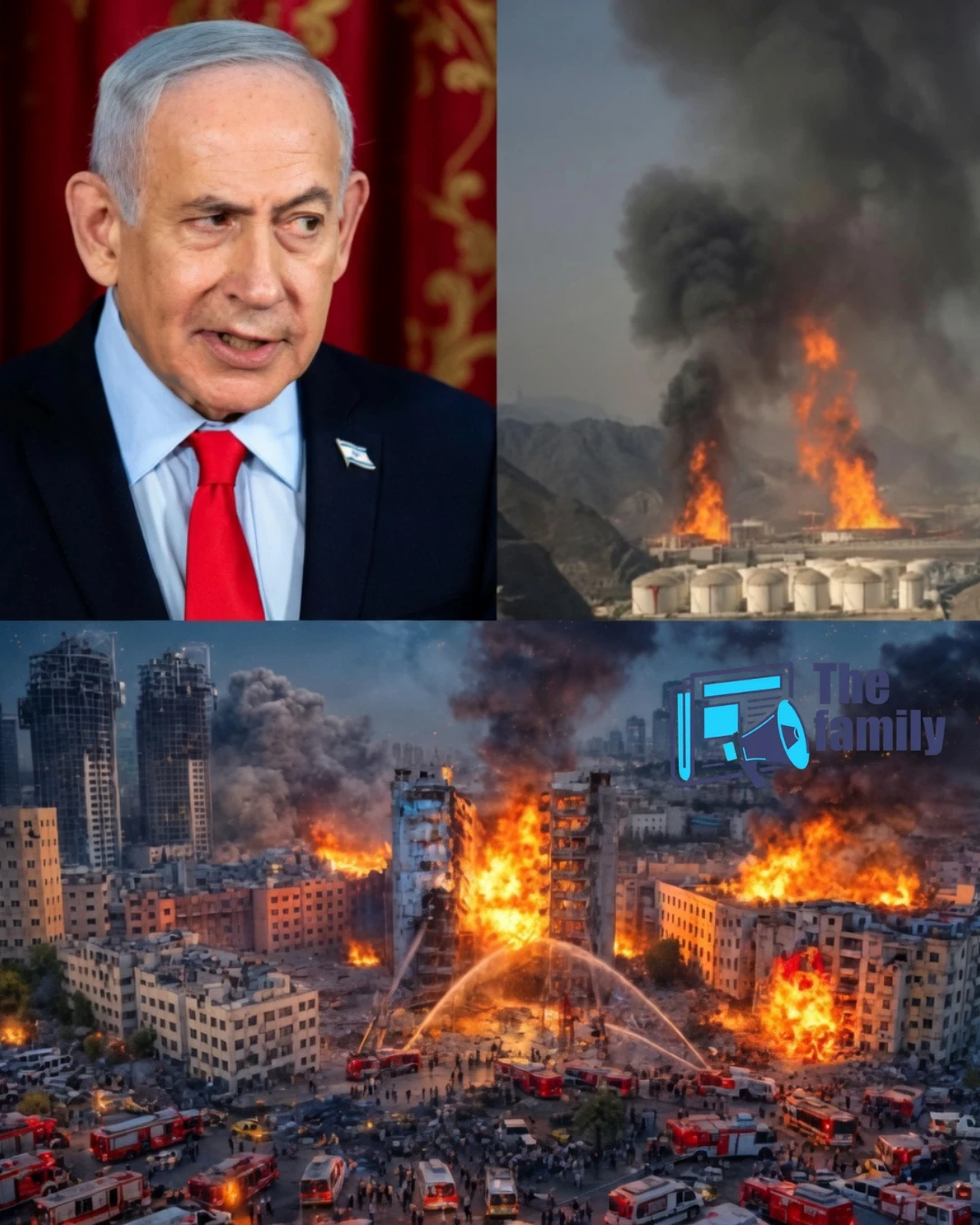
Reports of coordinated missile launches targeting Tel Aviv and surrounding regions, alongside strikes on installations associated with U.S. forces in the Gulf, indicate a widening battlefield. At the same time, retaliatory operations attributed to Israeli and U.S. coordination have reportedly targeted critical infrastructure within Iran, including industrial and logistical hubs.
Among the sites discussed in open-source reporting are major industrial facilities in cities such as Isfahan and Khuzestan—regions central to Iran’s economic resilience. These locations are not merely symbolic; they are tied to production capacity, employment, and the broader stability of domestic supply chains.
Strikes on such targets suggest a strategic logic that goes beyond immediate military gain. By disrupting economic infrastructure, one side may be attempting to degrade the other’s long-term capacity to sustain conflict—a tactic that carries both military and humanitarian implications.
Modern warfare increasingly targets systems rather than just forces, and this conflict appears to follow that pattern. Reports referencing damage to water facilities, energy infrastructure, and even academic institutions point to a broader definition of what constitutes a “strategic target.”
For example, alleged strikes near water storage systems in parts of Khuzestan highlight a particularly sensitive dimension. In regions already facing environmental stress, disruptions to water supply can have cascading effects on agriculture, public health, and internal displacement.
Similarly, claims regarding damage to universities in Tehran and Isfahan introduce a controversial question: where is the line between civilian and dual-use infrastructure? While military planners may view certain research facilities as legitimate targets, such actions often generate international debate and scrutiny.
The conflict’s reach extends well beyond Iran and Israel. Across the Gulf, reports of strikes on industrial facilities—including aluminum production sites in Abu Dhabi and Bahrain—suggest an attempt to disrupt global supply chains.
Ports and shipping hubs in Kuwait have also been mentioned in discussions of maritime risk, raising concerns about the security of commercial routes. Even limited disruptions in these areas can reverberate through global markets, particularly in sectors reliant on energy and raw materials.
Meanwhile, one of the most strategically sensitive locations in the region—the Strait of Hormuz—remains a focal point of concern. Any sustained threat to this narrow passage could affect a significant portion of the world’s oil supply, with implications for inflation, trade, and economic stability far beyond the Middle East.
Perhaps one of the most consequential developments is the reported targeting of installations linked to U.S. military operations. The Prince Sultan Air Base, located in Saudi Arabia, has been cited in accounts of missile or drone strikes.
Facilities like this serve as logistical and operational hubs, supporting surveillance, refueling, and command functions. Any successful strike—even a limited one—carries symbolic weight, signaling both capability and willingness to confront U.S. presence directly.
Such incidents raise the stakes considerably. While proxy engagements have long characterized regional tensions, direct or near-direct confrontations involving U.S. assets risk triggering broader escalation dynamics that are more difficult to contain.
In parallel with state-level actions, allied non-state actors appear to be increasing their activity. The Houthis in Yemen and Hezbollah in Lebanon have both been associated with missile and rocket operations targeting Israeli territory.
This multi-front pressure creates a complex strategic environment for Israeli defense planners. Instead of focusing on a single axis of threat, they must allocate resources across northern, southern, and potentially maritime domains.
From a strategic perspective, such coordination—whether centrally directed or loosely aligned—can stretch defensive systems and complicate decision-making processes.
Amid escalating air and missile exchanges, discussions of a potential ground operation have emerged in policy and media circles. While no official confirmation of such a plan exists in publicly verified channels, the idea itself carries significant implications.
A ground invasion involving U.S. forces into Iranian territory would represent a dramatic escalation, introducing risks far beyond those associated with air campaigns. Iran’s geography—characterized by mountainous terrain and urban density—poses substantial challenges for conventional military operations.
Moreover, reports suggesting that a significant portion of Iran’s missile capabilities remain intact—potentially stored in underground facilities—underscore the difficulty of neutralizing such assets through airstrikes alone.
Beyond strategy and geopolitics, the human dimension of the conflict is increasingly stark. Casualty figures reported by various sources vary widely, reflecting the challenges of verification in active conflict zones. Nevertheless, there is broad agreement that thousands have been affected across multiple countries.
Displacement is another growing concern. In areas near active frontlines, including parts of southern Lebanon and regions within Israel, civilians face ongoing uncertainty, with daily life disrupted by air raid sirens, infrastructure damage, and economic instability.
The financial cost is also mounting. Estimates of U.S. expenditures associated with the conflict—reported in some sources to exceed tens of billions of dollars—highlight the economic burden of sustained military engagement. For regional economies already navigating post-pandemic recovery and global inflation, such pressures add another layer of complexity.
As with many contemporary conflicts, the battle is not limited to physical space. Competing narratives—circulated through state media, independent platforms, and social networks—play a critical role in shaping public perception.
Phrases like “Welcome to Hell” function as more than headlines; they are tools of psychological signaling, aimed at influencing both domestic audiences and international observers. At the same time, conflicting reports about targets, casualties, and strategic outcomes make it increasingly difficult to establish a clear, verified picture of events.
For analysts and the public alike, this environment demands caution—recognizing that information itself has become a contested domain.
What emerges from this evolving situation is not a single, clear trajectory, but a set of overlapping possibilities. On one hand, the scale and coordination of recent actions suggest a movement toward broader confrontation. On the other, the absence of confirmed large-scale ground operations indicates that certain thresholds have not yet been crossed.
This ambiguity may be intentional. By operating in a space between escalation and restraint, actors retain flexibility while signaling resolve—a delicate balance that can either stabilize or destabilize the situation, depending on how it is managed.
The current phase of the conflict reflects a region in transition—where traditional boundaries between war and deterrence, state and proxy, military and infrastructure are increasingly blurred.
From missile trajectories reaching Tel Aviv to strategic calculations unfolding in Tehran and Washington, the dynamics at play extend far beyond any single battlefield.
Whether this moment becomes a prelude to wider war or a catalyst for renewed diplomatic efforts remains uncertain. What is clear is that the margin for miscalculation is narrowing, and the consequences of any next step—by any actor—could resonate far beyond the region.
In that sense, the phrase “Welcome to Hell” may be less a declaration than a warning—one that reflects not only current tensions, but the fragile equilibrium holding them in place.