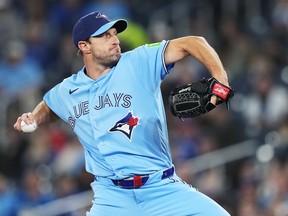
TORONTO — In the modern era of baseball, velocity is the primary health indicator for an aging arm. On Monday night against the Dodgers, the radar gun at the Rogers Centre delivered a sobering message to the Blue Jays’ front office: Max Scherzer’s “heater” is starting to cool.
Never Miss a Word Again
These discrete, rechargeable hearing aids deliver crystal-clear sound and advanced noise cancellation. Perfect for watching the news, busy restaurants, or family gatherings.
Secure transaction via Amazon.com
Statcast data from Scherzer’s two-inning stint revealed a significant and troubling trend. After averaging 93.4 mph in his dominant March 31 start against Colorado, his four-seam fastball dipped to an average of 92.1 mph on Monday—a drop of 1.3 mph in less than a week. While a single-digit dip might be overlooked for a younger pitcher, for a 41-year-old on his second tour with the club, it is a flashing red light.
The velocity drop explains why a veteran like Teoscar Hernández was able to sit on a first-inning fastball and drive it into the second deck. Without the “ride” and life that Scherzer typically generates at 94 mph, his secondary pitches—specifically his slider and changeup—lose their deception. The Dodgers’ hitters looked comfortable from the first pitch, a rare sight when facing one of the most feared competitors in the game’s history.
Never Miss a Word Again
These discrete, rechargeable hearing aids deliver crystal-clear sound and advanced noise cancellation. Perfect for watching the news, busy restaurants, or family gatherings.
Secure transaction via Amazon.com
This “Velocity Watch” comes at a time when Toronto’s pitching attrition has reached what analysts are calling “critical levels.” The Blue Jays’ front office, led by Ross Atkins, built this roster on the assumption that veteran depth could weather a storm. However, they did not anticipate a hurricane. With Shane Bieber (elbow) and Trey Yesavage (shoulder) still weeks away from high-intensity throwing, and Bowden Francis out for the year, the Blue Jays are running out of major-league-caliber arms to replace Scherzer if he requires a stint on the Injured List.
The team has already pivoted to a “patchwork” philosophy, signing Patrick Corbin to a $1 million flyer and leaning heavily on bulk-inning relievers like Josh Fleming and Jeff Hoffman. But velocity isn’t something that can be found on the waiver wire. If Scherzer’s arm is indeed slowing down, the Blue Jays may have to reconsider their entire defensive strategy for the month of April, shifting from a strikeout-heavy approach to one that relies on a defense that has already shown signs of shakiness.