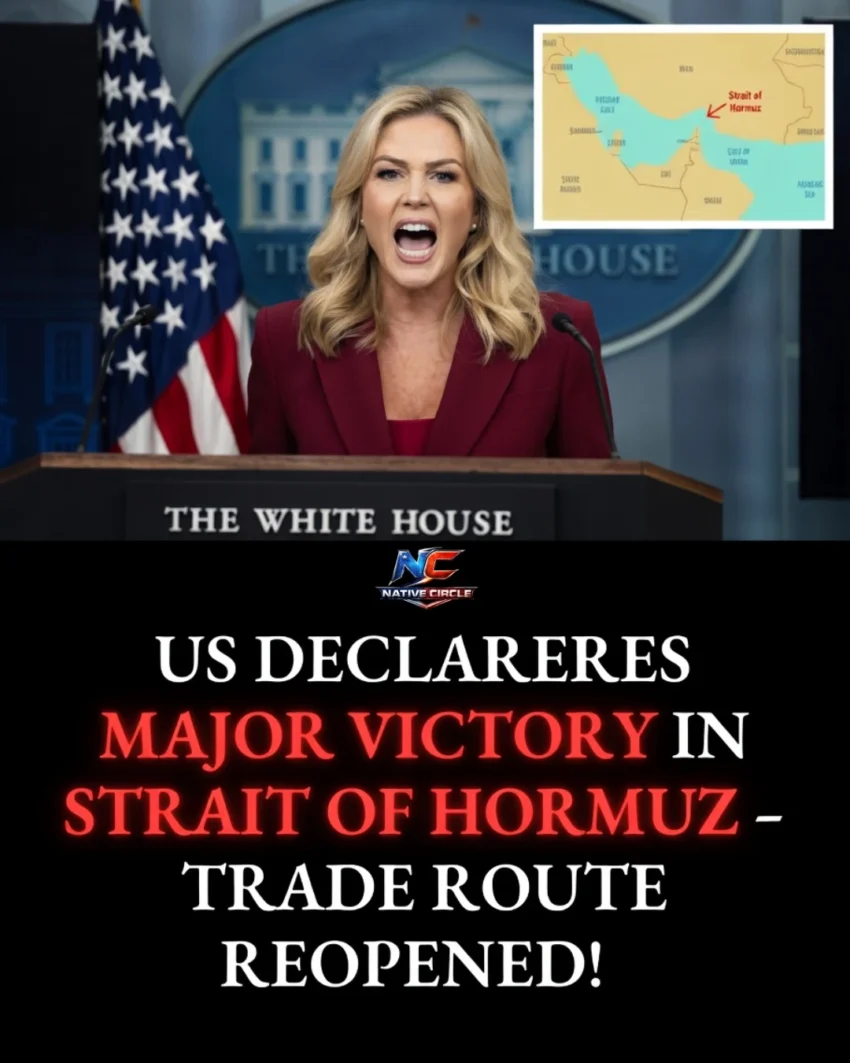
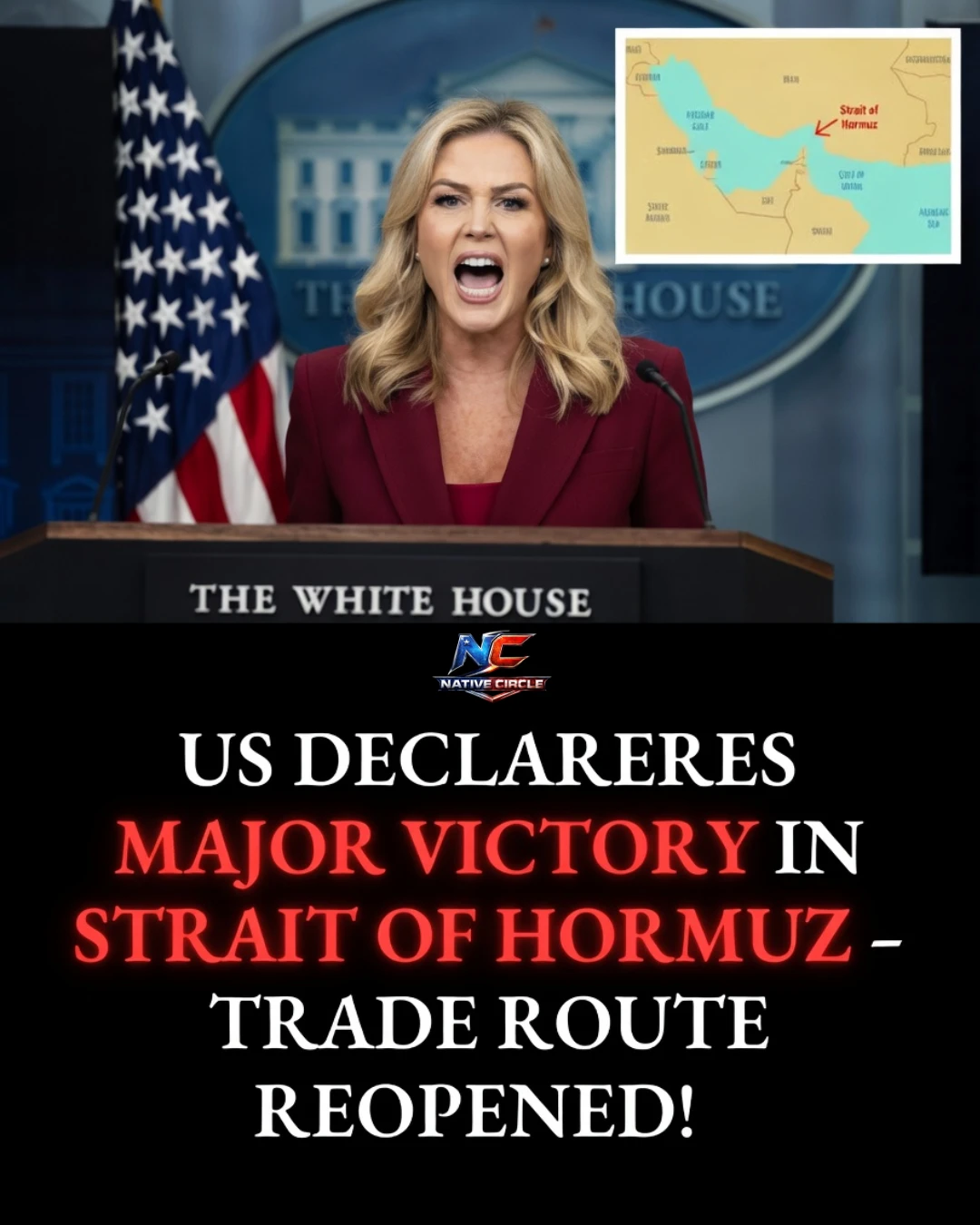
U.S. Declares “Victory” After Negotiating Reopening of Trade Route That Was Already Operating Before Conflict
WASHINGTON — The White House has declared a major diplomatic victory following a newly announced agreement aimed at ensuring the continued operation of a crucial global shipping lane in the Middle East. Officials say the outcome represents a successful resolution to tensions surrounding Iran, though critics argue the situation now appears largely similar to the conditions that existed before the crisis began.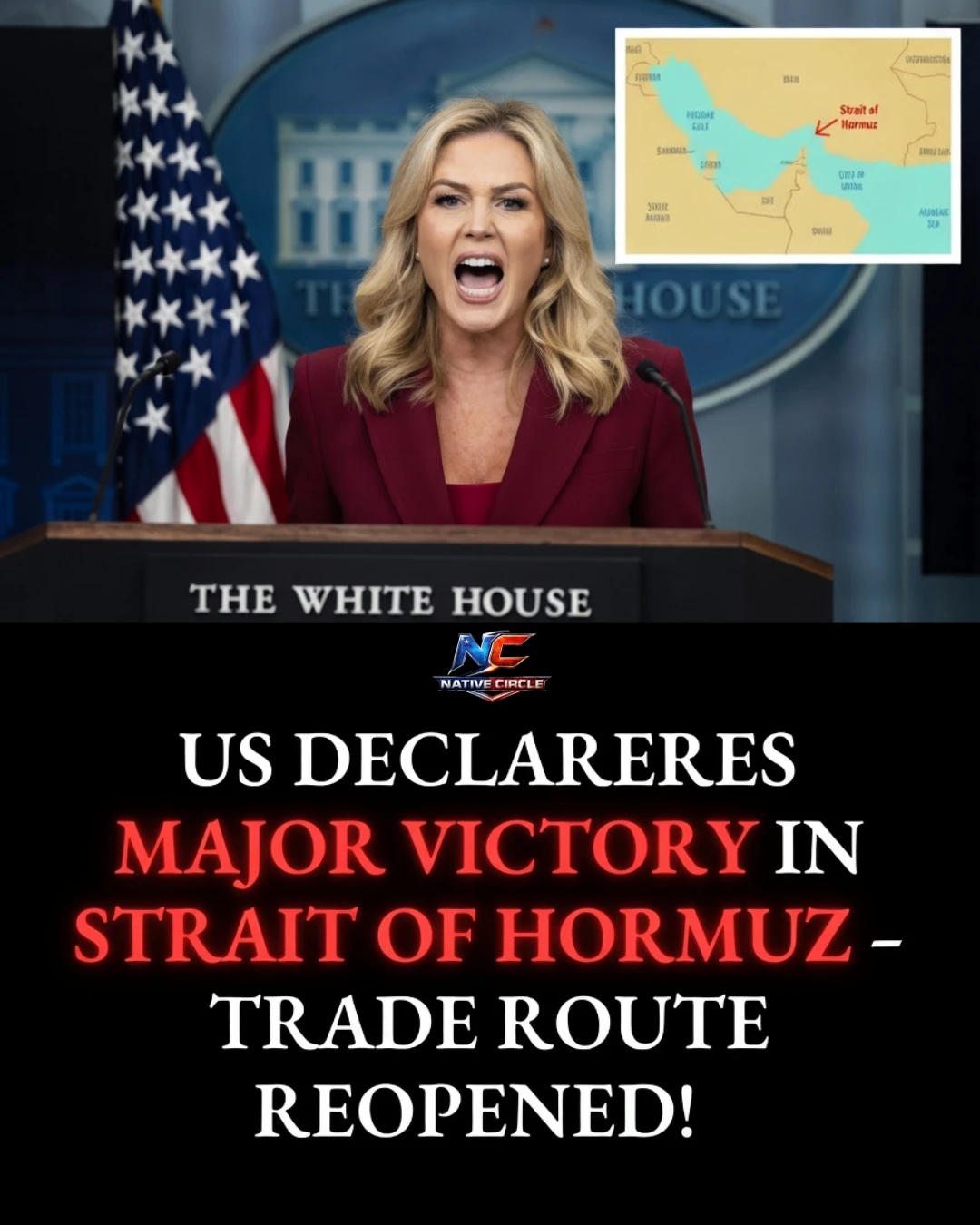
At the center of the announcement is the strategic Strait of Hormuz, the narrow maritime passage between the Iran and the Oman that carries a significant portion of the world’s oil shipments. The route has long been considered one of the most important chokepoints in global energy supply chains.
In a briefing at the White House, press secretary Karoline Leavitt described the agreement as a major step toward restoring stability in the region.
“The Strait of Hormuz is open, regional tensions are easing, and shipping can continue moving safely,” Leavitt said. “That stability is something the administration worked very hard to achieve.”
The statement emphasized the role of Donald Trump, who officials say pushed for negotiations intended to reduce the risk of further escalation between Washington and Tehran. According to the administration, diplomatic efforts helped reestablish a level of calm after months of heightened military and political tensions.
“There was a period of peace before the escalation, then tensions rose dramatically,” Leavitt said. “Now we have worked our way back toward stability. That outcome should not be taken for granted.”
However, some analysts and lawmakers have questioned whether the outcome represents a true strategic gain or simply a return to the status quo.
The Strait of Hormuz has historically operated as a stable commercial shipping route for decades despite periodic geopolitical tensions in the region. Energy markets and shipping companies have long relied on the passage to transport oil and liquefied natural gas from the Persian Gulf to international markets.
Critics argue that the current agreement largely restores conditions that existed prior to the recent conflict, raising questions about the broader cost of the escalation.
A Republican senator speaking on background acknowledged that the conflict consumed significant resources but insisted the diplomatic resolution still mattered.
“Yes, we’ve spent enormous resources and the conflict had serious consequences,” the senator said. “But what matters is that global shipping is continuing and the region has stepped back from further escalation. Maintaining stability in such a critical trade corridor is not a small thing.”
The senator also noted that ensuring the uninterrupted flow of maritime commerce is essential to the global economy. Roughly one-fifth of the world’s oil passes through the Strait of Hormuz each day, making even temporary disruptions a major concern for international markets.
Still, foreign policy experts say the situation highlights the complicated nature of modern geopolitical conflicts. Military actions, diplomatic negotiations, economic pressures, and public perception often intersect in ways that make clear outcomes difficult to measure.
Some analysts argue that the renewed tensions may have strengthened hard-line voices within Iran’s leadership while also straining relationships between Washington and several allied governments. Others say the de-escalation itself demonstrates that diplomacy can still play a role even after hostilities have begun.
Meanwhile, the Iranian government continues to maintain its political leadership structure under Ali Khamenei, who remains the country’s supreme leader. Iran’s nuclear program also remains a central issue in ongoing international negotiations, with Western governments continuing to debate the best strategy for addressing Tehran’s nuclear capabilities.
For global markets, the immediate concern remains stability in the Strait of Hormuz. Shipping companies and energy traders are closely monitoring developments to ensure that tankers can continue moving safely through the passage.
Whether the current calm will last remains uncertain.
For now, however, the administration is presenting the outcome as proof that diplomatic pressure and negotiations can produce results — even in one of the world’s most volatile regions.
“This is about preventing further escalation and keeping global trade moving,” Leavitt said. “That is ultimately the goal.”