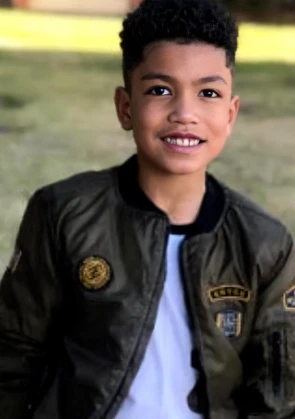
There are cases that haunt us, stories that stay with us long after we hear them. The tragic case of Jo-Jo King is one of those stories. Jo-Jo was only six years old, a little boy who, despite his young age, bravely spoke up and tried to protect himself from the violence he was enduring. His story is one of a child who trusted the system, who sought help when he was being hurt, but in the end, the system failed him in the most devastating way.
In 2019, Jo-Jo’s stepfather, Brandon Hale, beat him so badly with a belt that he couldn’t even sit down in school. The physical marks were undeniable. Teachers saw the welts, the loop-shaped bruises that covered his small body. Concerned, they did what they were supposed to—they reported the abuse. Child Protective Services (CPS) investigated and labeled it for what it was: physical abuse. The case seemed open and shut. Brandon Hale pleaded guilty to the abuse and was sentenced to probation.
But here’s where the story takes a dark turn. Despite the clear evidence of abuse, despite the fact that Jo-Jo had shown his bruises and had pleaded for help, he was sent right back into the same household. The very people who were supposed to protect him, who were supposed to ensure his safety, chose not to intervene. And worse yet, his father, who was fighting to get custody of Jo-Jo, was denied. His desperate plea for help—his question, “Does my son have to die for someone to help us?”—fell on deaf ears. No one listened, and no one acted.
A Life Stolen: Jo-Jo’s Final Days
In February 2020, that devastating call came. Jo-Jo was unconscious. By the time his father arrived at the scene, it was too late. His baby boy was gone. The story that was given to the authorities was that Jo-Jo was found inside a toy chest, not breathing. But when investigators looked closer, the evidence simply didn’t add up.
Jo-Jo’s body was wet—from his nose down to his hips. There was a wet towel found in the bathroom. A wet spot was on his bed. And perhaps most telling of all, the toilet bowl was missing a significant amount of water. But the toy chest where he was supposedly found was completely dry, leading experts to question the validity of the story being told. This was not the scene of an accidental death, and the evidence suggested something much more sinister.
A forensic pathologist later testified that Jo-Jo may have been smothered, held down, or even drowned—possibly in the toilet. His cause of death was determined to be hypoxic encephalopathy, which means his brain had been deprived of oxygen. The manner of death, however, was deemed “undetermined.” There was no immediate murder charge, no immediate arrest, and the case was almost closed. But Jo-Jo’s father, a law enforcement officer, refused to let it go.
A Father’s Fight for Justice
Jo-Jo’s father could not—would not—let his son’s death become just another statistic. As a law enforcement officer, he had access to resources and knew how to demand answers. He pushed, he fought, and he relentlessly sought the truth. His determination to ensure that Jo-Jo’s death was not swept under the rug finally brought the case back into the light. Slowly, as the investigation unfolded, the evidence began to point to one clear suspect: Brandon Hale, Jo-Jo’s stepfather.
The judge, after reviewing the evidence, made a damning statement: Brandon Hale, the only adult in the home when Jo-Jo stopped breathing, was likely the one who caused the fatal injury. And with that, Brandon Hale’s probation was revoked. He was sentenced to 10 years in prison, but not for murder. He was not charged with the death of Jo-Jo, but rather for violating the terms of his probation related to the abuse he had already pleaded guilty to. This sentence, while it held some consequence, did little to bring justice to Jo-Jo. It did not reflect the gravity of what had been done to that innocent child.
A Life Cut Short, A Justice System That Failed
The most heartbreaking part of Jo-Jo’s story is that he did everything right. He told the truth. He spoke up. He asked for help. But the adults in his life—the people who were supposed to protect him—failed him. They failed to listen when he showed his bruises, when he said he was in pain. They failed to protect him from the violence that was happening right under their noses.
Jo-Jo should have been allowed to live out his childhood, to enjoy the simple joys of life, to grow up and experience all the things a young boy should get to do. He should have celebrated birthdays, gone to school, made friends, and dreamed big. But instead, his life was stolen from him in a way that no child should ever have to experience.
The justice he received—10 years for probation violation—was not enough to bring him back, and it was not enough to make up for the life he lost. No amount of time in prison can ever undo the damage that was done to Jo-Jo and his family. His death should have never happened. The fact that it did is a testament to the flaws in our system—flaws that allowed a child to fall through the cracks, despite speaking up and showing signs of abuse.
A Call to Action: Protecting Children at All Costs
Jo-Jo’s story is a painful reminder of the need to be vigilant in protecting children from harm. It’s easy to assume that children are safe and that the people responsible for their care are acting in their best interest, but the reality is that many children are suffering in silence. Jo-Jo’s death is not just a tragedy for his family—it’s a failure of the system meant to protect him.
We must do better. We must listen when children speak up, when they show signs of abuse, and when they ask for help. We cannot let another child suffer in silence, and we cannot allow the systems in place to continue failing those who need us the most. This is a call to action for all of us—to be more aware, more proactive, and more willing to stand up for the most vulnerable among us.
Remembering Jo-Jo: A Life That Deserved More
Jo-Jo King was just a child—a six-year-old boy with a life full of potential, dreams, and love. His life was taken far too soon, but his story will not be forgotten. It serves as a stark reminder that no child should ever have to face abuse, neglect, or violence. It serves as a call for justice that can never fully be answered, but one that demands action.
Jo-Jo’s story is a tragedy, but it is also a catalyst for change. It is a reminder that we must be the voices for those who cannot speak for themselves. It is a plea to protect our children and to make sure that no one else suffers in the way Jo-Jo did.
Rest in peace, Jo-Jo. You deserved more than this world gave you, and your story will continue to inspire change, raise awareness, and remind us of the importance of protecting children at all costs.