The rumor surfaced quietly, then spread like wildfire. It suggested that even in death, Princess Diana was hiding a secret the world was never meant to know.
Years after the Paris crash, whispers claimed Diana had been pregnant when she died, a claim powerful enough to reignite grief and anger across generations.
When Prince William was just twenty-one, he reportedly encountered this allegation for the first time, and it struck him with devastating force.
The idea that his mother’s death could be wrapped in another lie felt unbearable, especially one that questioned her body, her choices, and her dignity.
The claim came from Mohamed Al-Fayed, father of Dodi Fayed, Diana’s companion on her final night.
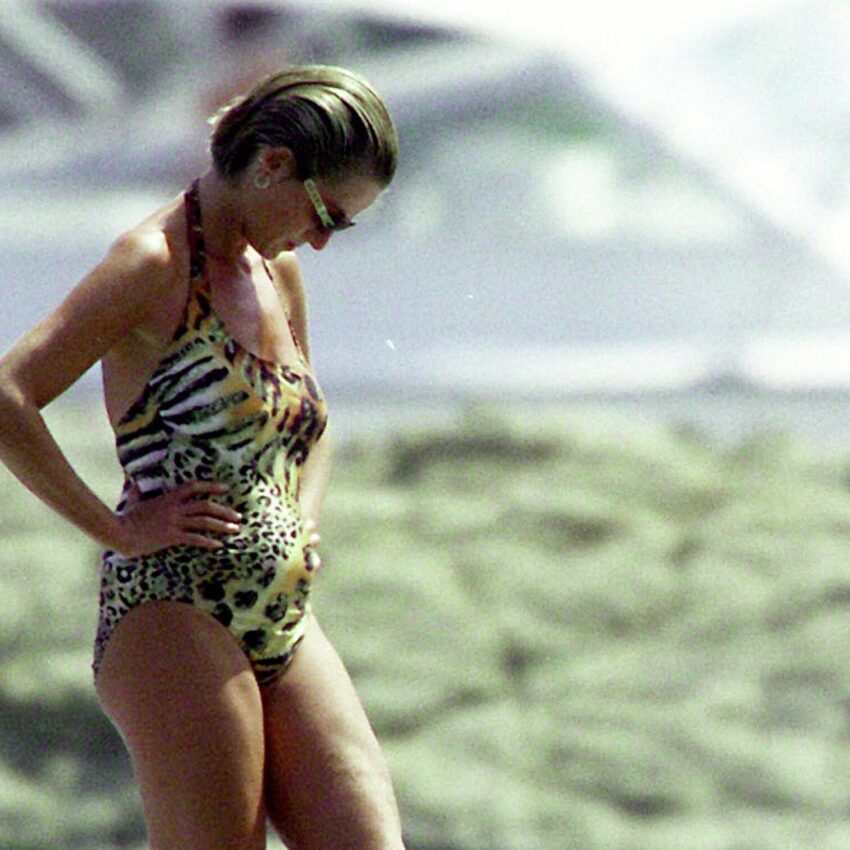
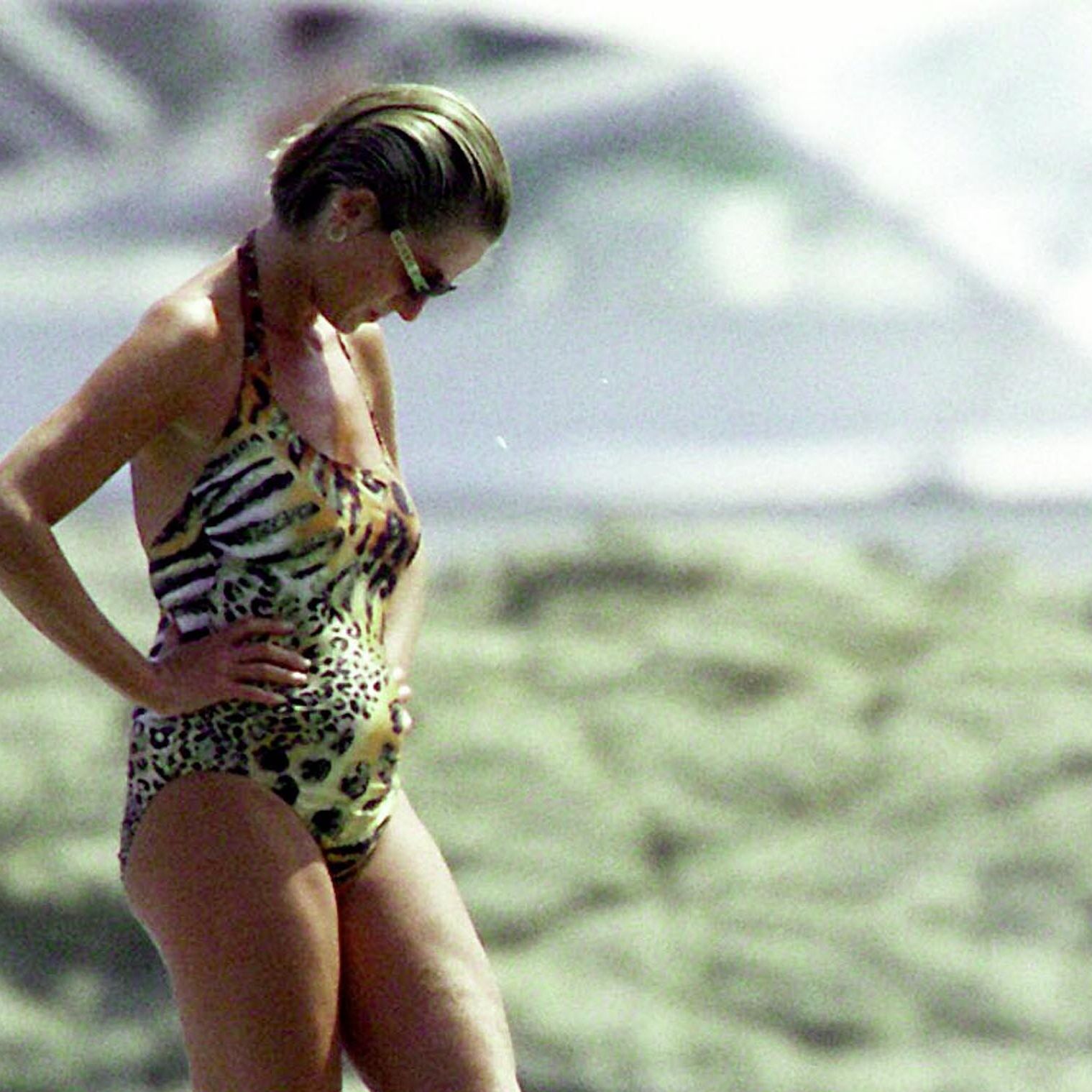
Al-Fayed insisted Diana was pregnant with Dodi’s child, presenting a photograph as supposed evidence to support his belief.
In the image, Diana wore a leopard-print swimsuit. A slight curve of her abdomen, he argued, proved she was expecting a baby.
For some, the theory felt sensational. For others, it felt cruel. Bodies change. Angles deceive. Grief searches desperately for meaning.
But speculation alone cannot outweigh medical truth, and official findings tell a very different story.
When Diana’s body was returned from France, a full medical examination was conducted under the authority of the royal coroner.
The results were unequivocal. There were no signs of pregnancy. No changes to the uterus. No physical indicators supporting the claim.
Further evidence came from forensic science. Blood samples recovered from the wrecked Mercedes were carefully analyzed.
Those tests showed no presence of pregnancy hormones in Diana’s bloodstream, eliminating even the faintest biological possibility.
Medical experts later confirmed that if Diana had been pregnant, even in the earliest stages, traces would have been detected.
The conclusion was firm and final. Diana was not pregnant when she died.
So why did the rumor persist, refusing to fade despite overwhelming evidence?
To understand that, one must look beyond facts and into grief.
Mohamed Al-Fayed was a father who lost his son suddenly, violently, and publicly. That kind of pain rarely follows logic.
For years, he believed Dodi had been murdered because of his relationship with Diana, a belief that hardened into obsession.
In his mind, the British establishment became an enemy, and conspiracy theories became a way to keep his son’s death meaningful.
If Diana was pregnant, then their love was dangerous. If their love was dangerous, then the crash was no accident.
It was a narrative built not on evidence, but on anguish.
Yet each retelling reopened wounds—not only for the royal family, but for Diana’s sons, who were forced to relive her death repeatedly.
For William and Harry, these rumors did not honor their mother. They reduced her life to speculation and her death to spectacle.
Diana had already lost control of her story in life. In death, she deserved peace.
Instead, conspiracy stripped her of dignity, turning private tragedy into public entertainment.
Even the Netflix generation, raised on dramatizations like The Crown, struggles to separate fact from fiction.
But truth matters. Especially when lies prolong suffering.
Diana was not a mystery to be solved. She was a mother, a humanitarian, a woman navigating extraordinary pressure.
Her death was tragic enough without adding imaginary chapters.
To suggest pregnancy without proof does not deepen her story. It distorts it.
And for William, every resurfacing rumor is not curiosity—it is intrusion.
The grief of one father should never become the weapon that wounds two sons.
Mohamed Al-Fayed’s pain was real. His loss was profound. But pain does not excuse falsehood.
In the end, this rumor says less about Diana and more about how desperately people cling to unresolved grief.
The truth is quieter, less dramatic, but far more respectful.
Diana died as she lived that summer—free, flawed, human, and not pregnant.
Letting go of the lie may be the final act of respect she deserves.
And perhaps the most compassionate choice is not to ask what might have been—but to honor what truly was.
Few people say it out loud, but inside royal-watching circles, there is a belief that Catherine, Princess of Wales possesses three rare “treasures” that no title alone can grant—and that these distinctions inevitably invite comparison.
The first treasure is the most symbolic of all: the sapphire engagement ring once worn by Princess Diana.
This ring is more than a piece of jewelry. It represents continuity, trust, and the royal family’s quiet acknowledgment of who is seen as Diana’s true spiritual successor.
By receiving the ring, Kate was not only welcomed into the family but entrusted with one of its most emotionally charged legacies.
Over time, she has also worn other pieces associated with Diana, including necklaces and tiaras, reinforcing a powerful visual message.
The implication, at least to observers, is clear: Kate is viewed as the figure best suited to carry forward the memory of the “people’s princess.”
By contrast, Meghan Markle has most often been seen wearing Diana’s gold watch, a meaningful but far more limited inheritance.
While any connection to Diana is significant, the difference in access has not gone unnoticed—and has fueled endless public comparison.
The second treasure Kate holds is influence.
For more than a decade, her clothing choices have sparked what the media famously calls the “Kate Effect.”
Items she wears routinely sell out within hours. Designers gain global recognition overnight. High-street brands become international headlines.
This influence was never loudly claimed. It grew slowly, organically, and consistently.
Meghan, by contrast, entered the royal family with her own strong sense of style and public profile.
After her marriage, many noted her apparent desire to carve out a fashion identity just as powerful—if not more so.
Yet influence in royal fashion is not just about boldness. It is about timing, tone, and public trust.
Kate’s style feels aspirational but accessible. Meghan’s, critics argue, sometimes felt more performative.
Whether fair or not, the public response has been markedly different—and that difference carries weight in royal life.
The third treasure is destiny.
Kate is the mother of three children—
Prince George, Princess Charlotte, and Prince Louis—who currently stand third, fourth, and fifth in the line of succession.
This means one of her children will inevitably become monarch.
That reality places Kate at the very center of the monarchy’s future, not symbolically, but structurally.
Her role is not optional. It is permanent.
Meghan’s children, Archie Mountbatten-Windsor and Lilibet Mountbatten-Windsor
, remain part of the line of succession but far removed from daily royal life.
Their distance—geographical and institutional—has reshaped how the public perceives their place within the monarchy.
Supporters see this as a choice for independence. Critics view it as a loss of influence and connection.
Either way, the contrast with Kate’s children is stark.
Taken together, these three “treasures”—legacy, influence, and destiny—create an imbalance that fuels endless speculation.
Not because Kate flaunts them, but because she doesn’t need to.
She wears Diana’s ring without commentary. She influences fashion without campaigning. She raises future monarchs without theatrics.
Meghan walks a different path, shaped by personal choice and public conflict rather than institutional inheritance.
Neither story is simple. Neither woman is one-dimensional.
But within the rigid, symbolic world of royalty, quiet power often speaks louder than ambition.
And in that language, Kate’s position remains uniquely secure—held not by jealousy or rivalry, but by time, trust, and the unmovable gravity of the crown’s future.