
Brussels vs. Budapest — what’s unfolding right now between the European Union’s power center and Hungary is one of the most revealing political showdowns in modern European history. It cuts straight to the heart of sovereignty, the limits of supranational authority, and why millions of everyday Europeans have grown deeply skeptical of the entire Brussels project.
Let’s stick to the facts, because they’re damning on their own. The EU’s New Pact on Migration and Asylum was pushed through the Council in May 2024. Hungary and Poland voted against it. That wasn’t a minor detail — two democratically elected governments explicitly said “no.” Yet the pact passed anyway via qualified majority voting and was imposed as binding law on all 27 member states, including those that opposed it.
Stripped of the jargon, the pact’s “solidarity mechanism” forces every country to either accept a quota of relocated asylum seekers from frontline states or pay into a fund — roughly €420 million tied to 21,000 relocations in the first cycle. Refuse the people? Pay the money. Refuse the money? Face infringement proceedings and escalating fines. Take migrants or pay up. No real third option.
Hungary’s stance has been crystal clear and consistent. Under Viktor Orbán, officials called it an absurd attack on national sovereignty. They built and maintained a southern border fence since 2015 at their own expense, keeping illegal arrivals minimal while frontline nations like Italy, Greece, Spain, Cyprus, Bulgaria, and Malta bore the brunt. Yet Hungary was still expected to absorb migrants or foot the bill for not doing so — all while the European Court of Justice hit them with €1 million per day in fines for refusing to comply with earlier asylum rulings.
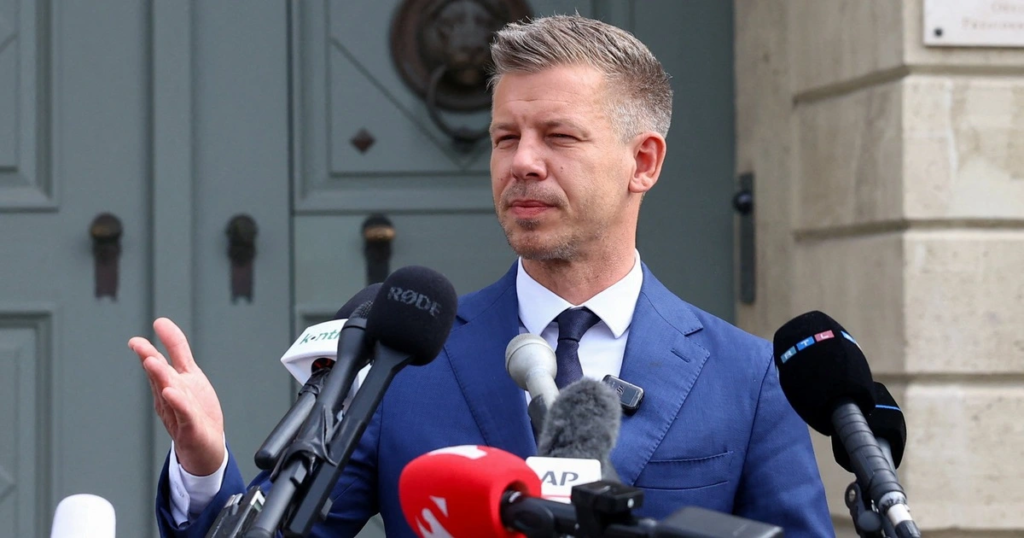
Even after Orbán’s defeat in the April 2026 parliamentary elections, the story didn’t flip as Brussels hoped. Péter Magyar and his Tisza party swept to a landslide victory with a supermajority, ending 16 years of Fidesz rule. The new leadership quickly signaled warmer ties with the EU, potentially unlocking frozen funds and easing other disputes. But on migration? Magyar was unequivocal at his first press conference: Hungary will not accept the pact, will not take a single relocated asylum seeker under the solidarity mechanism, and will actually strengthen the southern border fence — patching holes and reinforcing controls. Legal migration, yes. Mandatory redistribution, absolutely not.
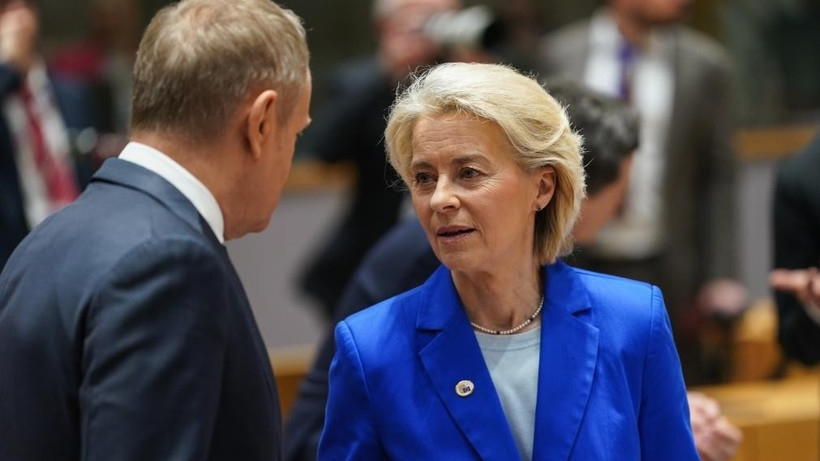
Brussels initially played it cool before the election, deliberately slowing infringement actions and freezing certain files to avoid handing Orbán campaign ammunition. Rule of law, it seemed, could wait for the electoral calendar. Now, with Magyar in charge, the Commission has expressed relief and talked of swift progress toward “European values.” Yet the migration hard line remains.
This isn’t just Hungary being difficult. The Czech Republic’s new government rejected the pact outright. Poland secured temporary carve-outs due to Ukrainian refugees but has voiced deeper opposition. Even Ireland has seen internal calls to opt out. When countries with wildly different histories and politics all push back against the same policy, maybe the issue isn’t the “recalcitrant” nations — it’s the policy itself.
At its core, the pact asserts that Brussels can decide not just trade rules or environmental standards, but who gets to settle permanently inside a nation’s borders. That’s a profound claim on sovereignty — one that goes far beyond economics into the fundamental question of national community and democratic consent. Hungary even held a referendum where voters overwhelmingly rejected mandatory resettlement. When citizens say “we don’t want this,” and a supranational body replies “you must comply anyway or pay,” the democratic deficit becomes impossible to ignore.
The broader picture over the past decade makes this collision even sharper. Since the 2015 migration crisis, the political map of Europe has shifted dramatically. What were once fringe parties are now in government or powerful coalitions across Sweden, Italy, France, the Netherlands, Austria, and Finland. That swing wasn’t manufactured by propaganda — it reflects real pressures on housing, schools, hospitals, and public services in working-class communities that bore the costs while policymakers in Brussels faced none of them.
The pact was meant to fix a broken system with faster border processing and better returns. Some elements have merit. But the compulsory relocation piece — the one most rejected by voters — is the flashpoint driving the resistance. Legal experts note that sustained non-compliance could normalize selective obedience across the bloc, undermining the credibility of EU law itself. Infringement cases drag on for years, and daily fines deducted from funds haven’t forced Hungary to fold.
This Brussels-Budapest clash exposes two incompatible visions: one where sovereignty ultimately rests with nation-states and their citizens, who must consent to major changes; and another where it’s steadily transferred upward to supranational institutions that can override elected governments in the name of “European solidarity.” The British saw a version of this dynamic in 2016 and chose to leave. You don’t have to cheer every outcome of Brexit to recognize the underlying instinct was about democratic accountability.
As the pact’s full implementation looms in June 2026, multiple states are signaling they won’t play ball, enforcement has already been politically delayed, and even the man who defeated Orbán is doubling down on border control. This isn’t explosive drama — it’s a slow, grinding structural crisis at the heart of the European project. The gap between what Brussels mandates and what European citizens will actually accept keeps widening.
Watch this space closely. How the EU handles this moment of reckoning will say everything about whether the bloc can adapt to democratic realities or whether the terminal tensions over sovereignty will only deepen. The collision between Brussels and Budapest isn’t really about one country — it’s about what the EU fundamentally is, and whether it can survive the pressures building from within.