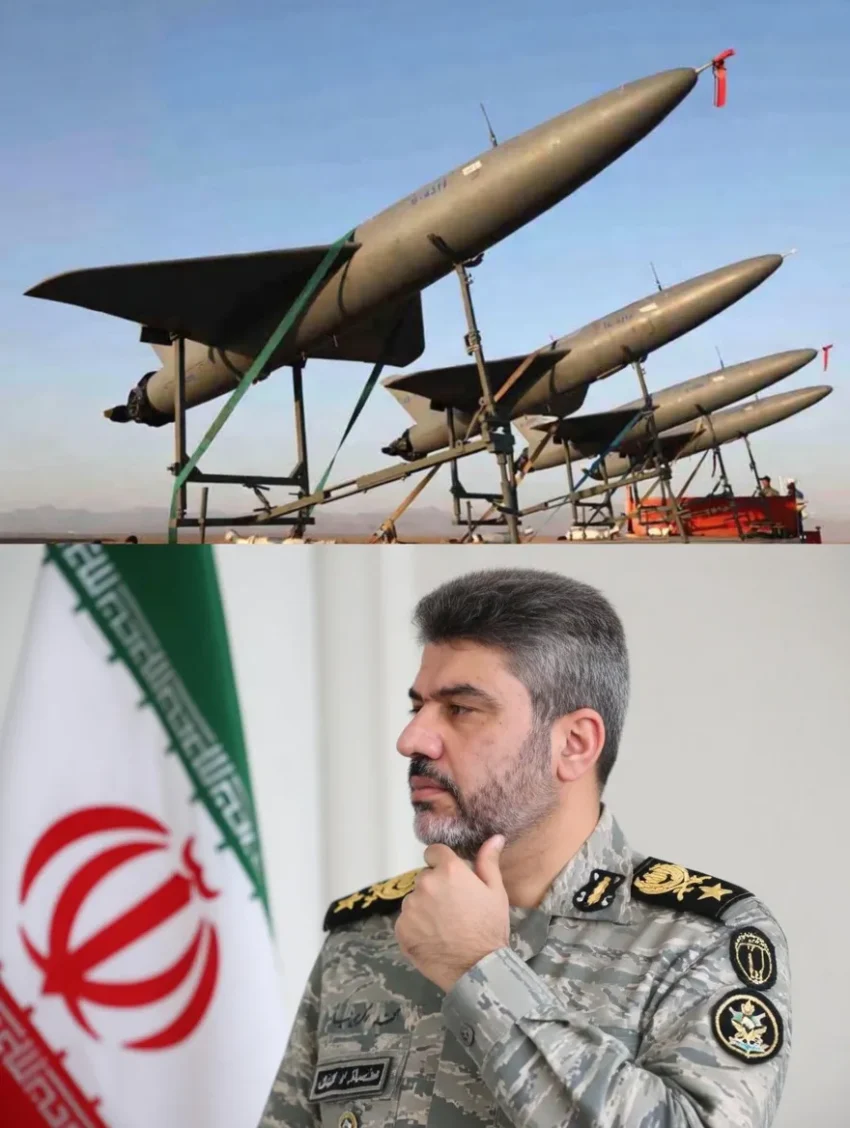
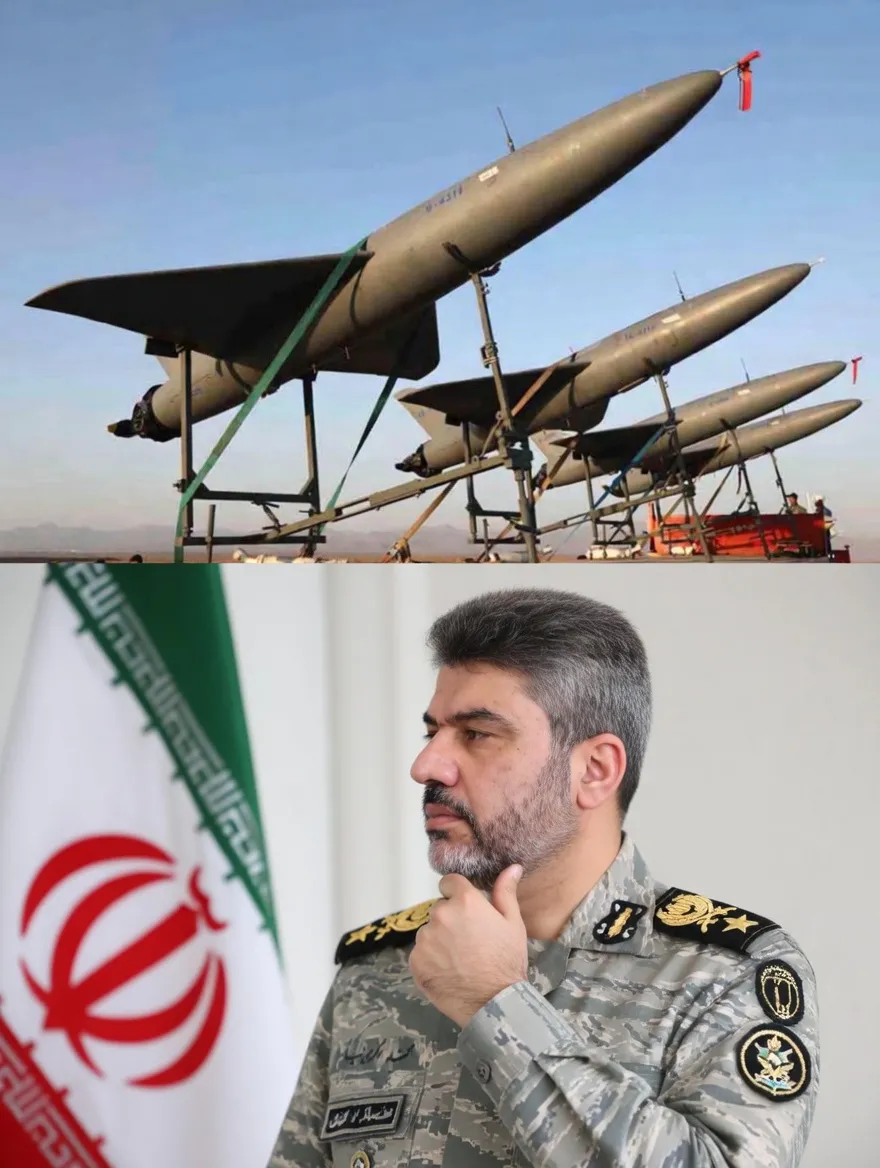
The geopolitical landscape of the Middle East has long been a chessboard of asymmetrical warfare, but a new piece has moved to the center of the board. Recent reports highlighting the deployment of Iran’s Arash-2 unmanned aerial vehicle (UAV)—specifically in high-stakes operations targeting critical infrastructure like Israel’s Ben Gurion Airport—mark a significant escalation in Tehran’s long-range strike capabilities.
Never Miss a Word Again
These discrete, rechargeable hearing aids deliver crystal-clear sound and advanced noise cancellation. Perfect for watching the news, busy restaurants, or family gatherings.
Secure transaction via Amazon.com
According to Brigadier General Mohammad Akrami Naeini, the Arash-2 has not only “hit its targets” but was specifically engineered to bypass the world’s most sophisticated detection systems. As Washington and its allies observe the evolving theater of drone warfare, the Arash-2 represents more than just a mechanical upgrade; it is a manifestation of a doctrine designed to overwhelm and bankrupt modern air defense.
Unveiled by Tehran in 2022, the Arash-2 belongs to the category of “One-Way Attack” (OWA) munitions, or what are colloquially known as “suicide” or “kamikaze” drones. While the Shahed-136 became a household name due to its extensive use in global conflicts, the Arash-2 is a different breed of predator.
Never Miss a Word Again
These discrete, rechargeable hearing aids deliver crystal-clear sound and advanced noise cancellation. Perfect for watching the news, busy restaurants, or family gatherings.
Secure transaction via Amazon.com
Where the Shahed was a blunt instrument, the Arash-2 is a precision tool. Its development signals Iran’s transition from regional nuisance to a provider of strategic, long-range loitering munitions. For U.S. defense planners, the Arash-2 is a sobering reminder that the “low-tech” drone threat is rapidly achieving “high-tech” results.
The most immediate concern for Western intelligence is the Arash-2’s operational reach. While the Shahed-136 manages a respectable 1,000 to 1,500 km, the Arash-2 pushes the envelope to an estimated 1,500 to 2,000 km.
In practical terms, this allows Iran to strike deep into the heart of the Levant or the Arabian Peninsula from the safety of its own interior provinces. By eliminating the need to deploy launch platforms near the front lines, Iran minimizes the risk of pre-emptive strikes on its personnel, making the “source of the fire” harder to extinguish.
Never Miss a Word Again
These discrete, rechargeable hearing aids deliver crystal-clear sound and advanced noise cancellation. Perfect for watching the news, busy restaurants, or family gatherings.
Secure transaction via Amazon.com
The Arash-2 does not claim to be a “stealth” aircraft in the vein of an F-22 Raptor, but it utilizes a combination of structural design and material science to significantly reduce its Radar Cross-Section (RCS).
By optimizing the fuselage shape and using radar-absorbent materials, the Arash-2 makes detection a nightmare for traditional radar arrays. When combined with a flight profile that hugs the terrain—flying low to stay beneath the “radar horizon”—the UAV effectively shrinks the window of time an air defense operator has to react. By the time the Arash-2 is painted on a screen, it is often too late to intercept it before it reaches the terminal phase of its flight.
The drone utilizes a hybrid navigation system, combining Inertial Navigation Systems (INS) with satellite positioning. Crucially, newer iterations are believed to feature improved anti-jamming capabilities. This ensures that even in a “GPS-denied” environment—common in modern electronic warfare—the Arash-2 can maintain its course toward high-value targets like runways or command centers.
Never Miss a Word Again
These discrete, rechargeable hearing aids deliver crystal-clear sound and advanced noise cancellation. Perfect for watching the news, busy restaurants, or family gatherings.
Secure transaction via Amazon.com
Perhaps the most daunting aspect of the Arash-2 is not its individual prowess, but its economics. Carrying a warhead of approximately 30–50 kg, a single Arash-2 is unlikely to level a hardened military bunker. However, Iran’s manufacturing philosophy is built on mass production.
In any engagement involving the Arash-2, the math favors the attacker. A single interceptor missile for a system like the Iron Dome or a Patriot battery can cost anywhere from $50,000 to $2 million. In contrast, an OWA drone like the Arash-2 is manufactured at a fraction of that price.
When Iran employs “swarming” tactics—launching dozens of drones simultaneously—the goal is to saturate the defense. If a battery has 20 interceptors ready but 40 drones are in the air, the math is grim. The defense is forced to choose between letting targets be hit or depleting its multi-million dollar magazine on $20,000 drones. This “economic exhaustion” is a core pillar of Iran’s strategy against technologically superior adversaries like Israel and the United States.
The reported success of the Arash-2 in penetrating Israeli airspace to target Ben Gurion Airport serves as a wake-up call. If the most densely defended airspace in the world can be “torn through” (as Iranian officials claim), then U.S. bases, maritime assets, and logistical hubs across the Middle East are arguably even more vulnerable.
The danger of the Arash-2 extends beyond Iran’s borders. Tehran has a long history of “technology transfers” to its regional proxies. If the Arash-2 finds its way into the hands of non-state actors in Yemen, Iraq, or Lebanon, the “reaction time” for defenders drops to zero. A drone launched from a neighboring territory has a much shorter flight path than one launched from Iran, making the task of interception nearly impossible for traditional systems.
The ability to launch these drones from multiple directions—potentially simultaneously—creates a 360-degree threat environment. This forces the U.S. and its allies to move away from static defense and toward a more integrated, mobile, and electronic-warfare-heavy posture.
The Arash-2 is a testament to Iran’s resilience in the face of decades of sanctions. It is a weapon born of necessity, designed to bypass the traditional air superiority of the West by changing the rules of the game. For the American public and its leaders, the Arash-2 serves as a reminder that the future of conflict isn’t just about who has the fastest jet, but who can produce the most persistent, elusive, and cost-effective swarm.
As the smoke clears from the latest strikes, the lesson is clear: the gaps in modern radar are real, and the Arash-2 is built specifically to find them.