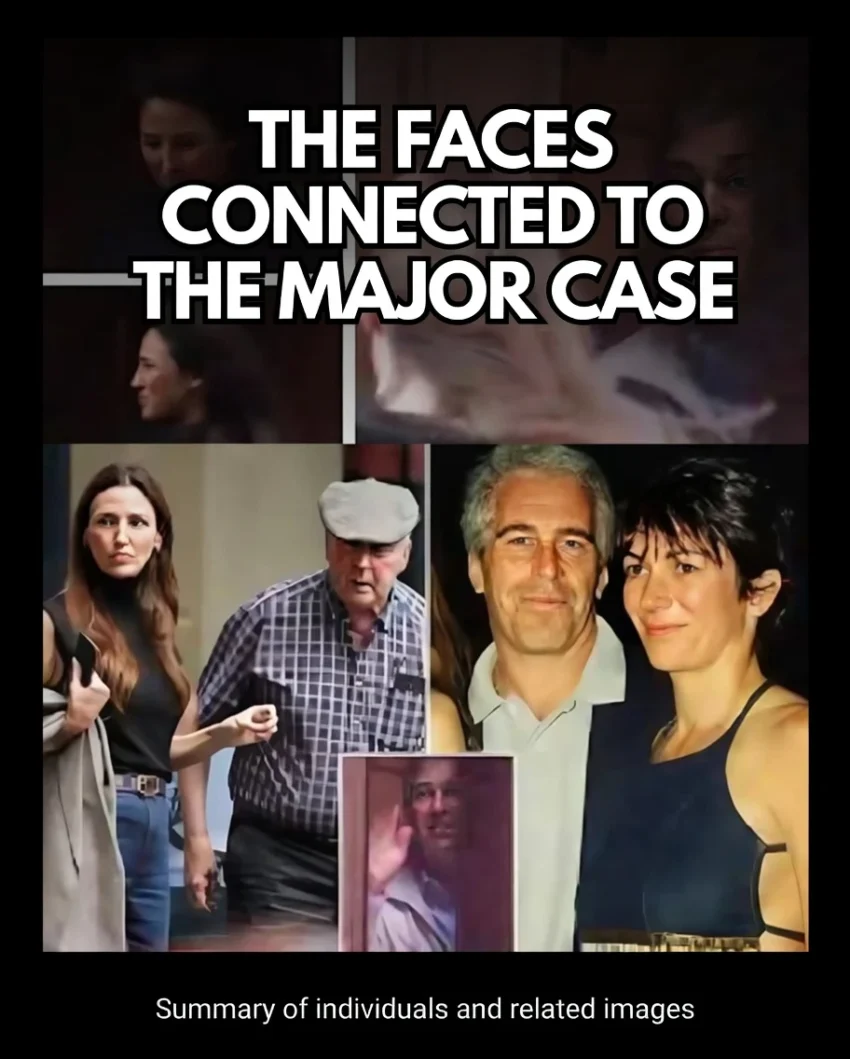
For nearly 30 years, the story of Maria Farmer seemed like a painful footnote in the Jeffrey Epstein saga. A woman who had once worked inside Epstein’s inner circle, she had told the world that she witnessed abuse, that she had seen photos of young girls, and that no one in power listened.
Never Miss a Word Again
These discrete, rechargeable hearing aids deliver crystal-clear sound and advanced noise cancellation. Perfect for watching the news, busy restaurants, or family gatherings.
Secure transaction via Amazon.com
Then, in 2025, the truth she had carried for decades finally came to light.
In 1996, Maria Farmer, a visual artist and former employee at Epstein’s estate, reported to the FBI that Epstein had photos of young girls and was involved in sexual abuse and possible child pornography. She described seeing a binder of explicit images, including pictures of underage girls, and told agents that Epstein had cameras and surveillance systems throughout his New York mansion.
Never Miss a Word Again
These discrete, rechargeable hearing aids deliver crystal-clear sound and advanced noise cancellation. Perfect for watching the news, busy restaurants, or family gatherings.
Secure transaction via Amazon.com
On September 3, 1996, the FBI formally logged her complaint, marking the case as a child pornography inquiry. The report was filed in the FBI’s system, yet no investigation followed. No interviews, no raids, no probes into the people around Epstein or his properties.
For years, the existence of that complaint was disputed or denied. Many in the media and law‑enforcement circles questioned whether Farmer’s account was real or exaggerated. The FBI never publicly acknowledged it — not even to her.
Without any official confirmation, the belief grew that the 1996 complaint had been lost, buried, or erased. The idea that the FBI had ignored one of the earliest warnings about Epstein seemed too damning to be real — and too convenient to be denied.
Never Miss a Word Again
These discrete, rechargeable hearing aids deliver crystal-clear sound and advanced noise cancellation. Perfect for watching the news, busy restaurants, or family gatherings.
Secure transaction via Amazon.com
Then, in 2025, the Epstein Files Transparency Act changed everything. The law, passed by Congress and signed by President Donald Trump, required the Department of Justice to release all Epstein‑related files — a first step toward a long‑overdue reckoning.
When the documents were finally made public, one of them was the 1996 FBI report filed after Maria Farmer’s call. The date on the report read September 3, 1996. The description matched her story. The FBI, at last, had to admit the complaint was real.
The timing of the ignored warning is chilling. The FBI logged Farmer’s complaint in 1996, but it did not open a full investigation into Epstein’s activities in Florida until nearly a decade later — and even then, the probe was limited, slow, and later criticized as inadequate.
Never Miss a Word Again
These discrete, rechargeable hearing aids deliver crystal-clear sound and advanced noise cancellation. Perfect for watching the news, busy restaurants, or family gatherings.
Secure transaction via Amazon.com
By the time authorities began to uncover the scope of Epstein’s network, the damage had multiplied. Dozens of victims — many of them young women or teenagers — came forward, recounting abuse that spanned years and continents. The pattern was clear: Epstein, with the help of figures like Ghislaine Maxwell, had built a system of exploitation that operated under the radar for more than a decade.
Farmers’ lawsuit, filed with the Marsh Law Firm in 2025, argues that the FBI’s failure to act in 1996 directly enabled Epstein’s continued crimes. The complaint says that if the agency had investigated the child pornography allegations, they might have stopped the abuse before it grew into a global trafficking network.
Now, Maria Farmer and 11 other women are suing the FBI and the federal government for $100 million, claiming that the agency’s refusal to act on early warnings like her own allowed Epstein to continue exploiting young women for years.
The lawsuit accuses the FBI of “gross negligence” and “deliberate inaction,” saying that the decision to ignore the 1996 complaint violated federal policy and moral duty. The women argue that the FBI’s silence gave Epstein time, space, and impunity — a window during which he could recruit, groom, and abuse countless victims.
In a statement, Farmer’s attorney, Jennifer Freeman, said:
“The FBI had the evidence, the names, the locations, and the urgency — all in 1996. They chose not to use it. That choice changed lives.”
The central question remains: Why wasn’t the complaint pursued?
No official explanation has been given. The FBI has not publicly admitted that the case was mishandled, nor has it acknowledged responsibility for the years of abuse that followed. The released files, while confirming the complaint’s existence, are heavily redacted — leaving many details still in the shadows.
Experts and survivors alike point to a combination of possible factors: institutional bias, fear of power, lack of urgency, and possibly even corruption. Epstein, a man connected to presidents, politicians, and billionaires, clearly enjoyed influence that few victims could match.
For Maria Farmer, the 1996 complaint was an act of survival. After being sexually assaulted by Epstein and Ghislaine Maxwell, she reached out for help — first to the New York Police Department, then to the FBI. The advice had been simple: “Call the FBI.”
Yet when she did, the story goes, agents listened — and then did nothing. In some accounts, she was even hung up on mid‑sentence.
Now, decades later, that early warning has become a symbol of failure and of perseverance. The fact that the FBI ultimately confirmed the complaint gives Farmer a sense of vindication — but not of closure.
The $100 million lawsuit is not just about money. It is about accountability. The women who filed it want the FBI to admit that its silence allowed Epstein to thrive. They want the institution to face the consequences of its inaction.
The complaint was real. The date on the file — September 3, 1996 — is real. The silence that followed — for nearly three decades — was also real.
But the reasons behind that silence? Those answers, for now, remain hidden in the margins of the Epstein files, waiting for further investigation, for more transparency, and for more courage from the people who hold the answers.
As the trial of the FBI’s role in the Epstein case begins, one question lingers in the background: If the FBI had listened in 1996, how many lives could have been saved?
Maria Farmer’s voice, finally heard in the pages of the FBI’s own records, stands as a haunting reminder that sometimes, the first warning is the only one the world gets.