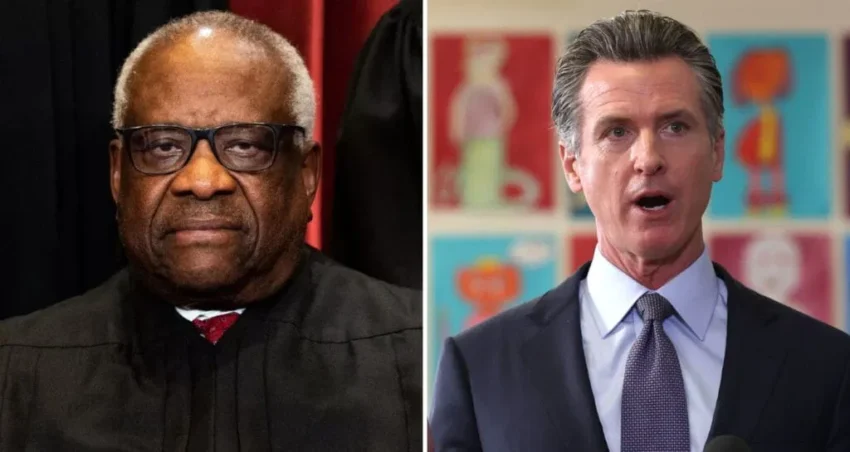
The U.S. Supreme Court just handed a major defeat to California’s climate radicals, and even one liberal justice joined the conservative wing to make it happen. In a 7-2 ruling, the court cleared the way for the state’s energy producers to move forward with their lawsuit against the U.S. Environmental Protection Agency, targeting California’s extreme green energy mandates.
At the heart of the case is the state’s requirement that electric vehicles dominate the market by 2035, part of Gov. Gavin Newsom’s plan to force California into “carbon neutrality.”
Justice Brett Kavanaugh, writing for the majority, made it clear these mandates are not just heavy-handed but potentially illegal.
“The government generally may not target a business or industry through stringent and allegedly unlawful regulation, and then evade the resulting lawsuits by claiming that the targets of its regulation should be locked out of court as unaffected bystanders,” Kavanaugh wrote. “In light of this Court’s precedents and the evidence before the Court of Appeals, the fuel producers established Article III standing to challenge EPA’s approval of the California regulations.”
Kavanaugh also pointed out that the EPA has shifted its own legal arguments over time, a fact that did not help its case.
“EPA has repeatedly altered its legal position on whether the Clean Air Act authorizes California regulations targeting greenhouse gas emissions from new motor vehicles,” he noted.
This ruling comes on the heels of President Donald Trump’s decisive action earlier this month, when he signed three resolutions wiping out key parts of California’s aggressive green agenda. The Trump administration’s move was a massive blow to Newsom, a likely 2028 presidential contender, and his push to transform California into the most “progressive” climate state in the country.
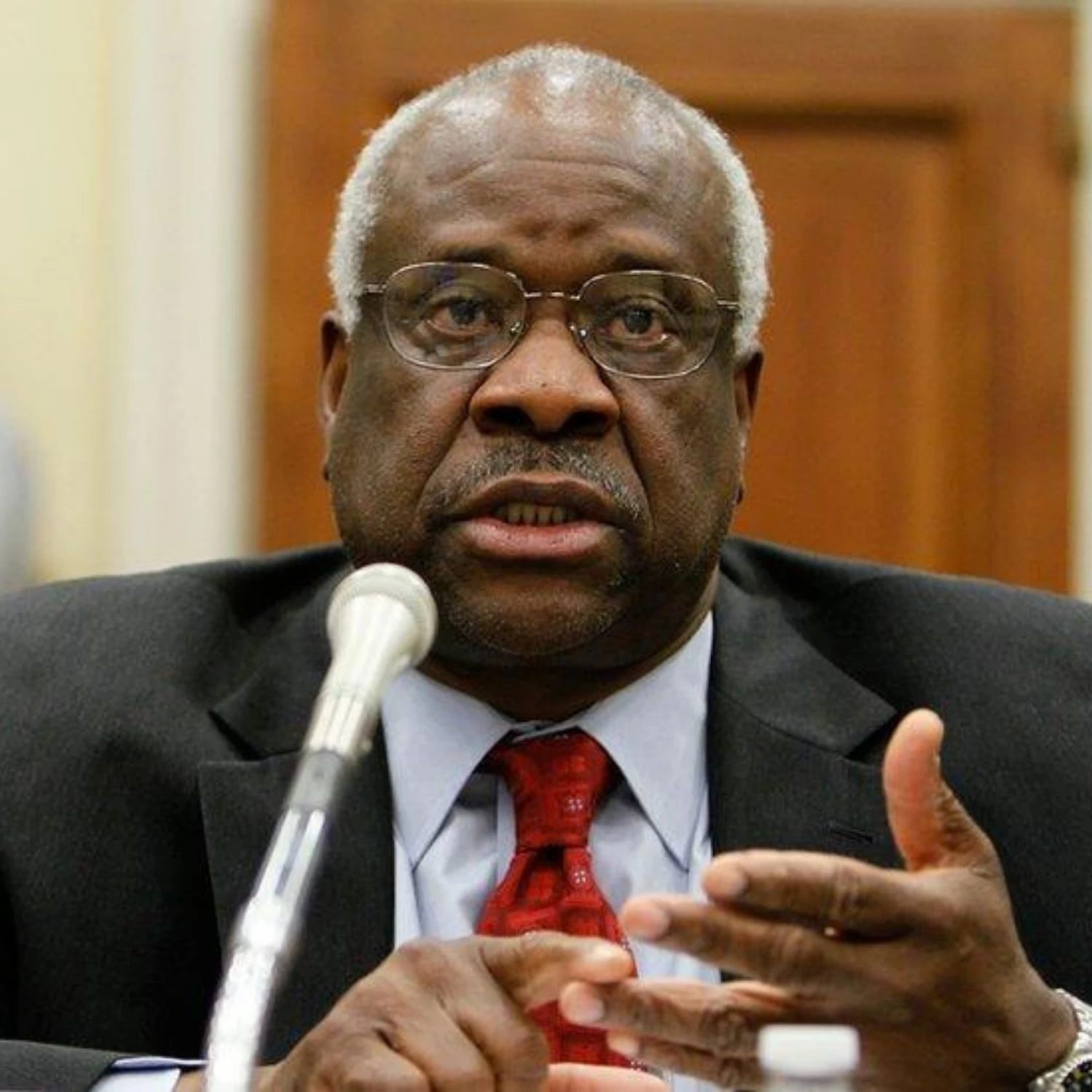
“This case involves California’s 2012 request for EPA approval of new California regulations,” Kavanaugh explained. “As relevant here, those regulations generally require automakers (i) to limit average greenhouse gas emissions across their fleets of new motor vehicles sold in the State and (ii) to manufacture a certain percentage of electric vehicles as part of their vehicle fleets.”
Environmental Protection Agency head Lee Zeldin revealed this week that President Donald Trump is about to make “the largest act of deregulation in the history of the United States.”
When Trump’s EPA ends a 2009 finding that greenhouse gases like carbon dioxide are bad for people’s health, it will stop 16 years of federal efforts to force big changes in American life without any legal reason.
The Endangerment Finding led to a lot of rules that are thought to cost more than a trillion dollars.
Former President Barack Obama tried to get Congress to pass a big climate change law early in his time in office. When the bill got stuck, Obama took action on his own.
The Clean Air Act should cover greenhouse gases, according to the EPA’s Endangerment Finding from December 2009. But that law was never meant to do that. It was passed 40 years ago, before global warming was even a topic of discussion.
The Clean Air Act was meant to control a few pollutants that were bad for people’s health right away, like smoke from factories or exhaust from cars.
In contrast, almost everything, everywhere, releases greenhouse gases, even people when they breathe.
There was and is no clear and legal way to regulate them under the law, leading to years of uncertainty and court challenges.
The Endangerment Finding had the biggest impact on cars.
The Biden administration used it to make almost all new cars and trucks electric by 2032. This is a huge and very costly project.
The Endangerment Finding lets the EPA change one of the country’s biggest industries in ten years, even though the American people never voted for it.
The EPA said that the new EV rules would save businesses and families money over time because they wouldn’t have to spend as much on gas.
But like most rules about energy efficiency, it never said why the government had to step in and make something so good happen.
Many truckers and families would have trouble spending thousands of extra dollars on electric vehicles, but President Joe Biden’s EPA didn’t listen to their concerns.
Trump’s team says that getting rid of the finding will save almost $2,500 for each car.
This week brought an unexpected series of developments on Capitol Hill, as two members of the House of Representatives announced plans to resign within an hour of each other, amid heightened scrutiny over lawmakers’ conduct.
Rep. Eric Swalwell (D-Calif.) said in a statement posted Monday that he would step down, though he did not specify a timeline for his departure. His announcement followed multiple reports in recent days alleging a pattern of misconduct, including claims of sexual harassment and assault. Those allegations have not been independently verified, but based on the reporting online as well as a very damning press conference earlier today by another alleged victim, he may just be lucky if resigning from Congress is the worst thing that happens to him.
Separately, Rep. Tony Gonzales (R-Texas) also indicated he would resign following calls for his expulsion. The controversy surrounding Gonzales includes reports about a past relationship with a staff member, Regina Santos-Aviles, as well as additional allegations reported by the San Antonio Express-News involving inappropriate communications. Those claims likewise remain unverified, but…he is resigning, so there’s that.
Though neither Gonzales nor Swalwell indicated when their last day would be, Rep. Anna Paulina Luna (FL-13) indicated on X Tuesday that she “received word that Swalwell has begun the internal process of switching his staff over to the Clerk of the House. His resignation will be incoming shortly. Same with Tony.”
With Gonzales and Swalwell announcing plans to step down, attention has shifted to the status of other lawmakers facing scrutiny, including Rep. Sheila Cherfilus-McCormick (D-Ill.). and Rep. Cory Mills (R-Fla.).
Cherfilus-McCormick has faced allegations tied to the misuse of federal funds during the COVID-19 pandemic. According to prior reporting, she was accused of improperly obtaining and using funds connected to FEMA programs, including claims that the money was used in part to support her 2021 congressional campaign. The status and outcome of those allegations remain subject to ongoing review.
In addition to scrutiny from the Department of Justice, the House Ethics Committee has been reviewing the matter. The committee announced in March that an adjudicatory subcommittee found multiple counts in a Statement of Alleged Violations had been substantiated.
Calls for potential disciplinary action have followed, with Luna among those raising concerns. On Tuesday, House Speaker Mike Johnson was asked about the possibility of expulsion as the situation continues to develop, saying:
“I have been a zealous guardian of due process around here,” Johnson told reporters on Tuesday. “I do think certainly on Cherfilus-McCormick, the Ethics Committee has gone through all of its processes, and they found some alarming facts. I think the facts are indisputable at this point, and so I believe it’ll be the consensus of this body that she should be expelled. I mean, that certainly rises to the level that’s needed.”
Politico reported that the House Ethics Committee is expected to meet next week to determine its recommendation regarding Rep. Sheila Cherfilus-McCormick. Even if the panel does not recommend expulsion, lawmakers could still pursue action on the House floor.
For her part, Cherfilus-McCormick arrogantly proclaimed that she had no intention of resigning, but Luna made it clear she plans on making sure the compromised Democrat is gone one way or another:
You stole money, and you’re saying there’s no due process? They found you guilty of 25 violations alone.
Unfortunately, it’s not illegal to lie; however, it is illegal to steal money. I look forward to voting to expel you, McCormick.
Ouch.