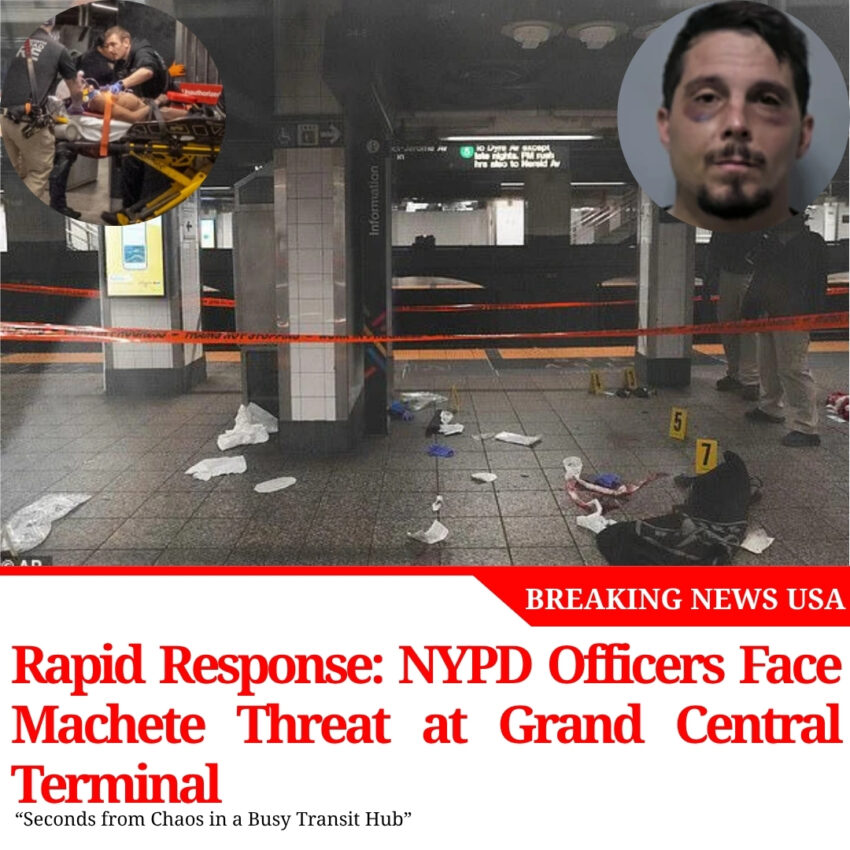
A routine Saturday morning in New York City turned tense in moments, as a busy transit hub became the site of a sudden confrontation involving law enforcement and an armed individual.
Commuters were moving through Grand Central Terminal around 9:40 a.m. when reports of injuries prompted a swift response from New York Police Department officers.
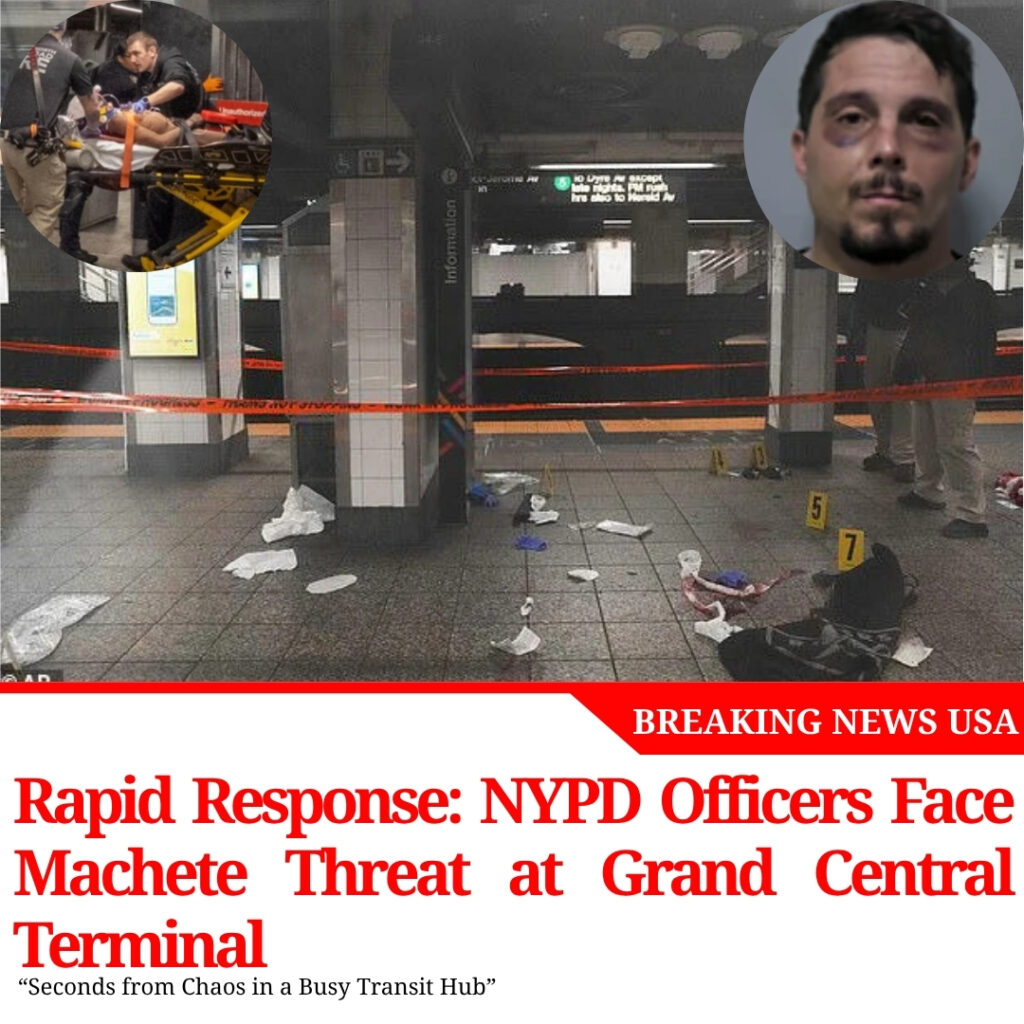
Upon arrival, authorities encountered a man identified as Anthony Griffin, who was holding a machete and acting unpredictably. Officials noted he made statements claiming to be “Lucifer” while moving through the station, which caused alarm among those nearby.
Police Commissioner Jessica Tisch reported that officers gave the individual more than 20 clear commands to drop the weapon. When those were not followed and he moved toward them with the machete raised, officers faced an immediate threat and used deadly force. Griffin was struck twice and later passed away at Bellevue Hospital.
By that point, three people—an 84-year-old man, a 65-year-old man, and a 70-year-old woman—had already been hurt in what investigators described as unprovoked encounters. The injuries included serious cuts to the head and face, an open skull fracture, and a deep shoulder wound. Thankfully, all three victims were expected to recover.
The sequence unfolded quickly: the first strike happened on one platform, followed by movement upstairs to another area. This rapid shift added to the confusion in the crowded space.
For bystanders, the event brought sudden fear to a location known for everyday travel and connections. Chief of Transit Joseph Gulotta emphasized that the attacks appeared random, with no prior links between the suspect and those injured. That element of unpredictability has left many thinking about safety in public areas they use regularly.
Griffin had a history of prior arrests, and investigators are reviewing his background, mental state, and actions leading up to the incident, including surveillance video and witness accounts.
New York Governor Kathy Hochul thanked the officers for their quick actions to protect the public during a fast-moving situation. Incidents like this highlight the split-second decisions law enforcement must make in busy urban settings.
The emotional effects may stay with those who were present long after the station resumed its normal flow. Moments of ordinary routine were interrupted without warning, reminding everyone how quickly things can shift.
As the review continues, the focus remains on supporting the victims, understanding the full sequence of events, and ensuring public spaces stay secure while remaining open and accessible.
In the end, what occurred at Grand Central served as a stark reminder of the thin line between daily life and unexpected danger — and the importance of rapid response in keeping people safe.