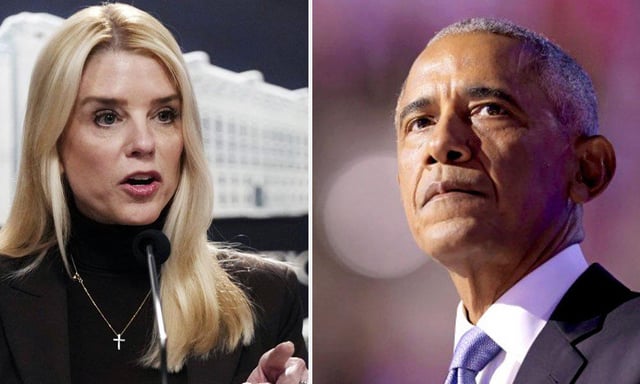
A growing political controversy is unfolding in Washington after comments attributed to Kash Patel sparked renewed debate about alleged “deep state” networks within the U.S. government. The claims, widely circulated online and in political commentary, suggest that elements within the federal bureaucracy may have operated outside traditional oversight during and after the administration of former President Barack Obama.
Supporters of the claims argue that long-standing concerns about hidden influence inside federal institutions deserve serious investigation. Critics, however, say the accusations remain largely unproven and risk deepening political polarization if not supported by verified evidence.
According to statements shared by commentators connected to Pam Bondi, the United States Department of Justice could consider additional investigative measures related to alleged abuses of power inside government agencies. Some reports have also suggested the possible involvement of federal law-enforcement bodies such as the Federal Bureau of Investigation and the Bureau of Alcohol, Tobacco, Firearms and Explosives in examining claims of misconduct within federal institutions.
However, as of now, there has been no publicly confirmed announcement from federal authorities establishing a new “secret task force” or formally labeling any political network as a criminal enterprise. Legal analysts and government experts caution that allegations of systemic wrongdoing require substantial documentation and must go through established investigative and judicial processes before conclusions can be drawn.
The debate has nonetheless gained significant traction across social media and political media outlets. Online discussions frequently reference polling data suggesting that many Americans are concerned about transparency and accountability within government institutions. Political commentators on both sides have used the moment to highlight broader questions about trust in federal agencies, the role of political influence in Washington, and the challenges of separating fact from speculation in the digital media environment.
Supporters of deeper investigations say the issue reflects a long-standing public demand for government accountability. Opponents counter that the “deep state” narrative is often used as a political talking point without clear evidence to support sweeping claims.
Regardless of perspective, the controversy illustrates how quickly political narratives can spread in the modern media landscape. Statements from public figures, combined with viral posts and commentary, can transform political disagreements into national debates about governance, transparency, and institutional trust.
For now, analysts emphasize that any formal investigation or legal action would require verified evidence and official confirmation from relevant authorities. Until then, the discussion surrounding alleged “deep state” networks remains largely a matter of political interpretation rather than established legal fact.