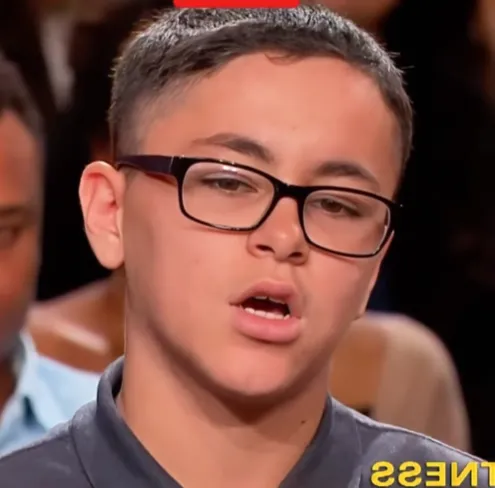
The courtroom carried a mix of tension and concern as a case involving a school playground incident unfolded. What began as a disagreement between children had escalated into a dispute between adults over responsibility and consequences.
Never Miss a Word Again
These discrete, rechargeable hearing aids deliver crystal-clear sound and advanced noise cancellation. Perfect for watching the news, busy restaurants, or family gatherings.
Secure transaction via Amazon.com
The plaintiff, a parent, explained that her child returned home upset after an incident at school. According to her, what started as a minor argument during recess quickly turned into something more serious.
She described how the situation escalated.
Never Miss a Word Again
These discrete, rechargeable hearing aids deliver crystal-clear sound and advanced noise cancellation. Perfect for watching the news, busy restaurants, or family gatherings.
Secure transaction via Amazon.com
In the middle of the disagreement, her child’s glasses were damaged, leaving them unusable. From her perspective, this was not just an accident, but the result of another child’s actions.
The financial impact added to her concern.
She explained that replacing the glasses was not a small expense, and she believed the responsibility should fall on the family of the child involved in the incident.
Never Miss a Word Again
These discrete, rechargeable hearing aids deliver crystal-clear sound and advanced noise cancellation. Perfect for watching the news, busy restaurants, or family gatherings.
Secure transaction via Amazon.com
The defendant, the other parent, offered a different view.
They acknowledged that there had been a disagreement between the children but argued that it was a mutual situation. According to them, both children were involved, and the damage was not caused intentionally.
Judge Judy quickly focused on one key issue: responsibility in a shared conflict.
Never Miss a Word Again
These discrete, rechargeable hearing aids deliver crystal-clear sound and advanced noise cancellation. Perfect for watching the news, busy restaurants, or family gatherings.
Secure transaction via Amazon.com
She asked whether the damage was the result of one child’s actions or part of a situation where both children contributed. This distinction would determine how responsibility should be assigned.
The plaintiff maintained that her child was not the cause.
She emphasized that the damage occurred because of the other child’s behavior, and that her child should not bear the cost of something they did not initiate.
The defendant argued that playground disagreements can be unpredictable.
They suggested that when two children are involved in a conflict, it can be difficult to assign blame to only one side, especially if the situation escalated quickly.
Judge Judy examined the details carefully.
She asked about witnesses, school reports, and any documentation that could clarify what happened. As the information was presented, it became clear that the situation was not entirely one-sided.
The courtroom grew quieter as she connected the facts.
She pointed out that while children may not intend to cause harm, their actions can still have consequences. At the same time, when both parties are involved, responsibility may not fall entirely on one side.
Judge Judy made an important observation.
She explained that in situations involving children, the focus should be on fairness rather than punishment. The goal is to address the outcome in a way that reflects what actually happened.
As the case moved toward its conclusion, the outcome became clearer.
Judge Judy ruled that the responsibility should be shared. She ordered partial compensation, reflecting that both children were involved in the incident, even if one suffered more visible damage.
The decision was balanced and practical.
The plaintiff appeared somewhat satisfied that her loss was acknowledged, while the defendant accepted the shared responsibility.
Before closing the case, Judge Judy offered a final reminder.
Conflicts can happen, especially among children.
But when those conflicts lead to damage, the focus should be on resolving the situation fairly.
As the courtroom cleared, the case left behind a simple lesson.
Even small moments can have real consequences.
And sometimes, the fairest outcome is one that recognizes both sides of the story.