In the late 1800s, in the bustling yet understated corridors of Philadelphia’s Hahnemann Medical College, a woman named Harriet Cole made a decision that would quietly etch her name into medical history. She wasn’t a physician or researcher — she worked as a cleaning lady, keeping the halls of this respected institution spotless and orderly. Yet after her passing at age 35, Harriet’s contribution to science became one of the most extraordinary of its era.
Harriet lived a modest life, largely unnoticed by the students and faculty who passed her daily. But she had grown familiar with the world of medicine around her. When she passed, she chose to donate her body to the college — an uncommon and generous act for the time, when body donation carried significant social weight.
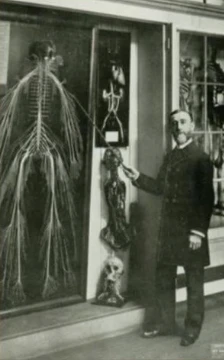
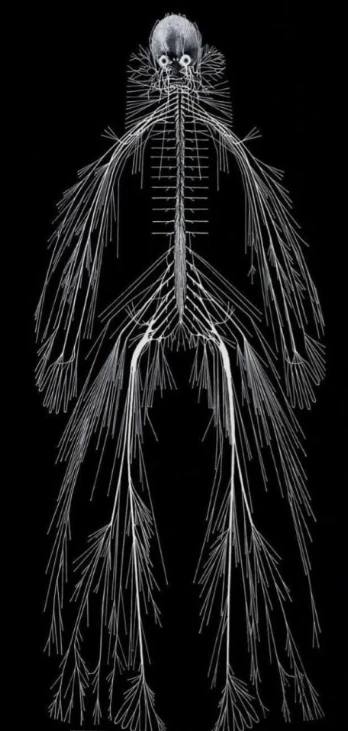
Her remains were entrusted to Dr. Rufus B. Weaver, a skilled professor of anatomy. What he accomplished next was groundbreaking. Over nearly six months of meticulous work, Weaver carefully isolated and preserved Harriet’s entire nervous system. Using fine tools and incredible patience, he separated each delicate nerve, protecting the intricate network that once carried every sensation and movement in her body.
The finished specimen was nothing short of remarkable — a nearly complete human nervous system, treated with a special lead-based coating and meticulously mounted on a blackboard with thousands of tiny pins. Simply named “Harriet,” it stood as both a scientific wonder and a deeply personal tribute.
This display soon gained widespread recognition. In 1893, it earned awards at the prestigious World’s Columbian Exposition in Chicago, celebrated for its educational value and the exceptional craftsmanship involved. Generations of medical students have studied it since, tracing the pathways that once defined a living person.
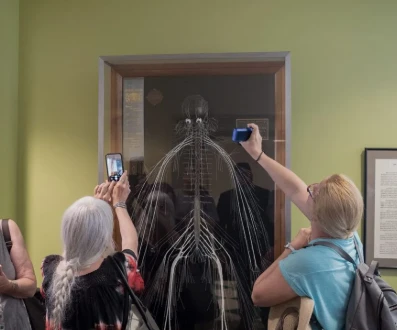
Today, more than 130 years later, Harriet remains right where her journey began — in Philadelphia, preserved behind glass in the same building where she once worked. Visitors and students still pause before the exhibit, moved not only by the anatomical detail but by the human story it represents.
Her legacy invites thoughtful reflection on consent, trust, and the intersection of science and humanity. While records confirm she agreed to donate her body, it’s unclear if she fully envisioned how her remains would be used. Regardless, her decision has educated countless minds and continues to inspire awe.
Harriet Cole never sought the spotlight during her lifetime. Through her final act, she became part of something enduring — a silent but powerful presence in the halls of learning she once helped maintain. Her story reminds us how ordinary lives can leave extraordinary marks, long after they are gone.