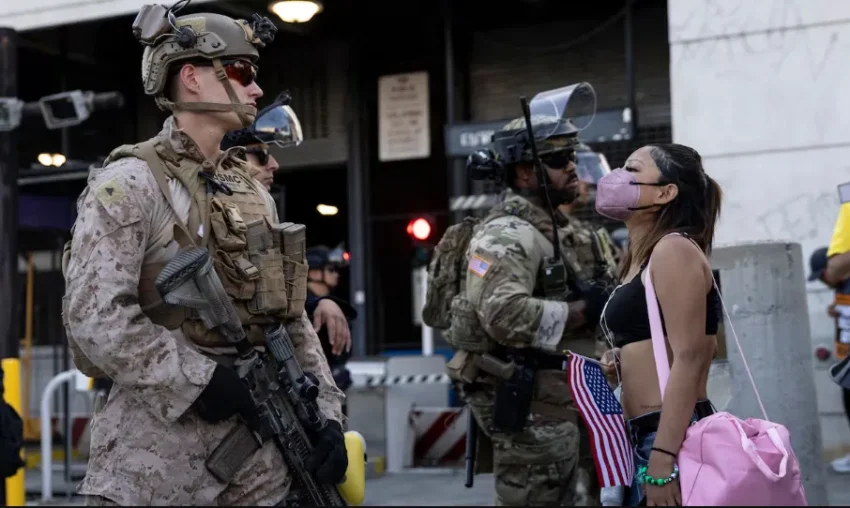
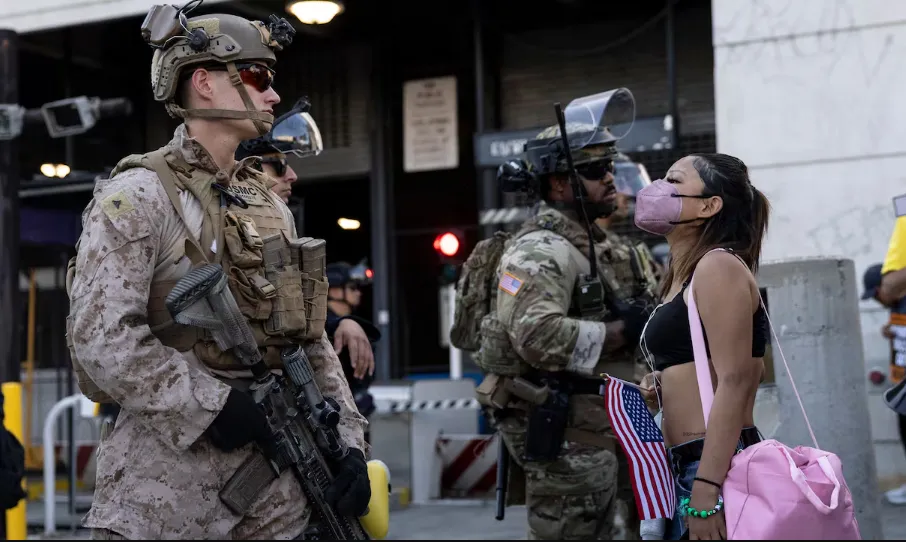
U.S. Marines protecting the U.S. embassy in Haiti exchanged gunfire with suspected gang members last week, a Marine spokesman announced Sunday.Captain Steven J. Keenan told Fox News that Marines supporting embassy operations came under fire from several suspected gang members outside the U.S. embassy complex in the Haitian capital of Port Au Prince on the evening of November 13. “U.S. Marines are committed to the safety and security of U.S. embassies worldwide and respond to all threats with professionalism and swift, disciplined action,” Keenan said.
No U.S. service members were injured as a result of the incident, according to a report from The Washington Post.
The long unstable Caribbean nation has largely suffered a government collapse in recent years, which began in earnest following the assassination
of President Jovenel Moïse in 2021. The assassination created a power vacuum that has led to several changes in heads of state and the loss of vast amounts of Haitian territory to organized gangs.
As of this report, gangs control about 90 percent of Port-au-Prince despite the deployment of Kenyan military personnel under a United Nations mandate to bolster Haiti’s security forces.
The ongoing issue with gangs in Haiti stems from a surge in organized criminal groups exploiting political instability since 2021, fueled by arms trafficking, corruption links to political elites, and economic collapse, leading to widespread violence including massacres, kidnappings, sexual assaults, child recruitment, and forced displacement
Over 200 gangs operate nationwide, with coalitions like Viv Ansanm (Living Together) coordinating attacks to expand influence, control illicit markets, and challenge state authority by establishing parallel governance in seized areas. Gangs have intensified operations in 2025, spreading from Port-au-Prince into rural departments like Artibonite and Centre, paralyzing commerce through roadblocks, exacerbating famine-like conditions for 5.7 million people.
Haiti has received substantial security assistance from outside nations to combat gangs, beginning with the UN-authorized Multinational Security Support (MSS) mission in 2024. Primarily lead by Kenyan forces, the UN mandate has received support from Jamaica, Bahamas, Belize, Guatemala, and El Salvador, while the U.S. has provided $25 million in aid for the MSS.
The November 13 incident is not the first time foreign diplomats and embassies have come under attack in Haiti. Earlier incidents include gangs targeting U.S. embassy vehicles in March and October 2024, leading to partial staff evacuations of non-essential personnel. A UN helicopter was also struck by gunfire in October 2024 as it was attempting to deliver food aid.
As a result of the violence, the European Union has evacuated all diplomatic staff, while the nation’s lone international airport has been closed due to numerous instances of gunfire targeting aircraft.
When the Phone Stayed Silent: A Mother’s Warning Ignored Before Tragedy
Whitney Decker felt the first knot of dread the moment her phone didn’t ring. Her daughters—Paityn, Evelyn, and Olivia—were due back from their weekend visit with their father. But as hours stretched into silence, fear blossomed into nightmare.
What followed was a heartbreaking story of ignored warnings, missed opportunities, and a system stretched too thin to protect three innocent lives.
A Mother’s Alarm Dismissed
Whitney’s concern grew into desperation as attempts to alert authorities were met with dismissal.
Behind the scenes, troubling signs were flashing. Travis Decker, their father, known for military service and battling mental health issues including PTSD and borderline personality disorder, was becoming increasingly unstable. Whitney had warned officials multiple times, but her concerns slipped through the cracks.
The Devastating Discovery
Tragically, the worst fears were confirmed when the bodies of Paityn (9), Evelyn (8), and Olivia (5) were found at a remote Leavenworth campsite—bound, suffocated, and with plastic bags over their heads.
Travis Decker vanished, now the prime suspect, armed and dangerous, fleeing justice and deepening a family’s anguish.
A System Under Fire
Legal experts and advocates say this tragedy reveals critical flaws: the high thresholds for Amber Alerts and law enforcement intervention leave many parents powerless when early signs flash red. Whitney’s heartbreaking story is not isolated—too often, protective parents face walls of bureaucracy when their children’s safety hangs in the balance.
Nationwide Outcry and Calls for Change
As the manhunt for Travis Decker continues, the nation mourns and demands reform. Social media campaigns like #JusticeForTheDeckerGirls echo a collective plea: overhaul mental health screenings, rethink Amber Alert protocols, and listen more closely to those sounding the alarm.
Final Reflection
Three young lives stolen, a mother’s warnings ignored, and a system that failed when it mattered most. Whitney Decker’s fight was not just for her daughters, but for every parent whose voice risks being silenced. Until that changes, we face a grim question: how many more tragedies must unfold before we truly act?
Please SHARE this article with your family and friends on Facebook.