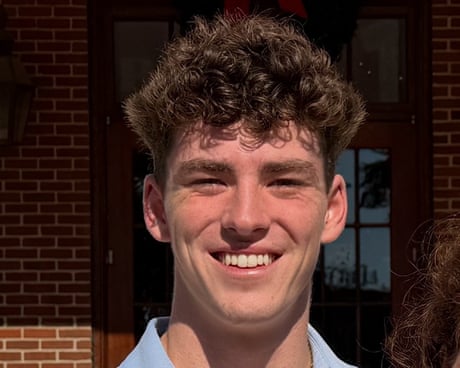
The tragic death of 20-year-old University of Alabama student James “Jimmy” Gracey in Barcelona has taken a troubling turn, as those closest to him begin to question the official narrative.
Spanish authorities have indicated that all evidence points to an accidental fall into the sea. But now, friends of Gracey are speaking out—suggesting that the final hours of his life may have been far more complex than initially believed.
Gracey, a native of suburban Chicago, had been vacationing in Barcelona during spring break with a group of friends. He was last seen in the early hours of Tuesday morning outside the popular Shôko nightclub, a well-known beachfront venue frequented by tourists and locals alike.
When he failed to return to the Airbnb he shared with friends, concern quickly grew. A search effort was launched, and two days later, his body was discovered in waters near Port Olímpic, not far from where he was last seen.
Authorities reported that surveillance footage captured Gracey walking alone toward a dock before falling into the water, with no indication of third-party involvement. A preliminary autopsy further supported this conclusion, noting injuries consistent with repeated impact against rocks along a breakwater.
Police have therefore leaned toward classifying the death as accidental, possibly influenced by alcohol or other substances. Toxicology results are still pending.
However, this explanation has not brought closure to everyone.
Friends of Gracey have begun raising doubts, pointing to what they describe as unsettling details surrounding his final moments. Some claim that messages he sent before his disappearance suggest he may have felt threatened or unsafe.
While these claims have not been confirmed by authorities, they have fueled speculation online and reopened questions about what truly happened that night.
Complicating matters further is the discovery of Gracey’s cellphone in the possession of a known thief. Police later determined that the individual had found the phone on the street and had no direct contact with Gracey. His wallet, recovered separately, still contained cash, credit cards, and identification—details that seem inconsistent with a typical robbery.
Investigators maintain that these elements are unrelated to the fatal incident. Still, for many observers, they add to a sense of uncertainty.
Barcelona, known for its vibrant nightlife and scenic coastline, attracts millions of visitors each year and is generally considered a safe destination. Yet the combination of late-night environments, unfamiliar surroundings, and coastal terrain can pose risks—especially for young travelers.
Gracey’s family has asked for privacy as they process their loss, describing him as a deeply loved son, brother, and friend. The University of Alabama also expressed its grief, noting that his passing has left a profound impact on the campus community.
Meanwhile, tributes from friends continue to pour in across social media. Many describe him as kind, faith-driven, and full of life—a person who brought light to those around him. Some of the friends who had traveled with him reportedly returned home early, unable to cope with the tragedy.
As investigators await final autopsy and toxicology results, questions remain.
Was this truly a tragic accident, as officials suggest? Or are there missing pieces yet to be uncovered?
For now, the case sits at the intersection of evidence and emotion—where official findings meet personal doubt.
And until all answers are clear, the story of Jimmy Gracey remains not just a loss, but a mystery that continues to haunt those who knew him best.