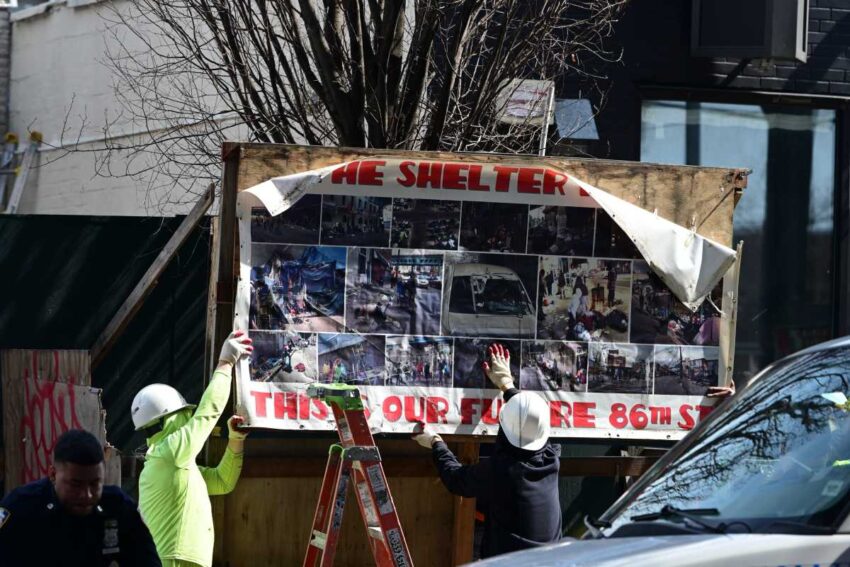
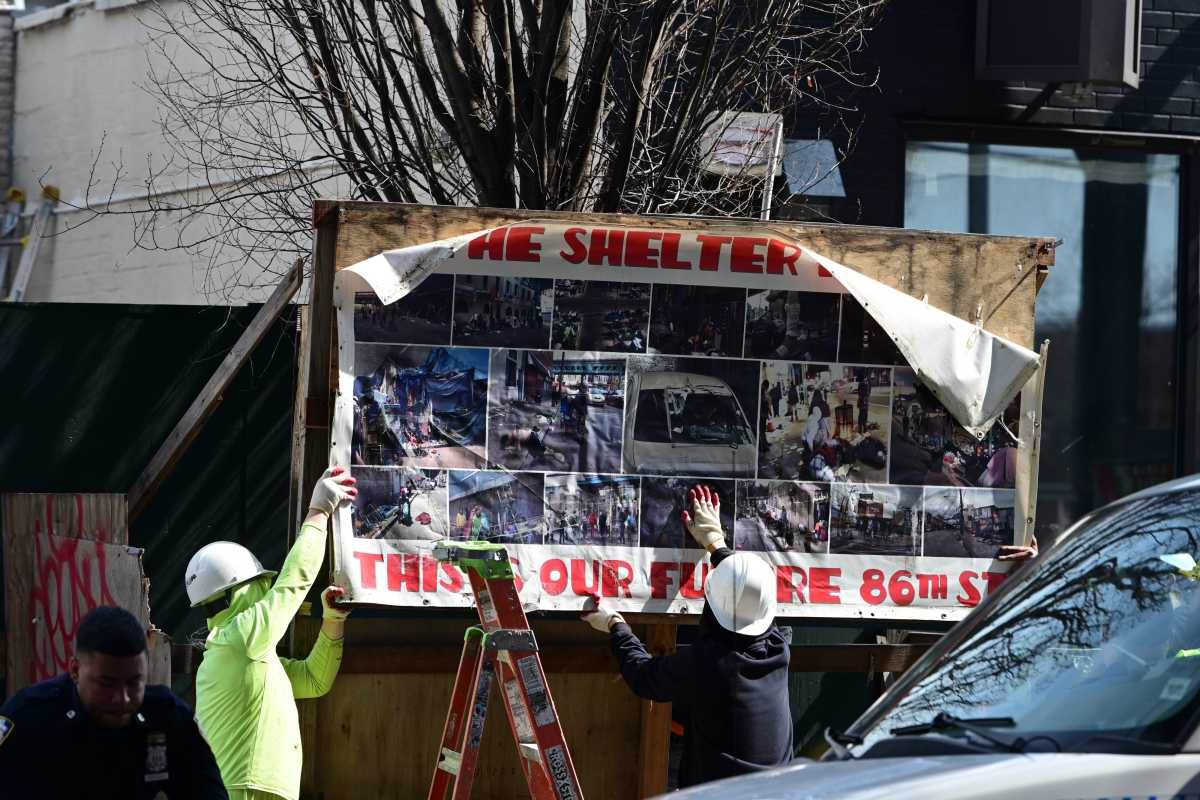
Brooklyn, New York — A contentious battle over a planned men’s homeless shelter in Bensonhurst, Brooklyn shifted into high gear this week as Mayor Zohran Mamdani’s administration resumed demolition at the project site, reviving a long‑standing controversy that has divided community members, local officials, and social service advocates.
The shelter — a proposed 150‑bed facility at 86th Street and 25th Avenue — has been the focal point of protests and legal challenges for more than two years. Activists and residents have repeatedly called on City Hall to halt the project, arguing that the facility’s location in a densely populated residential neighborhood raises serious concerns about safety, crime, drug activity, and quality of life.
Despite mounting resistance, demolition work recently resumed as part of preparations to build the shelter, prompting renewed tensions and criticism from community members who hoped the incoming Mamdani administration might reconsider the plan. “We have been fighting this for over 600 days,” one local activist told amNY. “This is not just NIMBYism — people here are worried for their families, their children, and their safety.”
The project, originally announced under the previous mayoral administration, has been a flashpoint for local pushback since its inception. Neighbors have organized marches, issued petitions, and repeatedly confronted city officials at public meetings. Some protests have at times turned heated, with demonstrators accusing City Hall of disregarding community voices and failing to engage in meaningful dialogue.
Opponents consistently cite the shelter’s proximity to transportation hubs, senior living facilities, and family‑oriented spaces as part of their objections. They warn that placing a large homeless shelter in such a densely populated area could lead to increased public safety concerns — claims echoed in previous rallies where protesters said shelters attract crime and drug activity.
One resident at a recent demonstration asserted, “We’re not against helping homeless individuals — we just don’t want this in the middle of our community without any plan to address the ripple effects.”
City Hall, however, has emphasized that the shelter is part of a broader strategy to expand supportive services for homeless New Yorkers and to distribute facilities more equitably across boroughs. The mayor’s team has argued that the new shelter will provide critical support — including case management, healthcare referrals, and pathways to stable housing — for men experiencing homelessness.
A spokesperson for the administration said that demolition and preparatory work moving forward reflects the city’s commitment to addressing homelessness “with dignity and respect.” Officials stress that the site was selected after extensive planning and that the benefits of increased shelter capacity outweigh concerns about location.
Despite strong local opposition, the city expects the shelter to be completed by late 2027, and officials have reiterated that providing additional shelter beds is an urgent priority given the size of New York City’s homeless population — which exceeds 100,000 people sleeping in the city’s system on any given night.
The Bensonhurst shelter fight is just one piece of a larger homelessness policy puzzle confronting New York City. Earlier this year, the Mamdani administration closed the aging Bellevue men’s shelter in Midtown, relocating its 250 residents to other facilities, including options in Brooklyn, and committing to redeveloping safer, more humane spaces for shelter residents.
At the same time, city leadership reinstated sweeps of homeless encampments with outreach by the Department of Homeless Services rather than police, an approach the mayor described as more humane than previous policies. However, this change has drawn mixed reactions from advocates and community stakeholders.
Homelessness advocacy organizations, such as Homeless Services United and the Coalition for the Homeless, have repeatedly called on the city to expand voucher programs like CityFHEPS and increase permanent housing options — not just temporary shelter capacity — to meaningfully address the crisis.
The shelter controversy has also spilled into local political dynamics. Some neighborhood leaders and community boards have criticized Mayor Mamdani for perceived lack of engagement and consultation with residents before advancing the project. They argue that more transparent communication and collaboration could have eased tensions or sparked alternative planning.
Others see the fight as emblematic of broader urban policy struggles in New York City, where the needs of the unhoused often clash with neighborhood preferences and perceptions of safety. “This battle goes beyond Bensonhurst,” one local council member said. “It speaks to how we balance compassion with practical concerns, and how we design equitable solutions that all New Yorkers can accept.”
As demolition continues and construction plans move forward, the Bensonhurst shelter battle is poised to remain a key test of Mayor Mamdani’s ability to navigate complex social issues while maintaining community trust. With homelessness showing no signs of quick resolution, the shelter project symbolizes the tensions between urgent public needs and neighborhood resistance.
Whether the facility will ultimately ease pressures on the city’s shelter system or become a prolonged flashpoint of community dispute remains uncertain. Yet one thing is clear: the fight in Bensonhurst underscores the depth of debate over homelessness, housing policy, and urban governance in one of America’s largest cities.