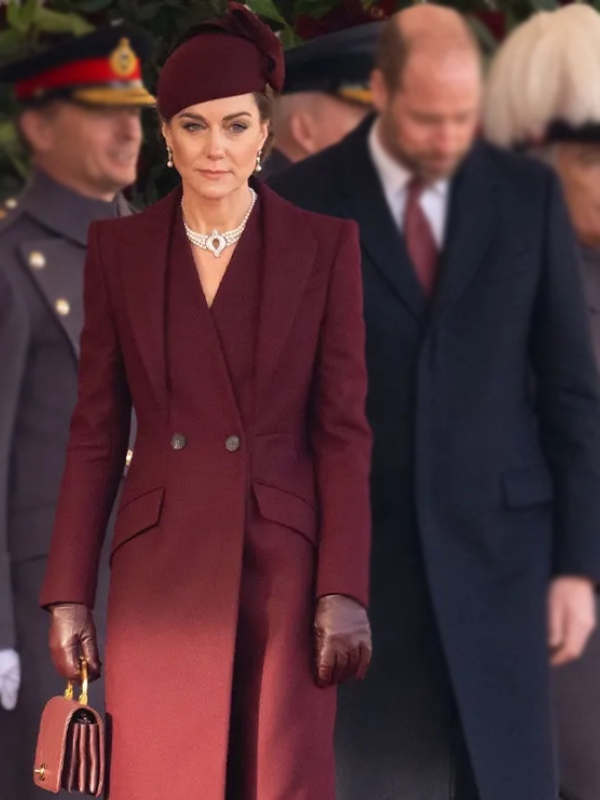
For years, Catherine, the Princess of Wales, has been celebrated as one of the world’s most stylish women. Her elegance seems effortless, her outfits perfectly matched to the occasion. But recently, something about Kate’s wardrobe has changed. Gone are the soft florals and understated neutrals of her early years. In their place are bold, vibrant colors—burgundy, emerald, royal blue—shades that not only flatter her but give her a commanding presence.
And there is no mistaking where this transformation comes from: the late Queen Elizabeth II.
When Kate welcomed the Trumps during their state visit, her outfit became the talk of the day. She wore a striking burgundy coat, a color that radiated confidence and refinement. Critics praised how beautifully the shade suited her complexion, while admirers couldn’t help but notice how regal she looked—surpassing even Camilla in presence.
That coat was more than just clothing. It was a statement. A signal that Kate is stepping firmly into her role as a future queen consort, embracing the lessons the late monarch left behind.
Queen Elizabeth understood the power of color better than anyone. From sunny yellow coats to bright magentas and bold blues, her wardrobe was famously vivid. To the casual observer, these choices might have looked eccentric. But there was always intention.
As the queen once explained, she wore bright colors so people could see her. When thousands gathered in the rain just for a glimpse, she wanted to make sure no one left disappointed. “I have to be seen to be believed,” she famously said.
Her clothing became more than fabric; it was part of her service. Each outfit ensured she stood out in a crowd, offering the public a flash of color, a beacon of stability.
Kate, it seems, has absorbed that wisdom. In recent years, her wardrobe has leaned heavily toward rich, saturated shades that stand out in photographs and in person. Like Elizabeth, she understands that being visible is part of her duty.
Looking back at Kate’s early style, the difference is striking. In her twenties and even the first years of her marriage, she often dressed like many young women her age: floral day dresses, casual jeans, and soft, approachable patterns. She looked lovely, but her clothes spoke of an ordinary woman rather than a future queen.
That began to change when she became the Princess of Wales. With her new title came new expectations. Suddenly, every public appearance carried the weight of representation—not only of herself but of the monarchy. Subtle prints gave way to solid colors, casual looks to tailored elegance.
Now, whether she chooses army green for a remembrance event, royal blue for a state function, or burgundy for a formal welcome, Kate’s wardrobe communicates strength, respect, and regal authority.
Fashion in the royal family has never been frivolous. Every choice carries meaning. For Queen Elizabeth, bold colors symbolized visibility and accessibility. For Kate, they now symbolize transition. They mark her evolution from a commoner-turned-duchess to a woman preparing, one day, to wear the crown.
Burgundy conveys dignity and warmth. Royal blue communicates loyalty and tradition. Emerald green suggests renewal and growth. Each shade tells a story—not just of personal taste but of the monarchy’s enduring symbolism.
By embracing these lessons, Kate shows not only that she respects the late queen’s wisdom but also that she is ready to carry those traditions into the future.
Observers can’t help but notice the contrast between Kate and Queen Camilla. While Camilla often favors muted tones and less daring palettes, Kate’s bold hues allow her to shine in ways that command attention. At recent events, Kate has consistently emerged as the visual centerpiece, her presence amplified by her clothing.
It is not about competition—at least not overtly. But to many, Kate’s style makes her appear every inch the queen-in-waiting. The symbolism is subtle but powerful: she is ready, she is visible, and she is regal.
When we imagine Queen Elizabeth’s wardrobe, we picture a rainbow. Each color carefully chosen, each outfit deliberate. Kate seems to be building her own version of that tradition, modernizing it for a new generation while keeping the late queen’s message alive.
The Princess of Wales no longer dresses like the girl-next-door. She dresses like a queen-in-training, her wardrobe a visual reminder that she is part of something larger than herself. And in doing so, she has won praise not only for her beauty, but for her understanding of what royal duty means.
Kate’s evolving wardrobe isn’t just about fashion. It’s about visibility, symbolism, and respect for the monarchy’s heritage. It shows that she has studied the late queen carefully, learned from her example, and found ways to translate those lessons into her own era.
For the British people—and indeed, for admirers around the world—this shift offers reassurance. It tells us that when the time comes, the monarchy will once again have a queen who understands the importance of presence, of symbolism, and of being seen.
And perhaps that is the most striking part of Kate’s new look. The vibrant colors may catch the eye, but the message behind them captures the heart: the crown will one day be in steady, thoughtful hands.
Rehefa nisokatra ilay varavaran’ny efitra fatoriana dia toy ny nijanona ny fotoana.
Nijoro aho, tsy afaka nihetsika, satria teo anoloako dia hita mazava toy ny sary tsy azo fafana — ny vadiko, Mark, ary i Emma, sakaizan’ny zanakay vavy indrindra, tafaharo ambanin’ny lamba firakotra, amin’ny fiarahana manafina fa efa nambara amin’ny mason’izy roa.
Tsy ny zavatra nataony no nandrava ahy. Tsy ny fitaka. Tsy ny fahadisoam-panantenana.
Fa ilay tsikin’i Emma, ilay tsiky mangina, feno fahalalana sy tsy fanenenana, toy ny olona efa nahita ny herin’ny fahanginana alohan’ny tena traikefa.
Nangina aho. Tsy nikiakiaka, tsy nitomany, tsy nanontany na inona na inona.
Nohidiko fotsiny ny varavarana.
Rehefa tonga tao an-dakozia aho, dia toy ny nisy fiainana nihetsika tao amin’ny zavatra rehetra manodidina.
Nandre ny fitempon’ny vata fampangatsiahana aho, ny feon’ny rano miakatra ao amin’ny fantsona, ny tapatapan’ny rivotra miditra avy any ivelany.
Rehefa mandrava anao ny zavatra iray, dia manomboka maheno ianao — maheno ny zava-drehetra.
Nipetraka teo amin’ny seza hazo taloha aho, niandry ny rano ho masaka.
Nesoriko ny peratra fanambadiana — ilay marika fanehoana ny fiarahana sy ny fitiavana — ary napetrako teo amin’ny lovia fotsy eo anilan’ny fatana.
Toy ny olona mamerina zavatra tsy azy aho. Toy ny famerenana boky amin’ny tranomboky rehefa vita vakina. Tsy misy feo, tsy misy fanelingelenana.
Nohazavako ny varavarana mankany amin’ny garazy. Niditra ny rivotra mangatsiaka, nandroaka ny hanitry ny parfum sy ny menaka navelan’izy ireo.
Tsy nisy rivotra toy izany hatramin’ny folo taona.
Teo amin’ny latabatra, mbola nisy ny taratasy fampidirana an’i Sophie any amin’ny oniversite.
Nitsoka ny rivotra nanodidina azy.
Ary teo aho no nahatsapa fa tsy hoe ny vadiko ihany no very, fa ny fianakaviana rehetra izay notahiriziko tamim-paharetana nandritra ny taona maro.
Misy vehivavy izay mikiakiaka rehefa tapaka ny fony.
Misy vehivavy mandrava zavatra.
Ary misy vehivavy toa ahy — mandamina, manoratra, mamorona fandaminana mba tsy ho ravan’ny fihetseham-po.
Tamin’ny 6:10 maraina, nanoratra mailaka tamin’ny HR aho:
“Hiasa lavitra aho androany.”
Tamin’ny 6:14, niditra tamin’ny kaonty banky iombonana aho.
Nesoriko tamin’ny fomba ara-dalàna ny fandoavam-bola ho an’ny trano, nafindrako ho amin’ny kaontiko manokana.
Tsy fankahalana izany. Fanarenana.
Tamin’ny 6:20, napetrako teo amin’ny dobo hantsana teo amin’ny efitra fatoriana ny lamba famaohana sy patalôha fohy — fanehoana kely amin’ny fahalalam-pomba.
Tamin’ny 6:23, nalefako tao am-paosiko ny fanalahidy fanampiny amin’ny fiara.
Izaho no vehivavy mitantana ny trano, ny vola, ny fandriampahalemana.
Ary amin’io maraina io, dia niverina tamiko izany rehetra izany.
Tamin’ny 6:31 dia nivoaka izy roa.
Efa voalamina ny volony, voasasa ny tavany, saingy mbola hita teo amin’ny masony ny fahamenarana.
Niezaka nitsiky i Mark, fa toy ny rikoriko no nivoaka.
I Emma kosa nijery ny tany toy ny zaza diso nanao heloka lehibe.
“Kafe?” hoy aho tamin’ny feo tony, toy ny olona mitantana fivoriana.
“Elena,” hoy i Mark, ny anarako mivoaka am-bavany amin’ny fikorontanana.
Nandraraka kafe ho an’izy telo aho.
Napetrako teo amin’ny latabatra ny kaopy, ny fipetrahan’ny porcelain toy ny sonia amin’ny fifanarahana farany.
“Manana dimy ambin’ny folo minitra ianareo,” hoy aho, “hanangona ny entanareo sy hiala amin’ity trano ity. Raha tsy izany, hiantso locksmith aho.”
Nisalasala izy roa.
Nijery ny kaopy.
Ny tànan’i Emma nihorohoro.
“Miala tsiny aho,” hoy izy tamin’ny feo marefo.
“Tsara,” hoy aho, tsy niandry fanazavana. “Mialà tsiny amin’ny toerana hafa.”
Tsy mbola nahatsapa hery toy izany aho. Tsy noho ny fankahalana, fa noho ny fandriampahalemana.
Ny fahanginana dia lasa fitaovam-piadiana — tsy mitaky feo, fa mahery kokoa noho ny fitarainana rehetra.
Niezaka nikasika ny tanako i Mark, saingy ny rivotra mangatsiaka no nandray azy.
Nijoro teo amin’ny varavarana aho, nijery azy roa nanangona haingana ny entany.
Ny feo tokana tao amin’ny efitra dia ny fanokafana valizy, ny fikitikitihan’ny zip, ary ny fitempon’ny foko mitovy amin’ny feon’ny kettle vao nikatona.
Tamin’ny 7:05, niala izy roa.
Nangina ny zava-drehetra.
Ny rivotra nivezivezy tao amin’ny efitra fandraisam-bahiny toy ny aina vaovao.
Nipetraka teo amin’ny seza aho, nitazana ny varavarankely, nahita ny hazavan’ny maraina nidiran’ny masoandro kely manaitra.
Ny rivotra nampahatsiahy ahy fa mbola eto ny tontolo, na dia potika aza ny foko.
Nitsoka moramora aho, nanafaka rivotra voahidy hatramin’ny alina lasa.
Toy ny vehivavy nianatra niaina indray aho.
Nijery ny lovia misy ny peratra aho.
Toy ny tsangambato amin’ny fitiavana efa maty.
Nesoriko moramora ilay lovia, napetrako tao anaty vata fanasan-dovia — toy ny olona manadio farany amin’ny fahatsiarovana.
Rehefa nifoha i Sophie tamin’iny maraina iny, tsy nahalala zavatra izy.
Nitondra mofo sy ronono ho azy aho, toy ny mahazatra.
Rehefa nanontany izy hoe:
“Aiza i Dada?”
Dia hoy aho, tsy nitsiky:
“Nandeha aloha izy. Mila fotoana.”
Nijery ahy izy, saina maranitra ho an’ny zazavavy vao 18 taona, fa tsy niteny.
Nisy zavatra tao amin’ny masony nilaza fa azony tsara ny zava-nitranga, na dia tsy nisy nilaza aza.
Nifampijery izahay, ary dia nifampitantana tam-pahanginana.
Tsy ilaina ny teny.
Nandritra ny alina, rehefa lasa ny andro, dia nijanona teo amin’ny efitra fandraisam-bahiny aho, tsy afaka natory.
Ny jiro manjelanjelatra, ny tabataba malefaka avy any ivelany, ny rivotra mitondra ny hanitry ny orana — izany rehetra izany dia nahatsapa ahy ho velona.
Tsy mbola nahatsapa ho velona toy izany aho hatramin’ny taona maro.
Tao anatin’ny fahanginana, niverimberina tao an-tsaiko ny sarin’i Emma — ilay tovovavy niantso ahy hoe “reny faharoa”.
Notsaroako ny fotoana nampianarako azy hanao resume, ny fotoana nihinanany pancake niaraka taminay, ny fotoana nahitako azy nihomehy niaraka tamin’i Sophie.
Ary dia nanontany tena aho:
Rahoviana no niova ny zava-drehetra?
Tsy nisy valiny.
Fa fantatro izao: ny famadihana tena manimba dia tsy avy amin’ny fitiavana very, fa avy amin’ny fahatokisana rava.
Herinandro taty aoriana, niverina i Mark.
Tsy toy ny lehilahy taloha intsony izy — tsy nisy volo voasasa, tsy nisy tsikiny, tsy nisy fanantenana.
Nipetraka teo amin’ny tokotanin-trano izy, mitondra taratasy kely sy valopy feno vola.
“Elena,” hoy izy, “miala tsiny aho. Tsy manantena ny famelan-keloka, fa te-hanampy amin’ny fianarana an’i Sophie aho. Tsy tokony ho very koa izy amin’ny fahadisoako.”
Nijery azy aho, tsy nisy fahatezerana, tsy nisy fitiavana intsony — fahabangana milamina fotsiny.
“Avelao izy handeha amin’ny lalany,” hoy aho taminy. “Ny vola dia tsy hanamboatra izay rava.”
Nitsangana izy, nanondro ny varavarana, nefa fantany fa tsy misy miditra intsony.
Rehefa niala izy, dia toy ny rivotra iray nanadio ny rivotra tao an-trano.
Nandritra ny volana maro, niaina niaraka tamin’ny fahanginana aho.
Nianatra nandeha irery teny amin’ny tsena, nianatra nihomehy tamin’ny zavatra tsotra.
Indraindray, rehefa mandre ny feon’ny rano ao amin’ny kettle aho, dia mahatsiaro ilay andro, nefa tsy amin’ny fanaintainana intsony.
Amin’ny fankasitrahana.
Satria tamin’io andro io, dia very ny zavatra maro — fa nahazo zavatra lehibe aho: tena fifehezako ny fiainako.
Nianatra aho fa indraindray, tsy mila vava na teny mavesatra ny fahendrena, fa fahanginana tony izay mandrava sy manangana indray.
Tamin’ny faha-50 taonako, nividy trano kely any ambanivohitra aho, manodidina ahy ny hazo sy ny rivotra madio.
I Sophie efa lehibe, manana fiainany manokana.
Indraindray izy miverina, mitondra kafe sy tsikiny, ary mijery ahy amin’ny fomba mitovy amin’ny andro nahatongavan’ny fahanginana tao amin’ny fiainanay.
“Neny,” hoy izy indray andro, “tsy haiko hoe ahoana no vitanao izany rehetra izany. Raha izaho, angamba efa tapitra aho.”
Nitsiky aho.
“Zanakako, indraindray tsy mila vato ny herim-po. Mila fahanginana fotsiny.”
Nijery ahy izy, sady nitomany sy nihomehy.
Ary tamin’io fotoana io dia fantatro fa nanasitrana ny fery rehetra aho.
Rehefa tonga ny alina, mipetraka amin’ny varavarankely aho, mihaino ny feon’ny tanàna lavitra.
Efa lasa lavitra ny andro tao Portland — ilay andro nisokafan’ny varavarana sy nitsaharako niaina.
Saingy indraindray, amin’ny rivotra manelanelana ny varavarankely, dia tsapako indray ny herin’ny fahanginana — tsy amin’ny fahoriana intsony, fa amin’ny fahafahana.
Nijery ny lanitra aho, nitsoka rivotra lalina, ary tao am-poko dia niteny tamim-pahatsorana:
“Nohadihadiko ny fahanginako, ary tao no nahitako indray ny fiadanako.”