It started as an argument inside an apartment in Coral Springs, Florida, on June 28, 2000 — the kind that might have ended with raised voices and a slammed door. But that day, it took a devastating turn that would claim two lives and lead to more than two decades of legal proceedings.
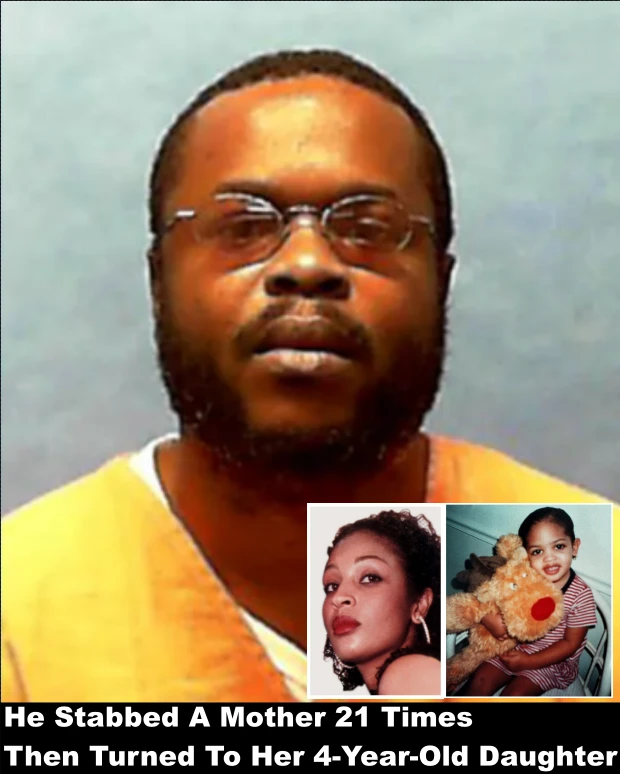
Richard Knight, 47, had been staying with family in the home shared with 28-year-old Odessia Stephens and her 4-year-old daughter, Hanessia Mullings. According to court records, tensions had been rising, and Stephens asked Knight to leave the residence. What happened next moved quickly beyond any chance of peaceful resolution.
Investigators say Knight stepped outside at first, but soon returned. He went into the kitchen, armed himself with knives, and entered the bedroom where Stephens and her young daughter were in bed. The attack that followed was prolonged and severe.
Stephens suffered 21 stab wounds, many focused on her neck, along with injuries to her chest, back, and chin. Evidence showed she fought back, with defensive wounds on her hands and arms. She also showed signs of strangulation. Despite her efforts to protect herself, the assault proved fatal.
The violence then shifted to her 4-year-old daughter, Hanessia. Court documents indicate the child was also stabbed and strangled, sustaining injuries to her chest, neck, and hand, including defensive wounds that suggested she tried to shield herself. At one point during the attack, the knife broke, yet authorities say Knight continued until it was no longer usable, even cutting his own hand in the process.

Both Odessia Stephens and Hanessia Mullings died at the scene.
Afterward, Knight attempted to clean up by showering and changing clothes, actions later seen as efforts to remove evidence. But law enforcement arrived quickly after being alerted. When officers knocked, Knight tried to flee through a window but was apprehended shortly after.
The case moved through the courts with strong evidence presented. In 2006, Knight was convicted of two counts of first-degree murder. The following year, he received a death sentence. Appeals followed over the years — upheld in 2011 and again in later reviews — keeping the case active for more than two decades.
On April 23, 2026, Florida Governor Ron DeSantis signed a death warrant, scheduling Knight’s execution by lethal injection for May 21, 2026, at Florida State Prison. The development brought renewed focus to a tragedy that began with a simple request to leave and ended in irreversible loss.
For the families left behind, the years since that June day have been marked by grief that no legal outcome can fully resolve. The names Odessia Stephens and Hanessia Mullings remain a painful reminder of lives cut short in a moment of unchecked anger.
This case continues to highlight how quickly everyday conflicts can spiral into tragedy — and how long the search for justice can stretch afterward. Even now, with a final date approaching, the central question echoes: how does an ordinary request turn into something that can never be undone?