On the night of June 7, 1998, James Byrd Jr. was simply trying to get home. It was a familiar routine in Jasper, where he often walked because a seizure disorder had kept him from driving. He was 49 years old, a father of three, known by those around him as a friendly man with a quick sense of humor and a love for music. Nothing about that night suggested it would be his last.
As he walked along the road after leaving a gathering, a gray pickup truck pulled over. Inside were three men—Shawn Berry, Lawrence Russell Brewer, and John William King. They offered him a ride. It was a simple decision, one that likely felt ordinary in the moment. He accepted.
But the truck did not take him home.
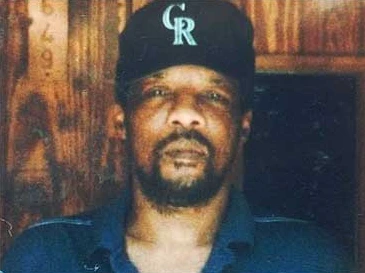
Instead, they drove him out to a remote wooded area outside Jasper. What followed was an act of violence so extreme that it would later be described as one of the most brutal hate crimes in modern American history. According to investigators, Byrd was beaten and humiliated before the attack escalated further. The men then used a heavy logging chain, fastening it to his ankles and attaching the other end to the back of the truck.
They drove off.
For miles, along a dark stretch of asphalt road, Byrd was dragged behind the vehicle. Evidence later showed that the attack covered approximately three miles. During that time, his body struck the pavement repeatedly, the force of the motion causing catastrophic injuries. At some point during the dragging, his body hit a concrete culvert, an impact that proved fatal.
But the truck did not stop immediately.
Investigators later documented 81 separate locations along the road where physical evidence of the crime was found—each one marking part of a timeline that unfolded in the darkness, unseen by most of the world at the time. What began as a ride offered on a quiet road became a sequence of violence that stretched across miles.
Afterward, the men disposed of what remained of Byrd’s body near a cemetery traditionally used by Black residents. Then, in a detail that would later shock many, they continued with their night, attending a social gathering as if nothing had happened.
The discovery of the crime the next morning sent shockwaves through the community. Law enforcement quickly began an investigation, following the trail of evidence left behind. The nature of the attack—its brutality, its duration, and the apparent motive—drew national attention.
As details emerged, the case became more than a local tragedy. It forced a broader confrontation with issues of racial violence, hate crimes, and the limits of justice in addressing acts driven by prejudice.
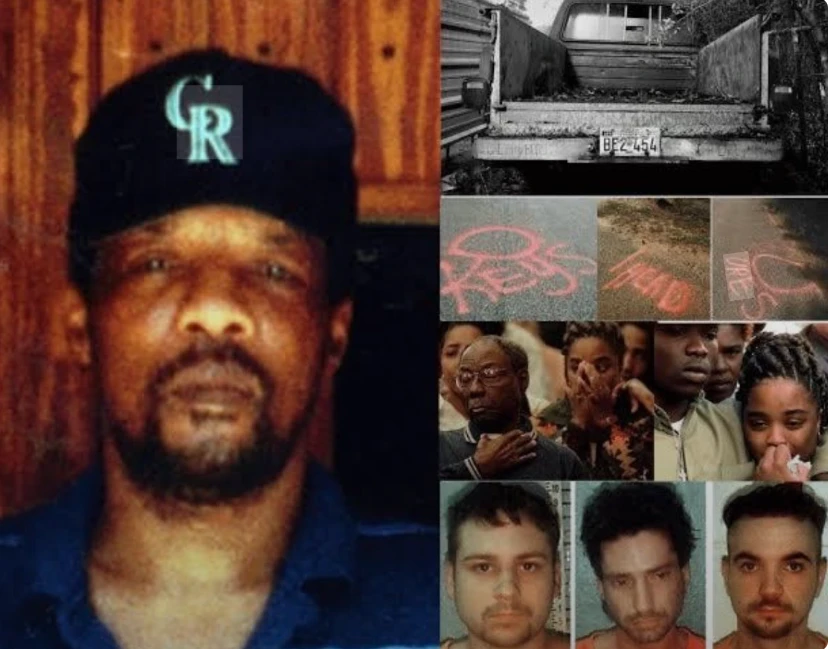
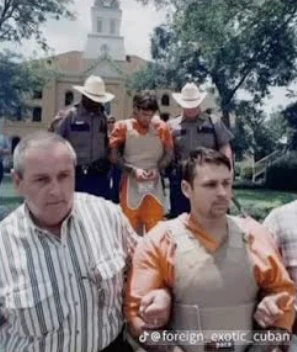
All three men were arrested and charged. During the legal proceedings, prosecutors presented evidence not only of the physical acts committed, but also of the ideology behind them. The case was prosecuted as a hate crime, with the attack understood not as a random act of violence, but as one rooted in racial hatred.
The outcomes were severe. Lawrence Russell Brewer and John William King were sentenced to death and later executed. Shawn Berry received a sentence of life in prison. The legal system delivered accountability, but for Byrd’s family, justice could not restore what had been taken.
Yet the impact of his death extended far beyond the courtroom.
In Texas, lawmakers passed the James Byrd Jr. Hate Crimes Act, strengthening penalties for crimes motivated by bias. More than a decade later, in 2009, the federal government enacted the Matthew Shepard and James Byrd Jr. Hate Crimes Prevention Act, expanding the definition of hate crimes and increasing federal authority to prosecute them. The law was signed by Barack Obama, marking a significant step in addressing crimes driven by hate at a national level.
For many, Byrd’s name became more than a memory—it became part of a turning point. His story entered public consciousness as a reminder of how deeply violence rooted in prejudice can affect not just one life, but an entire society.
Still, beyond the laws and the headlines, there remains the personal reality.
A man walked down a road, expecting to make it home.
He trusted the wrong people.
And in a matter of hours, his life was taken in a way that would leave a lasting mark on a nation.
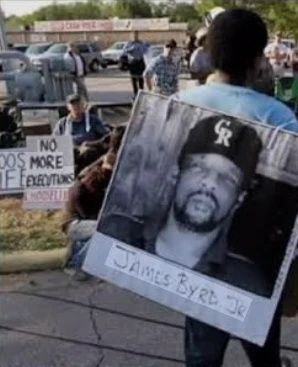
Today, his story is remembered not only for its tragedy, but for what it revealed—and what it changed. It is a story about violence, about accountability, and about the difficult work of confronting hatred where it exists.
Because even as laws evolve and awareness grows, one question continues to linger quietly beneath everything else—
how does something like this begin… and how do we make sure it never happens again?