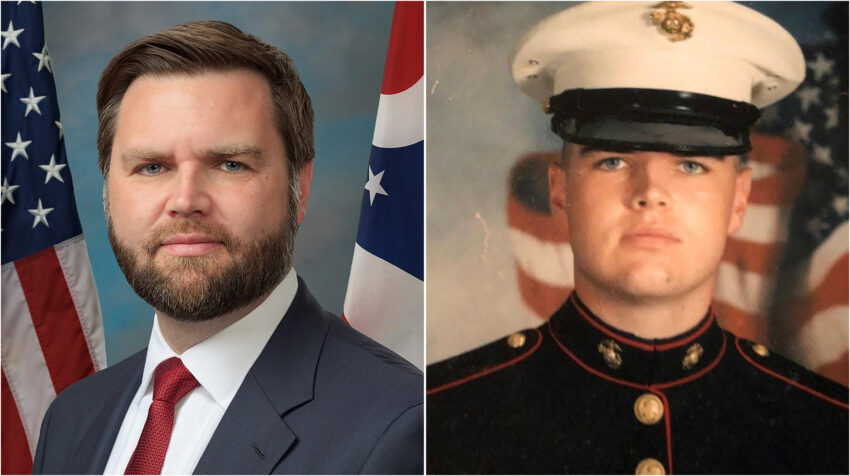
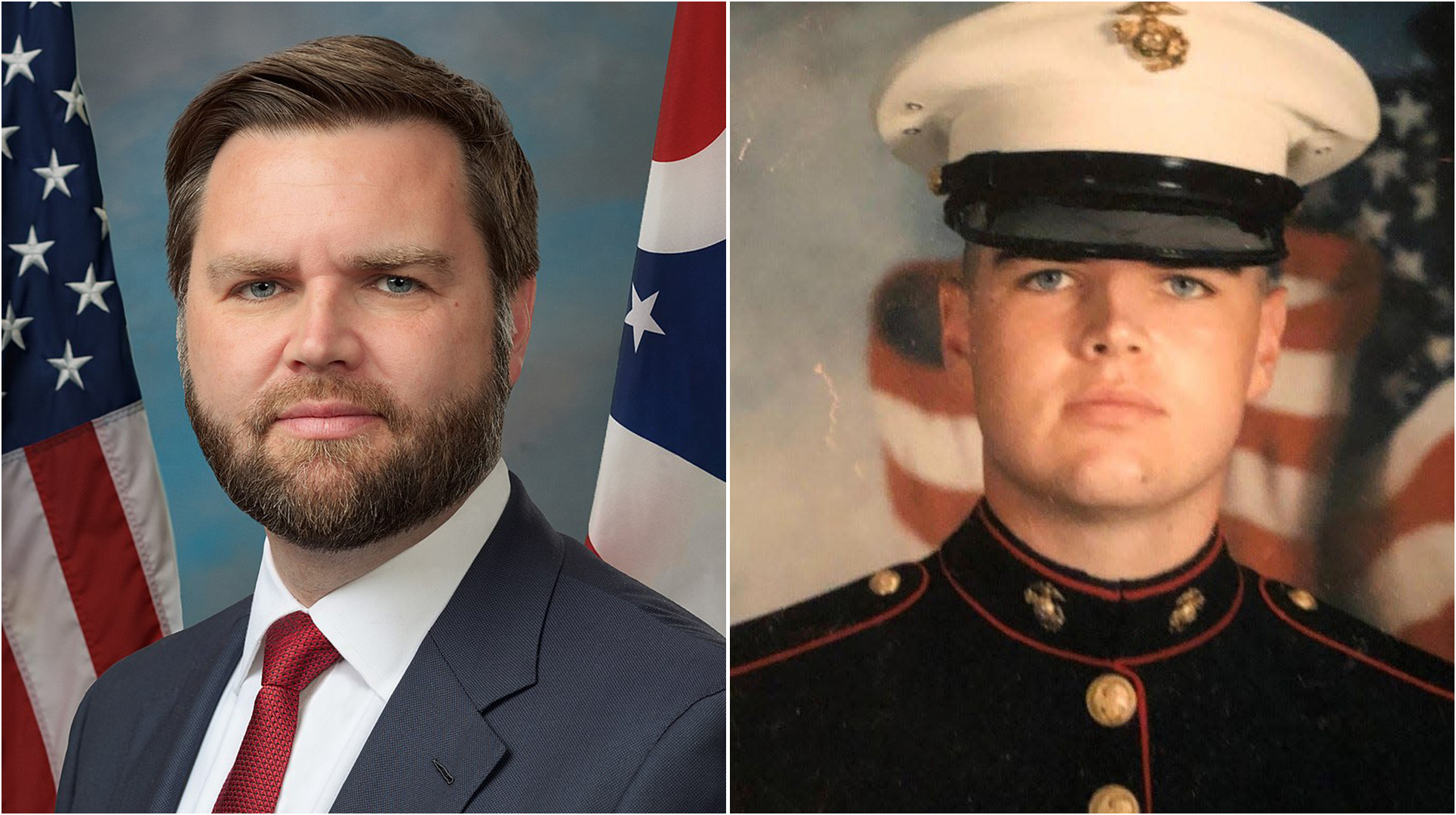
In discussions about political leadership, personal history often becomes a defining element of how policies are formed and priorities are set. For J. D. Vance, one aspect of his background continues to draw attention: his service in the United States Marine Corps. Supporters argue that this experience provides a perspective that extends beyond traditional political pathways, particularly when it comes to issues affecting veterans.
Before entering public office, Vance’s early life was marked by financial challenges. In interviews and public accounts, he has described the limited opportunities available to him at the time. Military service, he has said, offered a structured path forward—providing education, discipline, and a sense of direction. For many Americans, this pathway is familiar, as military enlistment has long served as both a career and a stepping stone to broader opportunities.
Service in the Marine Corps is often associated with rigorous training and a strong emphasis on discipline and teamwork. Those who have served frequently describe it as an experience that shapes not only professional skills but also personal identity. In Vance’s case, this period is often cited as formative, influencing how he approaches leadership and public responsibility.
Advocates for veterans’ issues have pointed to Vance’s background as a factor in his policy focus. They argue that individuals who have served may carry a more direct understanding of the challenges faced by service members after they return to civilian life. These challenges can include access to healthcare, employment transitions, and long-term support systems.
At the policy level, discussions around veterans’ care remain a consistent topic in national debate. Lawmakers from across the political spectrum have emphasized the importance of ensuring that former service members receive adequate resources. In this context, Vance’s supporters highlight his efforts to engage with these issues, viewing them as an extension of his personal experience rather than solely a political position.
Critics, however, note that military service alone does not define policy outcomes. They emphasize that legislative effectiveness depends on a range of factors, including collaboration, funding decisions, and broader governmental priorities. From this perspective, while personal experience can inform perspective, it must be accompanied by concrete actions and measurable results.
This contrast reflects a broader dynamic in public life. Personal narratives can resonate strongly with the public, offering a sense of authenticity and relatability. At the same time, governance requires translating those narratives into policy decisions that address complex and evolving needs.
What remains clear is that military service continues to hold significant cultural and political weight in the United States. It is often associated with values such as duty, sacrifice, and commitment—qualities that many voters consider important in leadership. For figures like J. D. Vance, this background becomes part of a larger story about how personal experience intersects with public responsibility.
As conversations around veterans’ issues continue, the role of leaders with military experience will likely remain a point of interest. Whether viewed as a source of insight or simply one element among many, such experiences contribute to the ongoing discussion about how best to support those who have served.
Ultimately, the connection between service and leadership is not defined by a single narrative. It is shaped by how experiences are translated into action—and how those actions impact the lives of the people they are meant to serve.
The roar of engines and the smell of burning rubber might seem worlds away from the quiet halls of the Capitol. Yet for JD Vance, the adrenaline of the NASCAR track has become a significant fixture in his public and personal life recently.
While many politicians attend sporting events for simple optics, Vance appears to have developed a genuine affinity for the culture of speed. His presence at the Charlotte Motor Speedway for the Bank of America ROVAL 400 was more than just a quick campaign stopover.
Flanked by his family, the Vice President was seen deeply engaged with the mechanics of the sport. He spent considerable time in the pit area, a place where the true heart of racing beats, showing a curiosity that went beyond standard pleasantries.
Veteran racer Kyle Busch and team owner Richard Childress hosted Vance during his visit. Childress later remarked on how natural the interaction felt, noting that Vance seemed to truly relish the high-energy environment and the dedicated fan base that defines NASCAR.
The interest did not end when the race concluded or the election cycle closed. In a move that surprised many, Vance made a special trip to the Richard Childress Racing museum in North Carolina long after the initial excitement of the 2024 season.
This follow-up visit suggested a deeper connection to the history and heritage of American racing. By exploring the evolution of the sport, Vance is signaling an appreciation for the technical innovation and the rugged individualism that the racing community holds dear.
For Vance, the racetrack represents a cross-section of the country he serves. It is a place where tradition meets cutting-edge technology, and where the values of hard work and competitive spirit are on full display every single weekend of the year.
Critics might view these appearances as calculated, but the consistency of his engagement tells a different story. Whether he is chatting with pit crews or admiring vintage stock cars, his enthusiasm for the sport appears to be accelerating with every passing lap.
As he balances the heavy weight of national governance, these excursions to the track provide a unique window into his personality. It seems the man tasked with navigating complex policy also enjoys the simple, raw power of a V8 engine screaming.