JACKSONVILLE, Fla. — In a monumental moment for American medicine, the Mayo Clinic in Jacksonville is poised to become the first medical center in the United States and the entire Western Hemisphere to offer carbon ion therapy — a cutting‑edge form of radiation treatment that holds promise for patients with some of the most difficult‑to‑treat cancers.
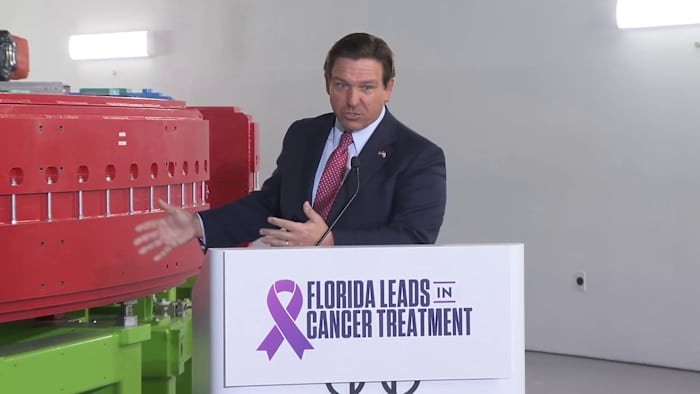
The milestone was announced earlier this year at a press event featuring Florida Governor Ron DeSantis, First Lady Casey DeSantis, and Mayo Clinic President and CEO Dr. Kent Thielen, who together heralded the program as a major step forward in the fight against cancer.
Carbon ion therapy is part of a class of heavy particle therapies that use charged particles — in this case, carbon ions — to target and destroy tumor cells with an unprecedented level of precision. Unlike conventional radiation therapy, which uses X‑rays, carbon ions deposit most of their energy right at the tumor site, reducing damage to surrounding healthy tissue.
This heightened precision is especially important for cancers that resist traditional treatments, such as certain sarcomas, head and neck tumors, and tumors located near critical structures. In some cases, carbon ion therapy has demonstrated superior biological effectiveness compared with proton therapy, another advanced form of particle radiation already used in select U.S. centers.
Although carbon ion therapy has been available in parts of Europe and Asia for years, no clinical facility in North America has previously offered it — making the Mayo Clinic’s program a historic first for this hemisphere.
The heart of the initiative is the Duan Family Building on the Mayo Clinic Jacksonville campus — a 228,000‑square‑foot integrated oncology facility that will eventually house carbon ion therapy equipment alongside traditional and other advanced cancer treatments, including proton therapy and immunotherapy.
Construction and build‑out of the heavy particle treatment infrastructure have been underway since the facility’s opening. Mayo Clinic expects proton therapy to begin treating patients first, with carbon ion therapy slated to become available at scale as early as 2028.
“This marks a new chapter in American cancer care,” said Dr. Kent Thielen in a statement announcing the program. “By integrating carbon ion therapy with other treatment modalities, we’re providing patients with more options and a renewed sense of hope — especially for cancers that are resistant to current therapies.”
The announcement was not only a medical milestone but also a political one. Governor DeSantis, whose administration has pushed for Florida to become a hub of biomedical innovation, highlighted the importance of the program in expanding access to cutting‑edge treatments on U.S. soil.
“Today, Florida stands at the forefront of cancer research and treatment,” said DeSantis at the Jacksonville press event. “Mayo Clinic’s investment in carbon ion therapy reflects our state’s commitment to innovation and patient care that takes aim at cancer in ways once thought impossible.”
Carbon ion therapy represents a sophisticated evolution of particle radiation. Unlike proton therapy, which uses lighter particles, carbon ions are heavier and can create more complex DNA damage within tumor cells — damage that is often more difficult for cancer cells to repair. Researchers believe this effect contributes to better tumor control, particularly in cases where cancers have shown resistance to other forms of treatment.
Physically, carbon ions travel through tissue with reduced lateral scattering and a sharp energy deposition peak — known as the Bragg peak — allowing clinicians to focus radiation doses on tumors while sparing adjacent healthy structures. This advantage is especially significant for tumors located near the spinal cord, brainstem, or other sensitive areas.
Clinicians and physicists at Mayo Clinic have collaborated with international partners and technology firms to bring this technology to the U.S., building on decades of research and clinical experience from carbon ion centers overseas.
For patients facing cancers that have historically been difficult to treat, the availability of carbon ion therapy on U.S. soil could be transformative. In countries where carbon ion therapy has been practiced for years, clinicians report promising outcomes, particularly for radioresistant tumors that have not responded well to other radiation treatments.
Moreover, Mayo Clinic’s program is expected to support clinical trials and research aimed at optimizing treatment protocols, identifying which cancer types benefit most from heavy particle therapy, and exploring combinations with immunotherapy and other modalities.
“This is not just about access; it’s about advancing our understanding of how to best treat complex cancers,” said one Mayo Clinic researcher involved in the project. “We are building a foundation for future innovations in precision oncology.”
As Mayo Clinic prepares for the rollout of this cutting‑edge treatment, anticipation is growing among the medical community and prospective patients alike. Carbon ion therapy may open doors to treatment options previously unavailable in the U.S., giving many a chance at improved outcomes and quality of life.
In a field where innovation is constantly evolving, the launch of America’s first carbon ion therapy program represents both a symbolic and practical leap forward — a reminder that advances once confined to distant research hubs can become reality at home.
Whether cancer patients can access these treatments sooner rather than later may depend on regulatory approvals, insurance coverage policies, and ongoing clinical trials — but the foundation is now firmly in place.
The program’s launch not only reshapes the landscape of cancer care but also signals a new era of medical possibility — one where science, technology, and compassion intersect to expand hope for patients and families across the nation.