
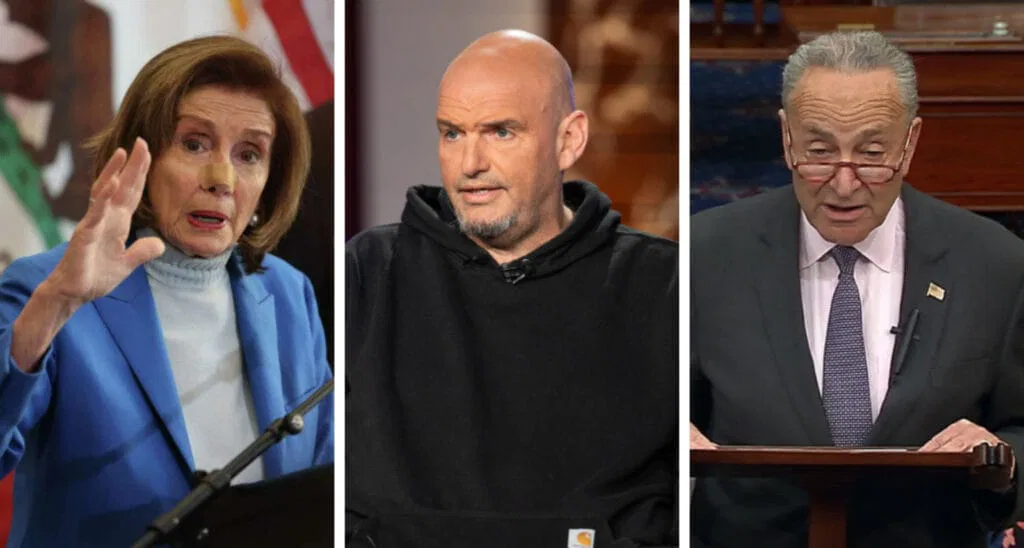
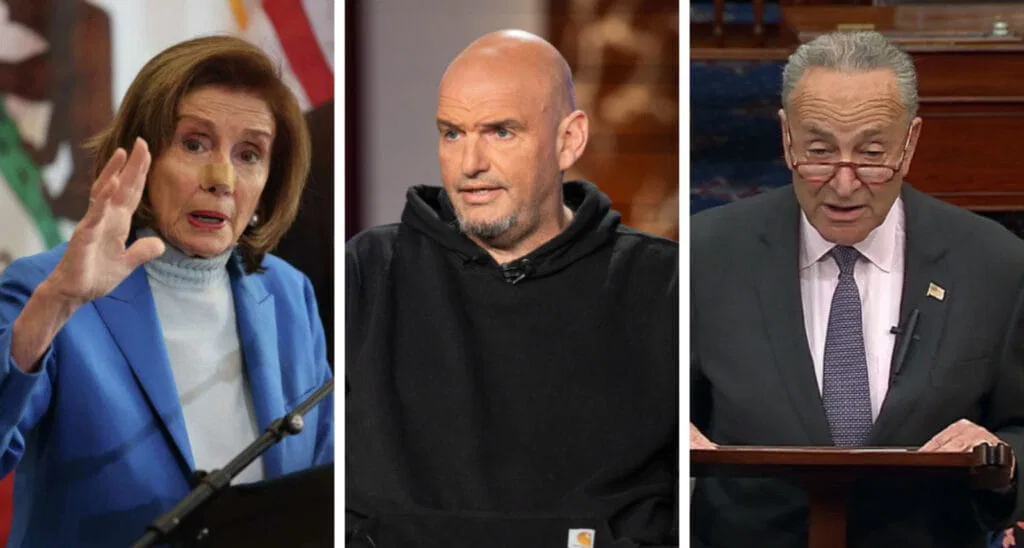
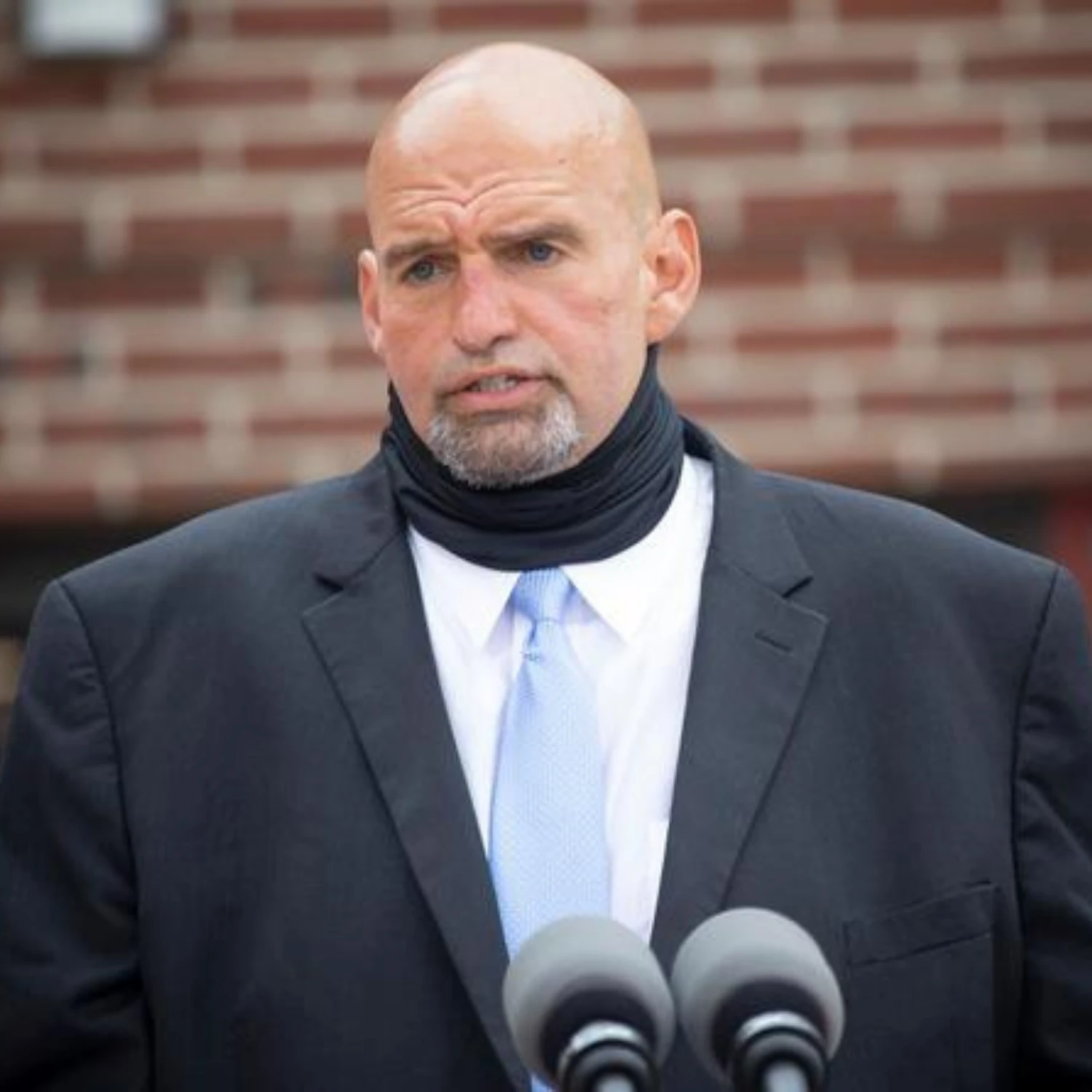
Pennsylvania Democratic Sen. John Fetterman broke with Democratic Party leadership this week, signaling his support for voter identification laws, saying he does not view showing ID to vote as unreasonable.
Senate Minority Leader Chuck Schumer, D-N.Y., and almost all Senate Democrats have turned down the Safeguarding American Voter Eligibility (SAVE) Act. This bill, which would protect the integrity of elections, passed the House earlier this year but has stalled in the U.S. Senate.
Schumer has called the bill “Jim Crow 2.0” because he thinks it would keep people from voting instead of making elections safer. But Fetterman, who has repeatedly disagreed with his party’s messages and positions, pushed back against Schumer’s framing of the bill.
“I would never refer to the SAVE Act as like Jim Crow 2.0 or some kind of mass conspiracy. But that’s part of the debate that we were having here in the Senate right now. And I don’t call people names or imply that it’s something gross about the terrible history of Jim Crow,” Fetterman told Fox News’ Kayleigh McEnany.
The bill would require voters to present photo identification before casting ballots, require proof of citizenship in person when registering to vote, and mandate states remove non-citizens from voter rolls.
Fetterman would not say whether he supports the bill outright. However, he noted that “84% of Americans have no problem with presenting IDs to vote.”
“So it’s not like a radical idea,” Fetterman said. “It’s not something — and there already are many states that show basic IDs. So that’s where we are in the Senate.”
Right now, there aren’t enough votes to get past the Senate’s 60-vote filibuster limit.
Sen. John Kennedy (R-LA) is urging Republicans to pursue a dramatic procedural shift to pass the SAVE America Act — by using budget reconciliation to bypass a Democratic filibuster and approve the bill with a simple majority.
Under current plans, Senate Majority Leader John Thune has scheduled the SAVE America Act for consideration as standard legislation, meaning it would require 60 votes to invoke cloture and overcome a filibuster. With Republicans holding 53 seats, at least seven Democrats would need to join them.
Kennedy argues that approach is unnecessary. Speaking on the Senate floor, Kennedy said Republicans should attempt to pass the measure through reconciliation — a parliamentary process created under the Congressional Budget Act of 1974 that allows certain budget-related legislation to pass with just 50 votes plus the vice president.
That means, if structured properly, the bill could pass with unified Republican support and a tie-breaking vote from Vice President JD Vance.
“That’s how we passed the one big, beautiful bill,” Kennedy said, referencing prior GOP legislation enacted over Democratic opposition. He also noted that Democrats used reconciliation in 2021 to pass the $1.9 trillion American Rescue Plan on a party-line vote.
Kennedy acknowledged that reconciliation is not simple.
“Anything you propose through reconciliation has to be paid for. We can find the money,” he said. “And anything you pass through reconciliation has to conform with the contours of the Budget Control Act. We call that giving a provision a Byrd bath.”
The so-called Byrd Rule limits reconciliation to provisions directly tied to federal spending, revenue, or the debt limit. Measures considered “extraneous” — meaning their budgetary impact is merely incidental to policy changes — can be struck by the Senate parliamentarian.
“Our parliamentarian decides what passes muster under the Budget Control Act and what doesn’t,” Kennedy said.
He urged Republican leadership to enlist legal experts to draft a version of the SAVE Act that could survive what he described as the “Byrd bath.”
“We have yet to try going to these smart lawyers … and saying, ‘Craft us a SAVE Act that will pass muster under the Budget Control Act and can be blessed by the parliamentarian,’” Kennedy said.
The SAVE America Act, supported by President Trump, would require proof of U.S. citizenship to register to vote in federal elections, mandate photo identification at polling places, and restrict mail-in ballots to specific circumstances such as military service, illness, disability, or travel.
Conservatives argue the bill is essential to restoring public trust in elections. Critics say documented cases of non-citizen voting are rare and warn that stricter requirements could burden eligible voters.
Frustration among Republican activists has grown as the bill faces procedural hurdles. Last year, when the Senate parliamentarian ruled against a Medicaid-related provision in a separate GOP bill, some conservative leaders criticized the unelected official’s influence over legislative outcomes.
Kennedy stopped short of calling for rule changes or removal of the parliamentarian, instead emphasizing that the Senate should test the limits of reconciliation before conceding defeat.
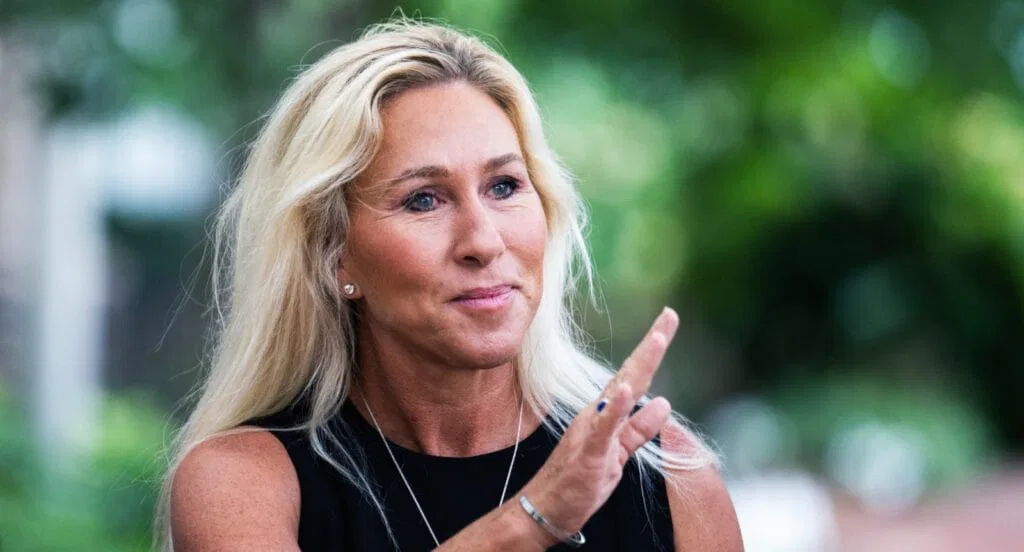
The run-off election in northwest Georgia to replace Marjorie Taylor Greene, a Trump ally-turned-critic who left her seat in Congress in January, has been called.
VoteHub projected that Republican Clay Fuller has defeated Democrat Shawn Harris in the run-off election for Georgia’s 14th Congressional District.
It’s important to remember that turnout is usually low in special elections, especially special runoff elections. This means that voter enthusiasm can have a bigger impact on the outcome than in bigger elections.
The general primary for the full term is on May 19, so these candidates may not be done fighting each other yet. Last month, Fuller and Harris both made it onto the ballot, along with many of the people they ran against in the special election in March.
President Donald Trump endorsed Fuller, a former prosecutor and Air Force veteran, and his victory tonight will provide Speaker Mike Johnson with more flexibility in his small House Republican majority.
Fuller has repeatedly said he would be “a warrior for President Trump on Capitol Hill,” but other Republican candidates have also promised to support the president’s plans fully.
“There’s a lot of folks who talk a big conservative game, but when it comes down to doing conservative stuff, they’re nowhere to be found,” Moore said Monday in an interview on a conservative talk radio show on WLAQ, a station in the district based in Rome, Georgia. “We need to find a fighter, a legislator, who’s willing to bring that fight with true vigor.”
The 14th Congressional District is massive, covering 10 counties from the Atlanta suburbs to the Appalachian foothills along the Tennessee state line.
Despite being Trump’s stronghold, the 14th Congressional District is home to a significant number of Democrats and independents, which could potentially unsettle Republicans in a special election.
Earlier this year, President Trump criticized Greene during a rally, days before she left Congress in early January.
Trump made the remarks at a campaign rally in Rocky Mount, North Carolina. During his speech, Trump referred to Greene as a “stone-cold liberal” and “highly neurotic,” Mediaite reported.
Trump suggested their relationship deteriorated because he did not return her phone calls frequently enough.
Greene recently announced she would resign from Congress following months of tension with Republican leadership. She has publicly criticized members of her own party on issues including affordability, healthcare, and the handling of the Epstein files.
Greene said she decided to leave Congress to avoid what she described as a “hateful primary” backed by Trump.
Trump mocked Greene by referring to her as “Marjorie Traitor Brown.” He said he chose the nickname because, in his words, “green turns to brown under stress.”
“What the hell happened to her?” Trump said during the rally. He claimed Greene appears frequently on CNN and suggested that marked a shift in her political alignment.
Trump said the demands of the presidency made it impossible to speak with every member of Congress regularly.
Trump told the crowd he is responsible for managing relationships with hundreds of lawmakers, dozens of senators, and foreign leaders, in addition to his family.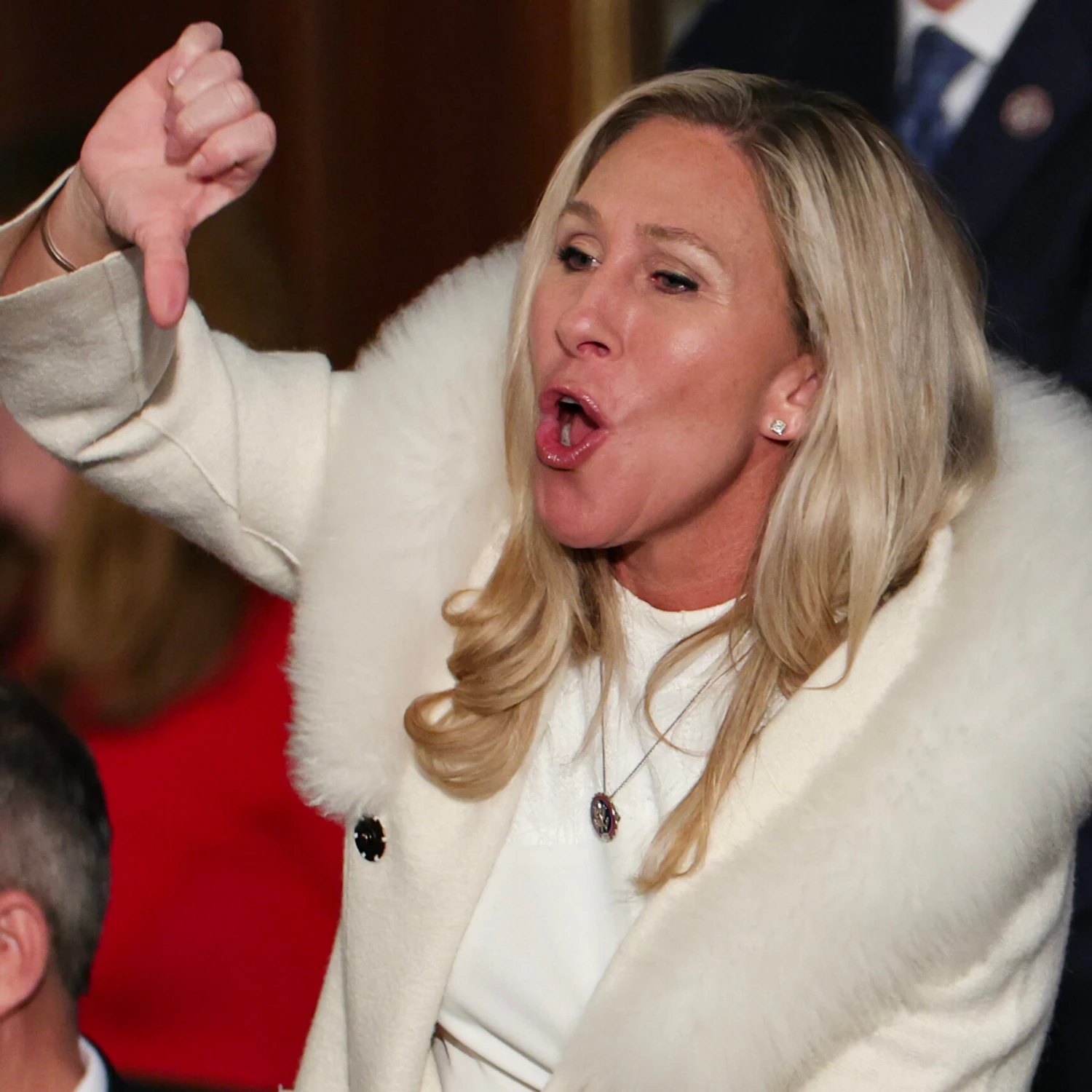
“You can’t call a president every single day,” Trump said. He said Greene complained publicly after he stopped returning her calls.
Trump again described Greene as “highly neurotic” later in his remarks. He dismissed suggestions that Greene was “brave” for resigning from Congress. Trump said he would have endorsed a primary challenger who would have defeated Greene.
“No, brave would be to stay,” Trump said. Greene has not publicly responded to Trump’s remarks.