Donald Trump’s Tuesday rally in Mount Pocono, Pennsylvania, was a dual-purpose political spectacle: an attempt to seize control of the affordability narrative while simultaneously using a shocking, baseless attack on Representative Ilhan Omar as a political lightning rod to energize his base. The sheer volume of the crowd’s response to the attacks, combined with criticism from an internal Fox News voice, underscored the growing panic within the Republican Party about their prospects in the 2026 midterms.
The centerpiece of Trump’s rally spectacle was his relentless, false attack on Congresswoman Ilhan Omar, a naturalized U.S. citizen who came to the country as a refugee. Trump repeated the long-standing, unverified claim that Omar “married her brother in order to get in.”
The moment Trump launched the attack—after railing against the “great big Minnesota scam” and Governor Tim Walz—the crowd went berserk, chanting, “Send her back!” Trump reveled in the reaction, using the inflammatory claim for maximum effect: “Can you imagine if Donald Trump married his sister?… Do you think I’d last for about two hours or would it be something less than that?”
This line of attack—which has been repeatedly debunked by multiple investigations and fact-checks and is a claim Omar has long called “absolutely false and ridiculous”—is being weaponized by the administration. Former ICE Director Tom Homan has confirmed he is now reviewing Omar’s immigration files over the alleged fraudulent marriage, an action which, regardless of its legal basis, keeps the inflammatory narrative in the news cycle. This strategy is designed to achieve two things: to satisfy the base’s desire to see perceived enemies of the “America First” agenda punished, and to distract from the administration’s own economic and legislative struggles.
While the media focused on the Omar controversy, the true driver of the rally was the Republican Party’s looming midterm disaster. Trump, who has been in office for nearly a year, had to leave the White House to campaign for Republicans in a critical swing state, a fact that drew harsh criticism from commentators, even on Fox News.
Former WWE superstar and Fox News commentator Tyrus called out the GOP establishment’s stunning lack of effort: “I absolutely hate that the president has to leave the White House to go campaign for these Republicans. Republicans, step up. Why does daddy have to come save you?”
This blunt assessment highlights a massive structural issue for the GOP:
Dependence on the Cult: Tyrus noted that when Trump shows up, the arena is sold out, but when he leaves, there are only “four people and two of them are the Republicans’ family members.” This dependency suggests that many Republican candidates lack the grassroots energy and personal appeal needed to win on their own, leaving them reliant on Trump’s presence to mobilize the base.
Failure to Campaign: The criticism is that the president has “important things to do,” yet he is forced to fly out and bail out “lifeless Republicans” who are failing to knock on doors, engage on social media, or fight the narrative being set by the Democrats.
History shows that the party controlling the White House often loses seats in the midterms. Trump is actively trying to defy this historical trend, not just to protect his own agenda—which is already struggling to get appointees approved even with a Republican-controlled Senate—but because the Republican party is perceived as too weak, too complacent, or too internally divided to win without him.
Despite the fire and fury directed at Ilhan Omar, the rally’s stated purpose was economic: to “road-test his claims that he’s tackling Americans’ affordability woes.”
Trump’s message was a variation of his new talking point: “They caused the high prices and we’re bringing them down.” This messaging is a direct response to abysmal polling that shows voters do not trust the administration’s economic leadership.
Trump’s need to fly to Mount Pocono, a competitive district in a critical swing state, underscores the high stakes. His ambitious agenda—from tariffs to a possible income tax cut and infrastructure—cannot survive if the GOP loses the majority. The midterms are not just about winning seats; they are about securing the legislative ability to implement the policies Trump believes are necessary to fix the economy.
The Mount Pocono rally, therefore, was a chaotic, spectacular expression of political desperation: using a divisive, racist, and unproven smear to whip up the base, all while simultaneously scolding the party for not being strong enough to campaign without the President’s personal intervention.
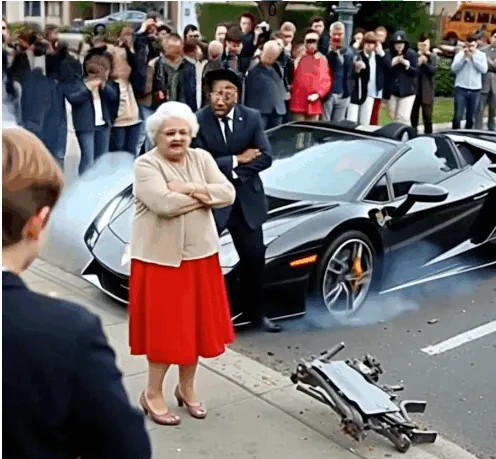
Marcus inhaled deeply, forcing himself to stay composed as emotions churned inside him. He knew this confrontation went far beyond a dented Lamborghini—it spoke to patterns he had endured his whole life: bias, avoidance of accountability, and the unequal weight of consequences.
“Karen, let me be very clear,” Marcus began, his voice steady but edged with resolve. “This isn’t just about a car or a neighborhood squabble. This is about responsibility. Your son made a choice, and choices have consequences.”
Karen’s jaw tightened, a flicker of irritation flashing across her face. “Marcus, I get that you’re angry,” she replied quickly, “but think about Tyler’s future. A police report could destroy his chances of college. Do we really need to drag the authorities into this? Can’t we just resolve it privately?”
Marcus shook his head, his gaze unwavering. “That’s exactly the problem, Karen. You want to protect Tyler from accountability while I’m left to carry the cost. What lesson does that teach him—or anyone else? Actions matter. Ignoring that sends the wrong message.”
Around them, neighbors whispered among themselves, some nodding in solidarity with Marcus, others swayed by Karen’s appeal for leniency.
Finally, Tyler broke his silence. His voice cracked with remorse. “I’m sorry, Mr. Reed. I didn’t mean for this to happen. I was just—”
Marcus cut in gently but firmly. “Tyler, this isn’t just about money or property. You need to understand the weight of what you did—the damage, the recklessness, the disrespect. People’s lives and livelihoods are affected by choices like yours.”
Karen glanced between the two men, her confidence slipping into uncertainty. “Then… what do you want us to do?” she asked, her tone edged with desperation.
Marcus paused, then answered with calm authority. “First, we file a police report. This will go on record, but it doesn’t end Tyler’s future—it gives him a chance to face reality and learn from it. Second, I expect your family to cover the cost of repairs. We can arrange a payment plan, but Tyler should contribute. He needs to put in the work.”
The murmurs in the crowd faded into silence as Karen absorbed his words. At last, she exhaled and nodded reluctantly. “Alright. We’ll do it your way.”
Marcus inclined his head, feeling the tension in his chest loosen. “Good. Then let’s make this a turning point—for Tyler, for this community, for all of us.”
As Karen led her son back home, Marcus stood by the wrecked car, a quiet determination settling over him. The battle wasn’t just about justice for one damaged Lamborghini. It was about the broader fight for fairness and accountability—a fight he had carried his whole life. Looking at the shattered glass and twisted metal, he felt a renewed sense of purpose. This was more than survival; it was about opening doors for others to demand what was right.