When Lina St. Preux, 44, was six months pregnant, doctors informed her that her unborn son had a congenital heart defect. Despite the devastating news, she remained determined to give Chrisner Claccemus every possible chance at life, relying on her faith and the Holtz Children’s Hospital team.
Chrisner was born on January 16, 2013, diagnosed with hypoplastic left heart syndrome, a defect that severely compromises blood flow by underdeveloping the heart’s left side. His treatment began with three scheduled heart procedures, designed to stabilize his heart function and ensure survival.
At age two, Chrisner suffered a cardiac arrest in his mother’s arms, followed by two more arrests in subsequent days. His fragile condition forced doctors to pause scheduled surgeries and focus on immediate life-saving interventions.
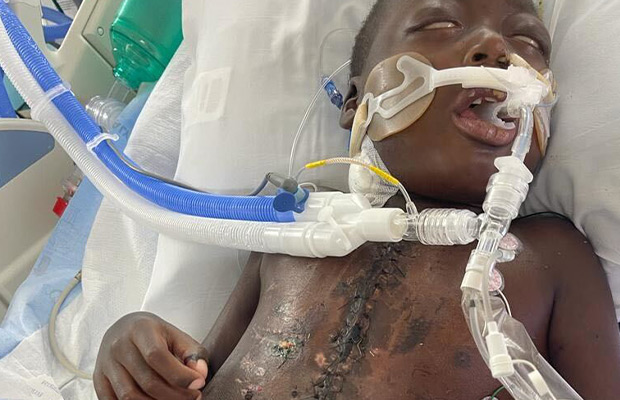
During this frightening time, Lina prayed for her son’s life while relying on the dedication of Holtz Children’s nurses and doctors. They placed Chrisner on a breathing tube and extracorporeal membrane oxygenation, or ECMO, to allow his heart and lungs to rest while circulating oxygenated blood throughout his body.
Once stabilized on ECMO, Chrisner was taken to the operating room for urgent intervention. Drs. Leonardo D. Mulinari and Sandeep Sainathan collaborated to devise a strategy to save his life amid rapidly declining cardiac function.
Racing against time, Dr. Sainathan implanted a HeartMate 3 ventricular assist device, the first pediatric hypoplastic left heart patient in the world to receive this adult device. The VAD maintained cardiac circulation and supported Chrisner until a heart transplant match was found.
During these procedures, Lina struggled to hold back tears, but the staff continually reassured her of Chrisner’s care and safety. “We’re treating him as if he were our own son,” one doctor told her, offering hope amidst uncertainty.
The VAD stabilized Chrisner for several months until a compatible donor heart became available in July 2022. Drs. Sainathan and Mulinari successfully performed the transplant with post-operative care led by Dr. Paolo Rusconi and the pediatric cardiac ICU team.
Chrisner faced a challenging recovery, complicated by cachexia, which caused significant muscle and tissue loss. With intensive rehabilitation, he regained strength and functionality, returning to a normal life with renewed energy and vitality.
A few weeks after surgery, Chrisner left the pediatric ICU and began rehabilitation at Christine E. Lynn Rehabilitation Center. Physical, occupational, and speech therapies helped him regain independence and resume everyday activities with enthusiasm.
Through therapy, Chrisner returned to his playful, curious self, enjoying favorite foods like pizza, sipping Gatorade, and playing with toys such as Buzz Lightyear. His mother watched with relief and joy as he reintegrated into family life with laughter and energy.
By October, Chrisner completed rehabilitation therapy, achieving significant progress in all domains. His success highlighted the impact of coordinated care, multidisciplinary collaboration, and personalized rehabilitation strategies.
Chrisner continues outpatient therapy at the Lynn Rehabilitation Center while preparing to return to school and resume a typical childhood. His mother emphasizes that faith and the dedicated Jackson Health team were instrumental in providing a second chance at life.
“I pray to God every day for Jackson,” Lina said, reflecting on the life-saving interventions and compassionate care her son received. “If it weren’t for Jackson, my son wouldn’t be here today.”
Chrisner’s journey illustrates the life-saving potential of pediatric cardiac innovation and collaboration. From ECMO stabilization to the world-first pediatric VAD placement and heart transplant, every step exemplified expert planning and execution.
His story underscores the critical importance of early intervention, family-centered care, and specialized pediatric cardiac expertise. Holtz Children’s Hospital provided not only technical skill but emotional support and guidance throughout every stage.
The combination of faith, family advocacy, and cutting-edge medicine allowed Chrisner to survive a defect that is often fatal in early childhood. His recovery is a testament to resilience, innovation, and the tireless dedication of pediatric cardiac teams.
From birth through transplant and rehabilitation, Chrisner’s journey exemplifies the triumph of hope and expertise over a life-threatening congenital condition. His progress highlights the transformative potential of comprehensive pediatric cardiac care.
Every milestone, from stabilizing with ECMO to walking independently after rehabilitation, reflects the integration of advanced medical interventions and family support. Chrisner’s experience serves as an inspiring example of pediatric medicine’s impact on a child’s life.
The Johnson family’s trust in Holtz Children’s staff ensured continuity of care, specialized interventions, and a holistic approach that addressed both medical and emotional needs. This collaboration was key to Chrisner’s survival and thriving.
Looking forward, Chrisner and his mother anticipate continued outpatient therapy and routine follow-ups while enjoying a normal childhood. Each day spent at home represents the success of innovative cardiac care and the power of multidisciplinary teamwork.
Chrisner Claccemus’ story is a beacon of hope for children with hypoplastic left heart syndrome and other complex congenital heart defects. His life demonstrates the extraordinary outcomes achievable through pediatric innovation, expertise, and unwavering family support.