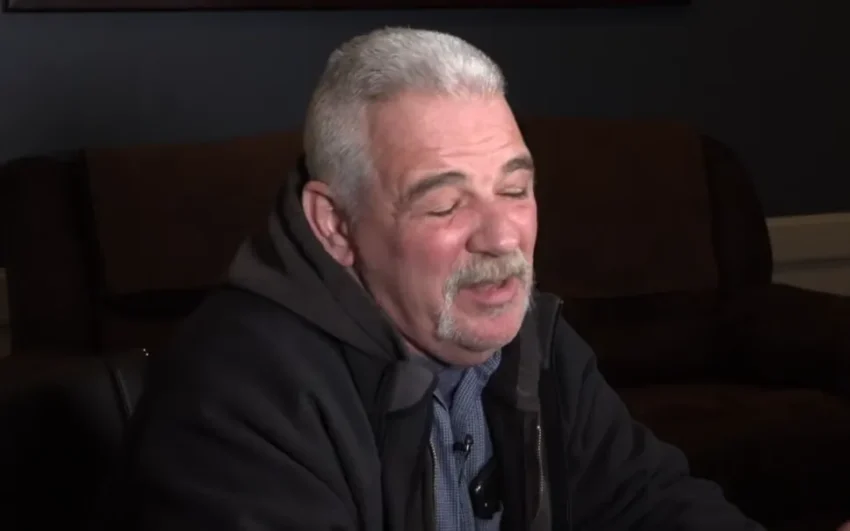
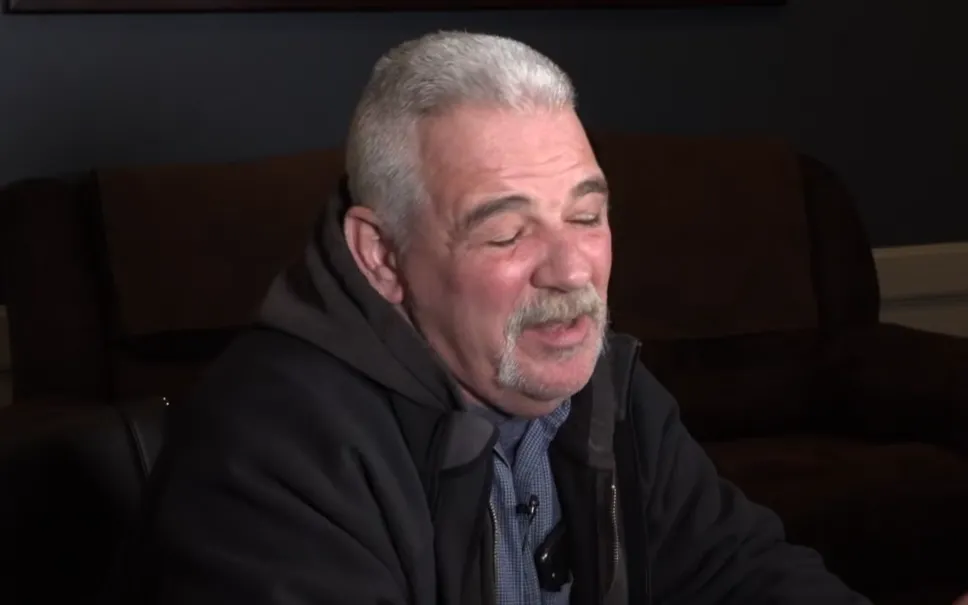
William Sequeira, a man who spent 37 years behind bars, has an incredible story that continues to captivate audiences. This video, titled “Ben Affleck Played Me: A Follow Up,” serves as a continuation of his previous appearance on Judge Frank Caprio’s court, which garnered over 50 million views.
In this sequel, Sequeira shares his personal journey, diving deeper into his past life as a career criminal, his time in federal prison, and his controversial claim that the 2010 Ben Affleck film The Town was based on his real-life experiences.
Sequeira’s criminal history is as staggering as it is infamous. Having spent 37 years incarcerated—seven years in state prison and 31 years in federal prison—his life story is marked by bank robberies, violence, and an unwavering commitment to the criminal underworld.
In fact, he claims to have robbed over 100 banks, with some estimates suggesting as many as 150, even revisiting certain banks to steal again due to the ease with which he could access the funds. His skillful planning and rapid execution of these crimes are a testament to his ability to operate with precision and efficiency.
Sequeira’s connection to The Town is perhaps the most intriguing part of his story. The 2010 film, directed by Ben Affleck, is widely regarded as a gritty portrayal of Boston’s criminal element, focusing on a group of bank robbers and their interactions with a bank teller.
Sequeira boldly claims that the story behind The Town mirrors his own life, citing the use of similar robbery tactics, gang affiliations, and even the romantic subplot, which closely mirrors his own love story. In the movie, Affleck’s character falls in love with a bank teller, much like Sequeira’s real-life fiancée, Maureen Lenihan, who worked as a bank officer in Boston.
Despite knowing Sequeira’s criminal background, Lenihan stood by him until his arrest, remaining by his side as he served time.
Born in New Bedford, Massachusetts, Sequeira’s early life was shaped by tragedy. His father passed away when he was just eight years old, leaving him and his mother to fend for themselves. This early loss contributed to the difficulties he faced growing up.
From the age of 11 to 16, Sequeira found himself in juvenile detention facilities, a period that would mark the beginning of his troubled life. His environment exposed him to a life of crime, and by the time he was 18, he had relocated to Boston, where he became further immersed in the criminal underworld.
Frequenting bars such as Triple O’s, which was a known haunt of notorious gangster Whitey Bulger, Sequeira’s path to criminality was set, leading him to commit numerous robberies and become deeply involved in organized crime.
Sequeira’s approach to bank robbery was methodical and driven by a sense of urgency. He describes how each heist was planned with a strict timeline—his goal was always to complete the robbery in under 60 seconds.
Armed with a stopwatch, Sequeira would time each heist meticulously, knowing that as soon as a gun and mask were pulled out, alarms would be triggered, and the police would be on their way. This quick execution was vital for his success, as he knew that any delay could result in a swift apprehension.
Sequeira would often walk away with large sums of money, carrying tens of thousands of dollars on his person at all times. At his peak, he could spend $50,000 in just two days, or up to $200,000 in a week.
Sequeira’s life behind bars was as dangerous and violent as his criminal exploits. Describing federal prison as a “very bad world,” he details the constant threat of violence and intimidation that permeated his life during his incarceration.
Within the prison walls, Sequeira aligned himself with other serious criminals, including bank robbers, murderers, kidnappers, and drug dealers, forming what became known as the “Boston gangs” in high-security federal prisons. Tattoos such as the letter “B” on his neck served as a grim sign of identification within the prison system, marking him as part of this notorious group.
Over the years, Sequeira was involved in numerous violent altercations, sustaining multiple stab wounds and accumulating scars from the constant battles within the harsh environment of federal prisons.
In 2017, Sequeira’s life took an unexpected turn. While incarcerated at the Federal Correctional Institution in Atlanta, he received a letter informing him that his case qualified for immediate release, thanks to a change in federal law under the Supreme Court ruling of Johnson’s vs. U.S. This decision overturned previous sentencing guidelines, and Sequeira’s case met the criteria for release.
He described this moment as a divine intervention, calling it “a moment when God touched my shoulder.”
Sequeira’s first day outside the prison walls was filled with disbelief. He struggled to process the reality of his freedom, and even after three years, he still finds himself adjusting to life on the outside.
He speaks of the challenges of re-integrating into society, trying to adopt a new way of living that focuses on positivity and making the right choices. Sequeira is determined to change his life, leaving his criminal past behind and pursuing a future that adheres to lawful and moral standards.
William Sequeira’s story is one of transformation, tragedy, and redemption. His life of crime, spanning decades of bank robberies and prison time, could have easily consumed him.
However, with the grace of a new legal ruling and his own commitment to change, Sequeira has begun to carve out a new chapter in his life. His past may be filled with violence and crime, but his future is one of hope, as he continues to adjust to freedom and redefine his purpose in a society that has long since written him off.
The impact of his story, combined with the intrigue surrounding The Town and his connection to the film, only adds another layer to his complex and fascinating journey.