From the very start, Jess’s pregnancy was far from easy. She was constantly ill, suffering from severe morning sickness, and by the time she reached 12 weeks, her pregnancy was categorized as high risk. The doctors anticipated that she might be induced at 38 weeks due to concerns about her baby’s growth.
Despite these challenges, Jess remained hopeful, attending bi-weekly specialist appointments and growth scans. William, their little one, was tracking a bit small, but there were no immediate alarms, and Jess pushed through with the knowledge that the road ahead would be challenging.
By 30 weeks, Jess’s routine became even more intense, with weekly scans and Doppler tests to monitor William’s growth and wellbeing. The pregnancy was taking a toll, but Jess kept her eyes on the prize, hoping that each scan would bring reassurance.
Then, on September 26th, 2024, at exactly 33 weeks, Jess went in for her regular scan and check-up, expecting the usual news. The scan went well, everything appeared fine, except for William’s size. This had been a concern all along, but Jess and her doctors had learned to manage it. However, that day was different.
Jess had made the appointment without her mum, who had been with her at every scan. Her mum was flying back from Australia that day, so it was just Jess and her partner. After the routine scan, Jess was hooked up to the CTG bands to monitor William’s heart rate.
Initially, everything seemed fine, but when Jess coughed, she watched in horror as William’s heart rate dropped dramatically, from 170 bpm to 50 bpm. It was a terrifying sight, and Jess immediately called for her midwife. Within moments, six doctors, nurses, and midwives rushed into the room, bringing with them more scanning equipment. Jess knew, in that moment, that things were about to get very real.
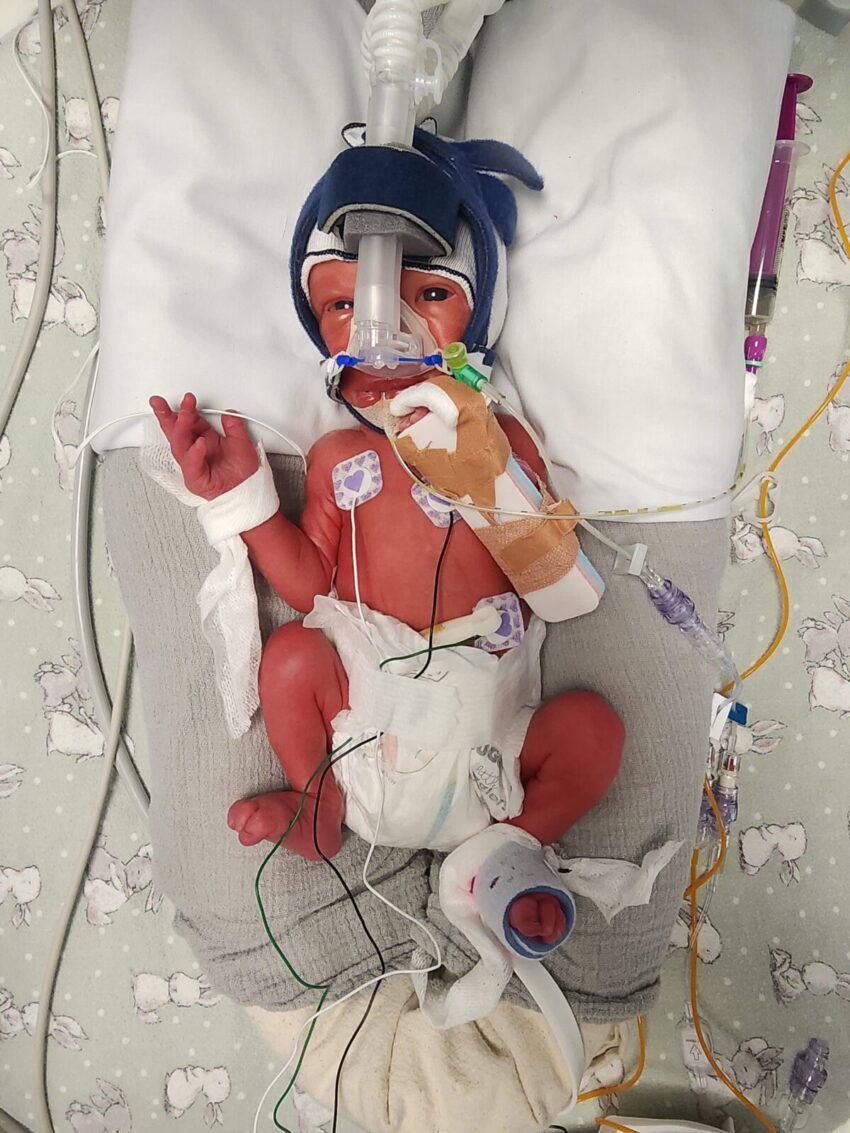
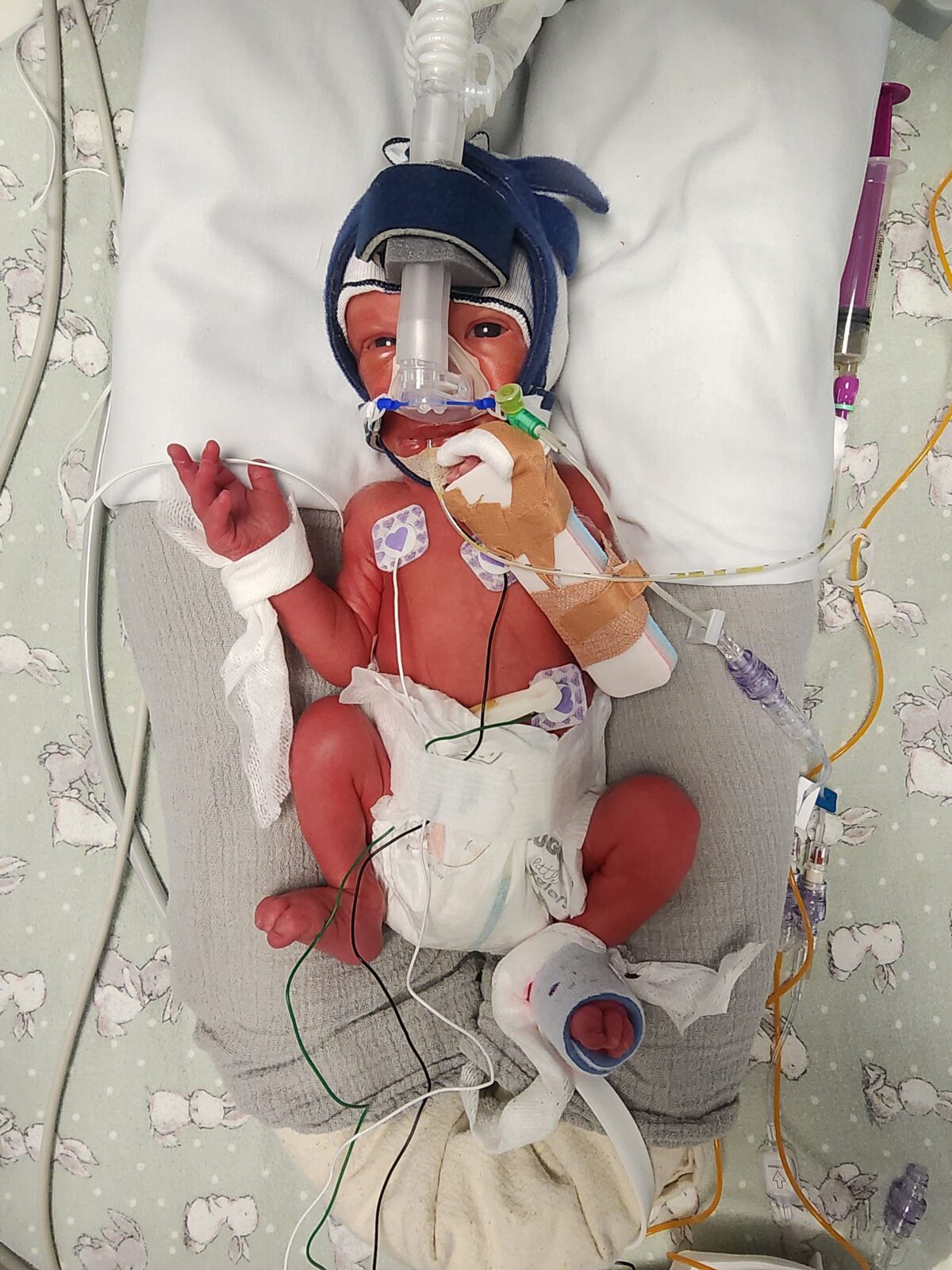
Without wasting any time, Jess was rushed off to the operating theater, and just hours after the heart rate drop, William was born. At just 1600 grams, he was tiny and had trouble breathing. He was quickly transferred to the Neonatal Unit in Whangarei Hospital, where he became the smallest baby in the unit.
Jess’s heart broke as she looked at her baby boy, covered in wires and tubes. For the first five days, she couldn’t hold him, a painful reality for any new mother. William was placed on CPAP for breathing support and given an NG tube for feeding.
The first week of William’s life was a constant battle. On day two, doctors discovered that William had fluid in his lungs and that one of his lungs had collapsed. A chest drain was inserted to alleviate the pressure, and William handled it surprisingly well.
Just when things seemed to be stabilizing, William developed green bile, which raised immediate concern. Doctors feared that he might have an obstruction in his bowels or an infection. Without hesitation, they intubated him and arranged for a transfer to Starship Hospital in Auckland, where specialists would assess him.
Jess and her partner spent 48 long hours at Starship before they received the good news: William had no infections or obstructions. They were cleared to return to Whangarei, but the road to recovery was still far from over.
After their return to Whangarei, William continued to fight with resilience. His time in SCBU (Special Care Baby Unit) was filled with highs and lows, but slowly, he began to improve. On day 15, he came off the CPAP, moved to high-flow oxygen, and then, in a sign of his growing strength, he pulled the oxygen tube out himself in the night. That moment was a small victory for Jess and her family, a sign that William was getting stronger every day.
The family spent over five weeks in SCBU, with two nights in NICU. It was a long, challenging stay, but Jess and her partner were determined to get through it. By the time they finally brought William home, he was thriving, growing, and full of life.
He weighed over 10 pounds and was hitting milestones that once seemed so far away. Today, William is a healthy, happy 4-month-old who loves to talk and enjoys spending time outdoors. His early challenges are now a distant memory, and he’s been thriving without any further complications.
Looking back, Jess is overwhelmed with gratitude for the support they received from the staff at Whangarei Hospital, Starship Auckland, and the Little Miracles Trust. Without the love and care of the NICU nurses and doctors, Jess isn’t sure how she would have made it through those early days of uncertainty. The support from the Little Miracles Trust helped ease their journey, providing both practical and emotional support during a time that was incredibly difficult.
For Jess, becoming a mum was not the journey she had imagined, but it was a journey that taught her strength, resilience, and the importance of community. William’s journey through the NICU will always be a defining moment in their lives, but today, Jess is proud to share William’s story—a story of love, survival, and the power of family.