On the evening of August 4, 2025, what began as an argument between two young people ended in a way no one present could undo.
The parking lot of an AutoZone store in Bedford, Ohio, was not meant to be the setting of a tragedy. It was an ordinary place, lit by storefront lights and passing headlights, a space where people bought car parts and went home. But within moments, a disagreement escalated, a gun was fired, and 20-year-old Riley Jones collapsed with a gunshot wound to the chest.
Her boyfriend, 22-year-old Darien Hobley, would later admit responsibility.
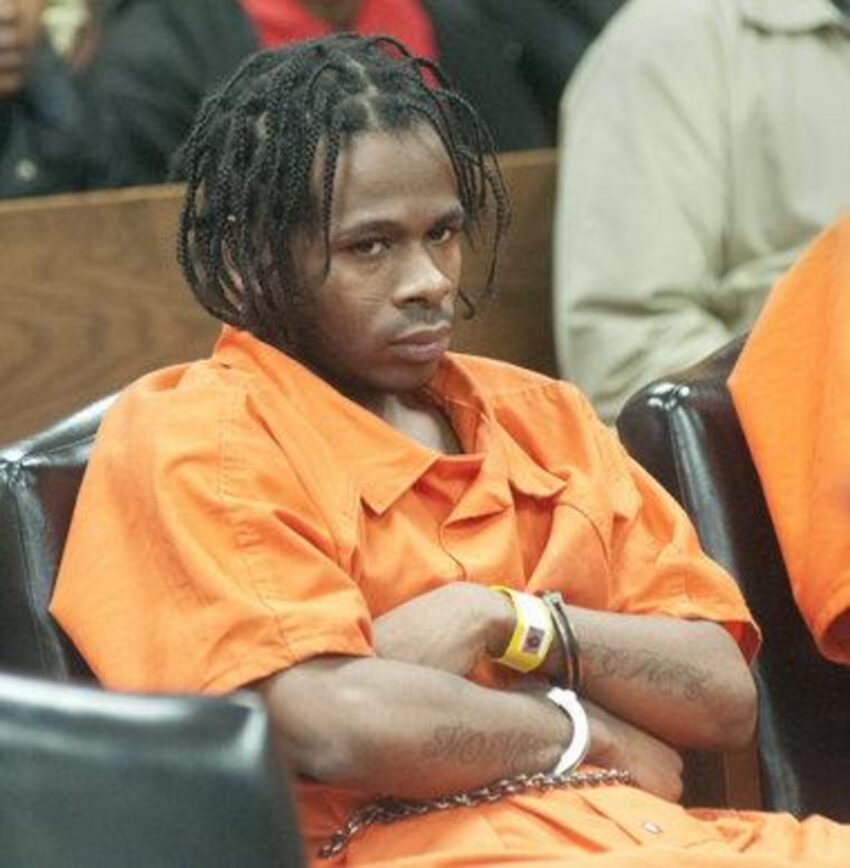
On February 24, 2026, Hobley stood in court and was sentenced to 8 to 10½ years in prison after pleading guilty to involuntary manslaughter and tampering with evidence. The plea agreement reduced more serious original charges, reshaping the legal path of the case but not the finality of Riley’s death.
The facts, as presented by authorities, were stark.
An argument unfolded in the AutoZone parking lot in Bedford. Voices rose. Emotions flared. At some point during that confrontation, Hobley fired a shot that struck Riley Jones in the chest. The sound of the gunshot shattered more than the quiet of a summer evening; it fractured two families and permanently altered multiple lives.
In the immediate aftermath, Hobley reportedly entered the store and asked employees to call 911. That moment — stepping inside, requesting help — stands in sharp contrast to what followed. Instead of remaining at the scene, authorities said he left the area before first responders arrived. He was arrested nearby not long afterward.
For Riley, there would be no second chance, no reconciliation, no future conversation to mend what had broken between them. She was 20 years old.
Twenty is an age defined by beginnings. College classes. First apartments. Early careers. Plans whispered between friends about travel, love, and possibility. Whatever Riley’s specific dreams were, they ended in a parking lot under fluorescent lights.
When Hobley appeared in court months later, the atmosphere was heavy with absence.
He addressed Riley’s family and apologized, stating that he never intended to hurt her. In cases involving intimate partners, that phrase — “I never meant for this to happen” — often echoes through courtrooms. It reflects a complicated intersection of anger, impulse, and irreversible consequence. But for grieving families, intent rarely softens impact.
The charge of involuntary manslaughter suggests that prosecutors ultimately accepted that the killing was not premeditated murder. The tampering with evidence charge stemmed from actions taken after the shooting, though specific details beyond his leaving the scene were addressed within court proceedings. The plea deal avoided the risk of a trial and the possibility of a longer sentence if convicted on more severe charges.
Plea agreements can be painful for families of victims. They balance legal certainty against emotional desire for maximum accountability. Trials are unpredictable; juries weigh evidence; defenses argue doubt. A plea ensures prison time, but it may feel to some like an incomplete measure of justice.
An 8 to 10½ year sentence carries weight. It is not symbolic. It represents years of confinement, separation, and reflection. Yet it is also finite. One day, Hobley will complete his term and reenter society. Riley will not.
This is the quiet arithmetic that haunts cases like this.
Young relationships can be intense. Love at that age often feels absolute, consuming, urgent. Arguments can escalate quickly when emotional regulation is still forming, when pride overrides patience, when access to a weapon turns a heated moment into something fatal. None of that excuses what happened, but it frames the broader tragedy: two young lives defined by one irreversible decision.
Gun violence between intimate partners is a recurring pattern across communities. It does not always begin with long histories of abuse or visible warning signs. Sometimes it begins with words — harsh, sharp, poorly chosen — and spirals when a firearm is within reach. The presence of a gun in a moment of anger transforms possibility into catastrophe in seconds.
In Bedford, on that August night, a disagreement became deadly because a trigger was pulled.
Witness accounts placed Hobley briefly inside the AutoZone after the shooting. That detail complicates the narrative. It suggests a moment of realization, perhaps panic, perhaps regret. But leaving the scene before authorities arrived added another layer to the legal case, contributing to the evidence tampering charge.
Courts do not sentence emotions; they sentence actions.
When Hobley apologized in court, he faced the family of the woman he once called his girlfriend. For them, the apology exists alongside a permanent void at holidays, birthdays, graduations, and ordinary Tuesdays. They must carry memories into a future that looks nothing like the one they imagined for Riley.
Sentencing hearings often reveal the human cost beyond headlines. Parents describe childhood memories. Siblings speak of shared laughter. Friends recount inside jokes and unfinished plans. In those moments, the courtroom becomes more than a legal arena; it becomes a space where grief is formally acknowledged.
The judge’s role is to balance accountability with the framework of law. In this case, the plea to involuntary manslaughter signaled that the court recognized the absence of proven intent to kill. Still, a life was lost. Prison time followed.
Eight to ten and a half years is a span long enough for transformation — or stagnation. For Hobley, incarceration will mean living daily with the knowledge that a moment of anger ended someone else’s life and reshaped his own. For Riley’s family, time will move differently. Years may dull the sharpest edges of grief, but they will not restore what was taken.
There is a broader lesson here, one that stretches beyond Bedford or this single case.
Conflict is inevitable in relationships. Disagreement is human. But the fusion of conflict and firearms is combustible. The line between argument and obituary can be frighteningly thin when a weapon is involved. Communities across the country continue to confront this reality, often too late.
Young adults are still learning how to argue without destroying, how to step away rather than escalate. Education about conflict resolution, emotional control, and responsible gun ownership is not abstract policy debate; it is lived consequence. Each headline represents a preventable fracture.
In the courtroom, Hobley said he never intended to hurt Riley. Intent matters in law. It shapes charges, influences sentences, defines degrees of culpability. But impact matters in life. And impact, in this case, is permanent.
Riley Jones’ name is now linked to a case file, a sentencing date, a parking lot. Yet behind that name was a person with history, personality, relationships, and aspirations. It is easy for public attention to focus on the defendant, the plea deal, the prison term. Harder — but more important — is remembering the individual whose life ended.
The plea agreement closed the criminal proceedings, but it did not close the emotional chapter for those who loved her.
As the gavel fell on February 24, 2026, one chapter ended: the legal reckoning. Another continues quietly — the long work of grieving, healing, and, perhaps someday, forgiveness for those able to find it.
This case is not a spectacle. It is a caution.
It reminds us that moments matter. That arguments can turn catastrophic in seconds. That access to a gun during emotional volatility carries risks far beyond pride or wounded feelings. And that once a trigger is pulled, no apology can rewind time.
In Bedford, a parking lot returned to normal the next day. Customers came and went. Cars pulled in and out. Fluorescent lights flickered on at dusk as they always had. But for two families, nothing about that place will ever feel ordinary again.
One young woman’s life ended there.
One young man’s freedom narrowed there.
And a community was left to absorb another story about how quickly everything can change.