He was 25, building a future, and preparing to welcome his second child. Hours later, he was fighting for his life. What exactly happened in those early morning moments—and why has no one been held accountable yet?
In the early hours of March 25, 2026, what began as a routine night out in Chicago ended in a tragedy that continues to haunt a family—and raise urgent questions for investigators.
Alexander Kazanowski, known to friends and family as “Xander,” was found unresponsive outside a bar in the Avondale neighborhood around 3:20 a.m. Within days, he would be pronounced dead from injuries consistent with a brutal beating.
At just 25 years old, Kazanowski was not only building a life—he was preparing to expand it. His partner was expecting their second child. Their daughter was still young. The future, by all appearances, was just beginning to take shape.
And then, suddenly, it was gone.
According to reports, Kazanowski had been inside a local bar—identified in police footage as Tune-Up—before the incident. At some point during the night, he was allegedly asked to leave following comments that drew attention from staff or patrons.
What happened next remains the focus of an ongoing homicide investigation.
Witness accounts and early reports suggest that after exiting the bar, Kazanowski became involved in a verbal exchange with a group outside. The situation escalated. At some point, violence followed.
By the time he was discovered, he was already in critical condition.
Authorities later confirmed that his injuries were consistent with blunt force trauma—a detail that points to a sustained and severe physical assault rather than a brief altercation.
Kazanowski was rushed to a nearby hospital, where doctors fought to save him.
For several days, there was still hope.
But on March 28, that hope ended. He was pronounced dead, leaving behind not just unanswered questions—but a family suddenly forced to navigate grief, shock, and loss all at once.
In the weeks following the attack, the Chicago Police Department launched a full homicide investigation.
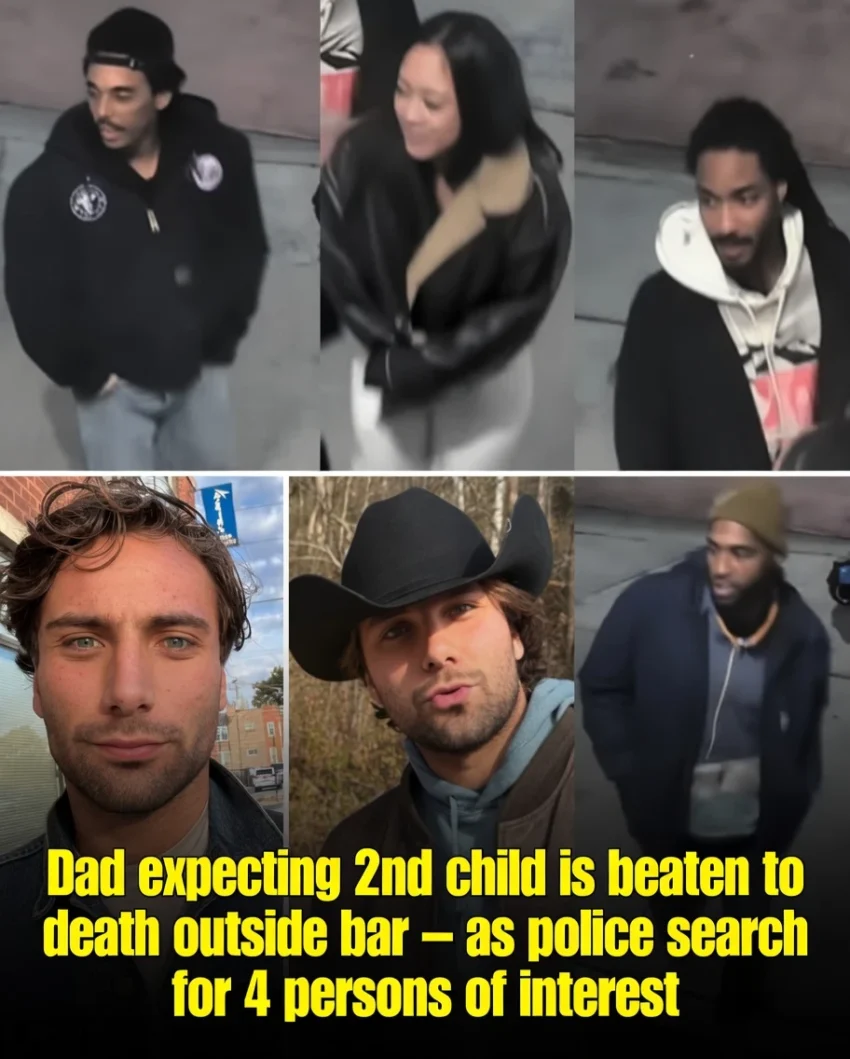
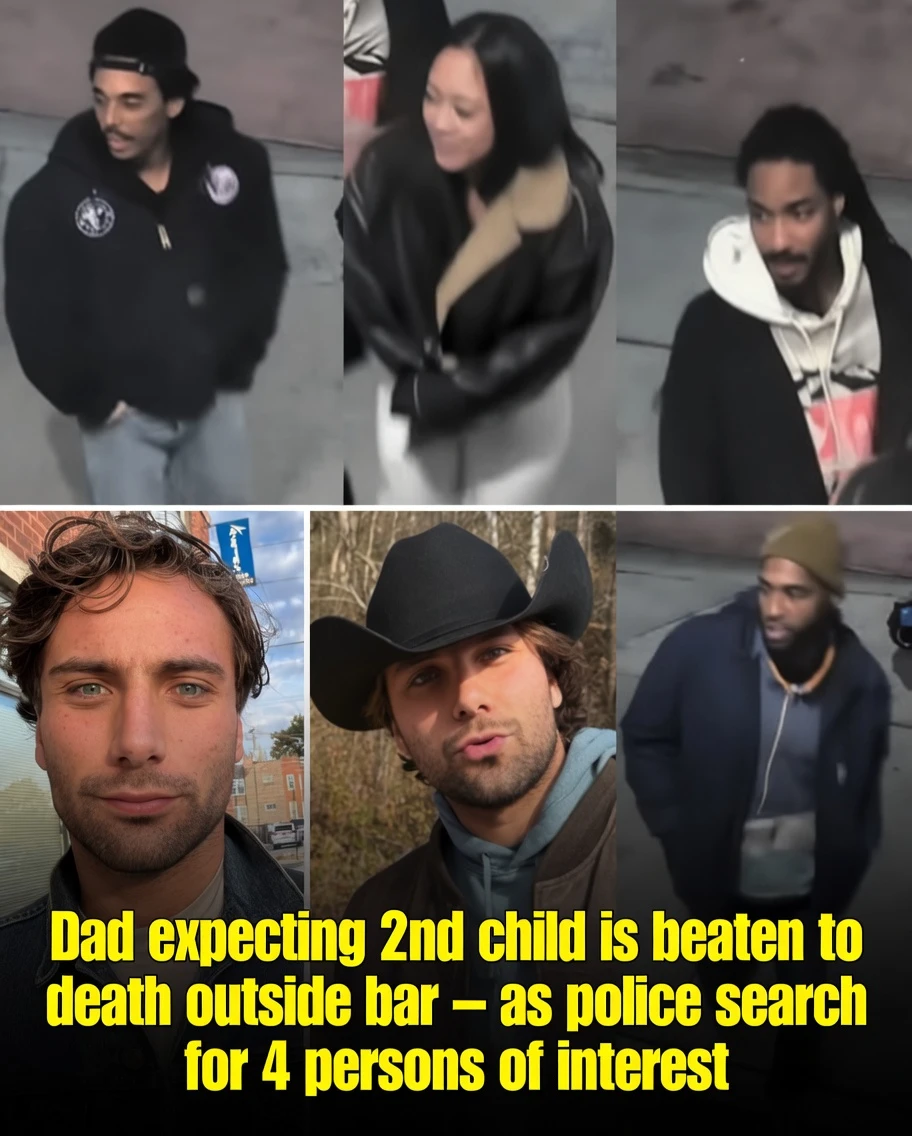
Surveillance footage released to the public showed four individuals believed to be connected to the incident. Authorities have described them as three men and one woman, all seen entering the bar on the night of the attack.
They have been labeled “persons of interest.”
But as of now, no arrests have been made.
The lack of immediate resolution has intensified public concern—especially in a city where debates around crime, policing, and accountability are already deeply charged.
Why have these individuals not been identified or detained?
What exactly does the footage reveal—and what does it leave out?
And perhaps most importantly: who delivered the fatal blows?
It is easy, in cases like this, for a person’s identity to become reduced to a single moment—the crime that ended their life.
But Alexander Kazanowski was more than a victim.
He was a father. A partner. An entrepreneur.
He had built a career as a model, working particularly in wedding and bridal shoots—an ironic and painful detail given the life he was building with his own partner.
He also identified himself as the founder and CEO of a Chicago-area company providing household services, reflecting what his family described as an “unrelenting entrepreneurial spirit.”
Friends and loved ones painted a picture of someone vibrant, driven, and deeply present in the lives around him.
In the days following his death, tributes began to appear—none more heartbreaking than that of his partner.
Her message, shared online, was deeply personal. She remembered the small, intimate details that define a life shared: his personality, his quirks, the everyday moments that now feel impossibly distant.
“Our lives won’t be the same without you,” she wrote.
It is a sentence repeated in countless tragedies—but never loses its weight.
Kazanowski’s family described him as a “modern-day Renaissance man”—someone who lived fully, intensely, and on his own terms.
They spoke of his charisma, his ability to light up a room, and his determination to carve his own path.
In many ways, their words reflect something deeper than grief.
They reflect an attempt to preserve identity in the face of loss—to ensure that he is remembered not just for how he died, but for how he lived.
Amid the tragedy, there was one final detail that stood out.
Kazanowski was an organ donor.
Even in death, his actions had impact. According to his family, his donations helped save multiple lives and gave others a second chance.
It is a detail that adds a layer of complexity to the story—one that contrasts sharply with the violence that ended his life.
The case has also reignited broader conversations about safety and violence in Chicago.
Avondale, where the incident occurred, is a busy and active neighborhood—not typically associated with high-profile violent crime.
Yet incidents like this challenge assumptions.
They raise questions about late-night safety, conflict escalation, and the unpredictable nature of public violence.
They also highlight the role of surveillance, witness cooperation, and law enforcement response in determining whether justice is ultimately served.
One of the most unsettling aspects of this case is how quickly everything appears to have escalated.
A night out.
A conversation.
A confrontation.
And then—irreversible consequences.
It is a reminder of how fragile ordinary moments can be, and how easily they can spiral into tragedy.
Despite the details that have emerged, much about the case remains unclear:
These are not just investigative questions. They are the questions of a family waiting for answers.
As days turn into weeks, the absence of resolution becomes its own kind of burden.
For investigators, the case continues.
For the public, attention may begin to fade.
But for those closest to Alexander Kazanowski, time does not move the same way.
There is only before—and after.
At 25, Kazanowski had already built a life filled with ambition, relationships, and purpose.
He leaves behind a partner, a young daughter, and a son he would never meet.
He leaves behind a story that now depends on others to be told—and a case that demands resolution.
For now, the investigation continues. The footage remains public. The suspects remain unidentified in custody.
And somewhere in Chicago, four people may hold the answers to what happened that night.
Until those answers emerge, the story remains unfinished.
Because sometimes, the most haunting stories are not the ones we don’t understand—but the ones where the truth feels just within reach, yet remains out of grasp.