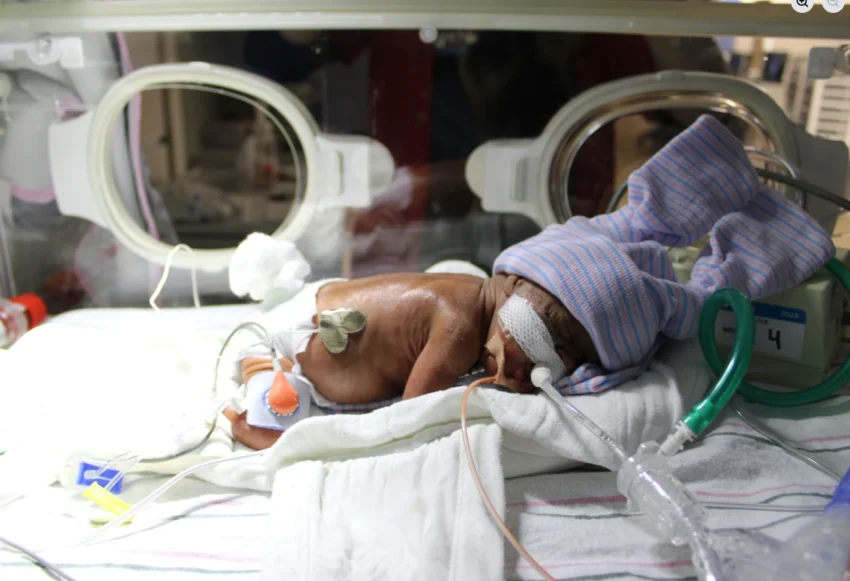
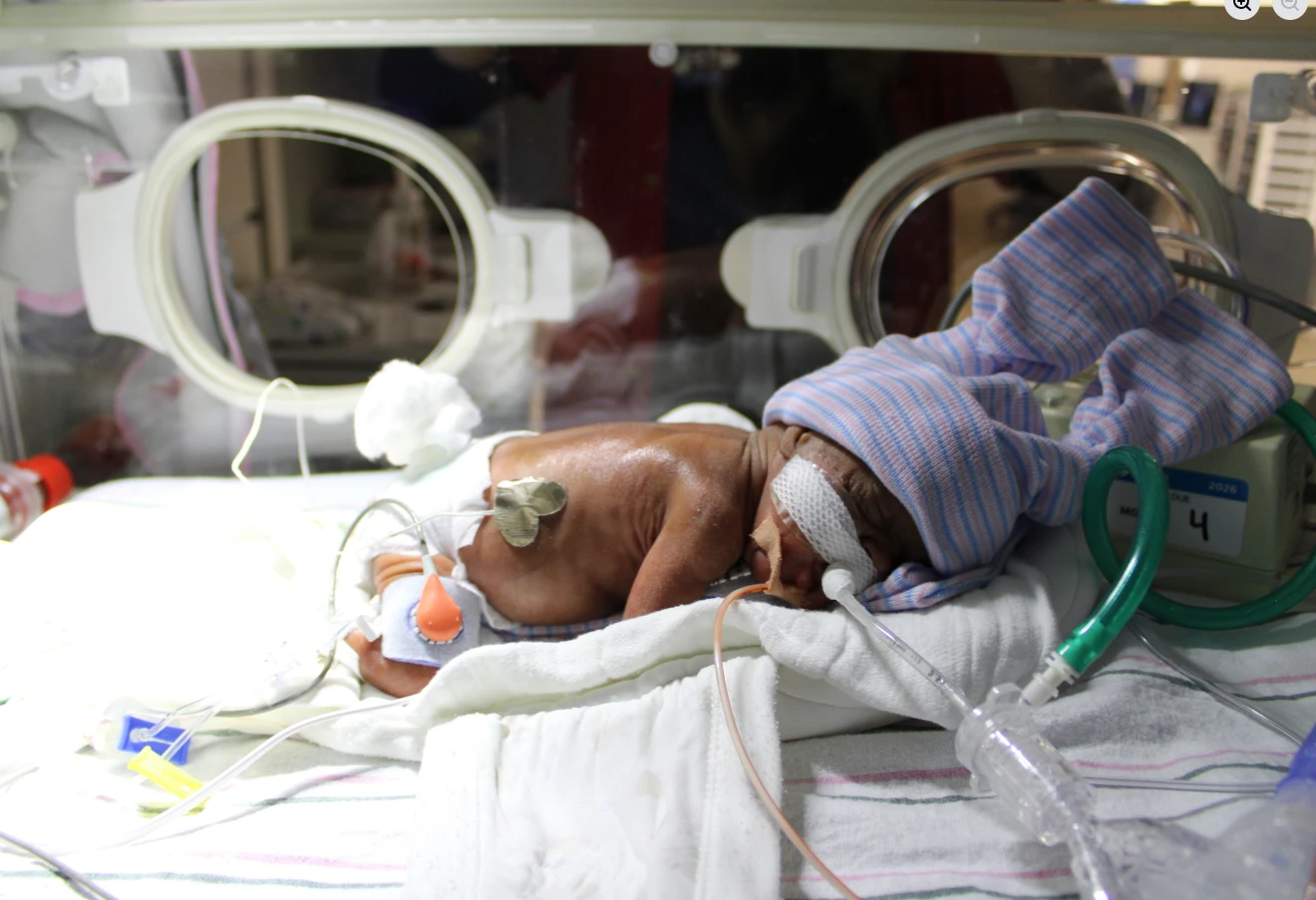
The Easter Bunny made a special visit to one of the most unexpected places this year — deep inside the hallways of a major children’s hospital.
For some of the tiniest and bravest patients at Riley Hospital for Children, the holiday surprise was a moment of joy amid medical struggles that most adults can barely imagine.
At Riley’s Neonatal Intensive Care Unit (NICU), where families and physicians have spent countless days and nights focused on survival, comfort, and progress, the appearance of bunny ears brought laughter, color, and light at a time when stress and uncertainty are constants.
The Easter Bunny — lovingly reimagined by the Riley NICU Nest team — hopped from room to room, stopping by the bedsides of infants and toddlers whose early lives have been shaped by serious health challenges.
These were not ordinary Easter baskets or store‑bought costumes.
The floppy bunny ears worn by the children were handmade by team members Anji Hines and Brandi Brizendine — crafted with care and affection to help brighten the days of Riley’s tiniest patients.
In one room, twin siblings Zarah and Zion Civil crouched close to their cribs, each outfitted in soft pastel bunny ears as their eyes took in the playful visitor.
Nearby, other infants including Elijah Masson, Leilani Solis, Benny Miller, and Baby Girl Gellhouse smiled, blinked, or simply rested in their cozy blankets, cherishing the moment of cheer brought to them amid tubes, monitors, and medical charts.
Not to be outdone, a slightly older patient in Riley’s Cardiovascular Intensive Care Unit (CVICU) — Noah Meth — sported his own set of “egg‑stra sweet” bunny ears, adding a touch of humor and grace to his own long medical journey.
Noah, just months into his first year, has been hospitalized for an extended period while waiting for a heart transplant, struggling with a serious congenital heart condition that has kept him in care far longer than most infants his age.
That playful accessory on his head was not just a costume — it became a beacon of hope and normalcy in a hospital experience that has tested both his body and his family’s resilience many times over.
Beneath the bright ears, behind the wires and monitors, these moments captured an emotional truth: amid the clinical intensity of pediatric care, empathy and laughter still have a place.
The Easter Bunny visits were about more than photos or holiday cheer — they became a reminder of humanity inside the medical world, a moment when staff, parents, and patients could forget, if only briefly, the seriousness of their situations and simply enjoy being children again.
For families who have endured sleepless nights, frightening alarms, and countless uncertainties, the appearance of a bunny with floppy ears symbolized hope, connection, and childlike joy in the midst of it all.
Parents captured pictures that will likely remain treasured keepsakes — snapshots of a holiday at the bedside rather than at home, a gathering of love in a place shaped by courage and challenge.
For the NICU team, these visits were personal too.
Nurses and specialists who spend every day juggling technology and tenderness welcomed this chance to celebrate lightness and laughter with the families they support.
Some of these skilled professionals had seen these very children struggle to breathe, grow, or even open their eyes in those earliest weeks — moments when the hard reality of their condition overshadowed everything else.
Now, seeing those same tiny hands reaching for soft bunny ears, or the soft gaze of a baby reclining with a pastel plush atop their head, reminded everyone why they do what they do.
It reminded them that even in the most difficult of circumstances, there is room for kindness, play, and shared humanity — and that joy can flourish even in the smallest moments.
Staff walked with gentle footsteps, not just as clinicians, but as humans celebrating a holiday with children who themselves are fighters — little patients whose lives are already defined by bravery beyond their years.
They are infants and toddlers whose days are normally measured by vital signs, feeding schedules, and medical milestones rather than Easter eggs and costumes.
The handmade ears became more than props.
They became trophies of survival, symbols that even the tiniest warriors can have moments of laughter, costume, and delight.
For families, seeing their children in those costumes may have felt like a step closer to normal life — a life they envisioned before illness and hospitalization became a part of each day.
Some parents snapped photos, tears welling up as they watched the scene unfold — not just because of the sweetness of the costumes, but because of what these children have endured and how far they have already come.
For the siblings and relatives who gathered in quiet corners of waiting rooms or by cribs, these moments were a chance to catch a breath, share a smile, and hold onto hope in a setting where courage and patience are daily companions.
Even for the medical professionals who have witnessed birth in its most vulnerable form — through ventilators, machines, and NICU incubators — the Easter Bunny visits brought renewed optimism and a collective sense of shared joy.
In a hospital built for healing, where so many paths are unknown and outcomes uncertain, these moments of laughter and celebration became part of the care itself — soft threads of humanity woven into a world of intense medicine and unwavering hope.
And while the journey ahead for each of these children will involve continued care, therapies, and milestones, the memory of those bunny ears offers something lasting: a story of comfort, community, and the simple power of play even in the hardest times.
For families and staff alike, this Easter will be remembered as an Easter marked not by baskets or hunts, but by smiles in hospital hallways, tiny ears atop brave heads, and the shared belief that love — and a little whimsy — can make all the difference.