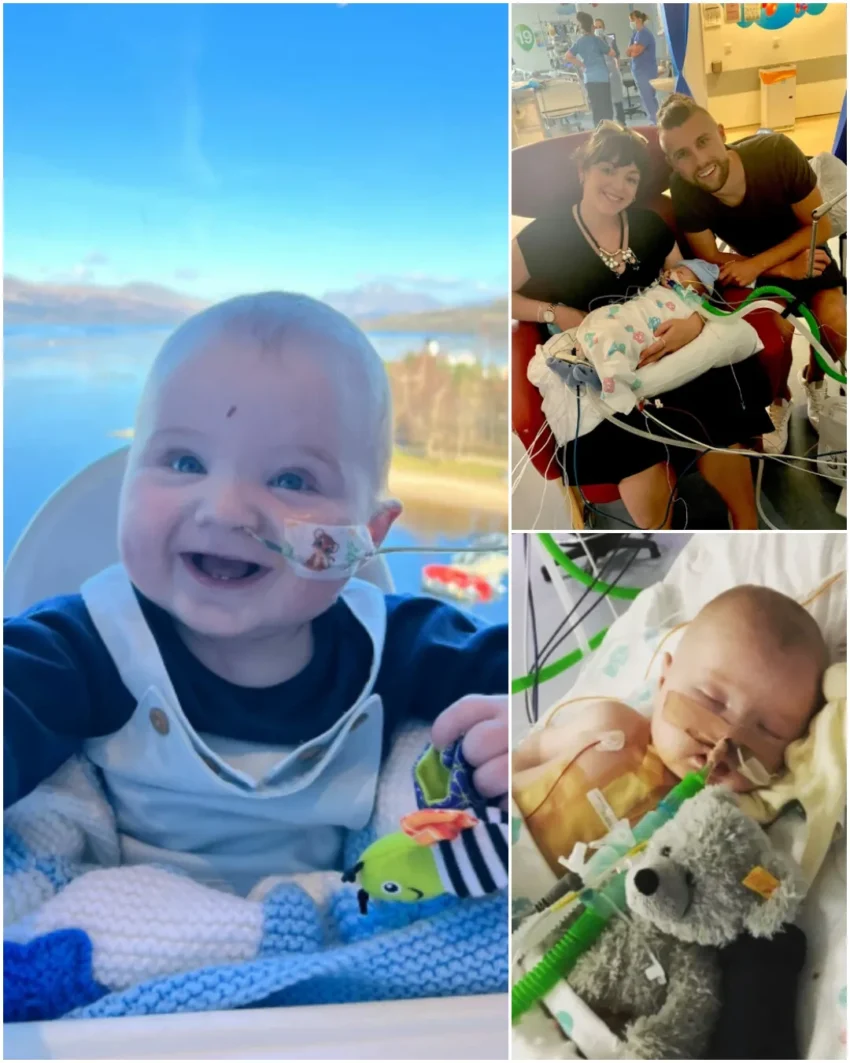
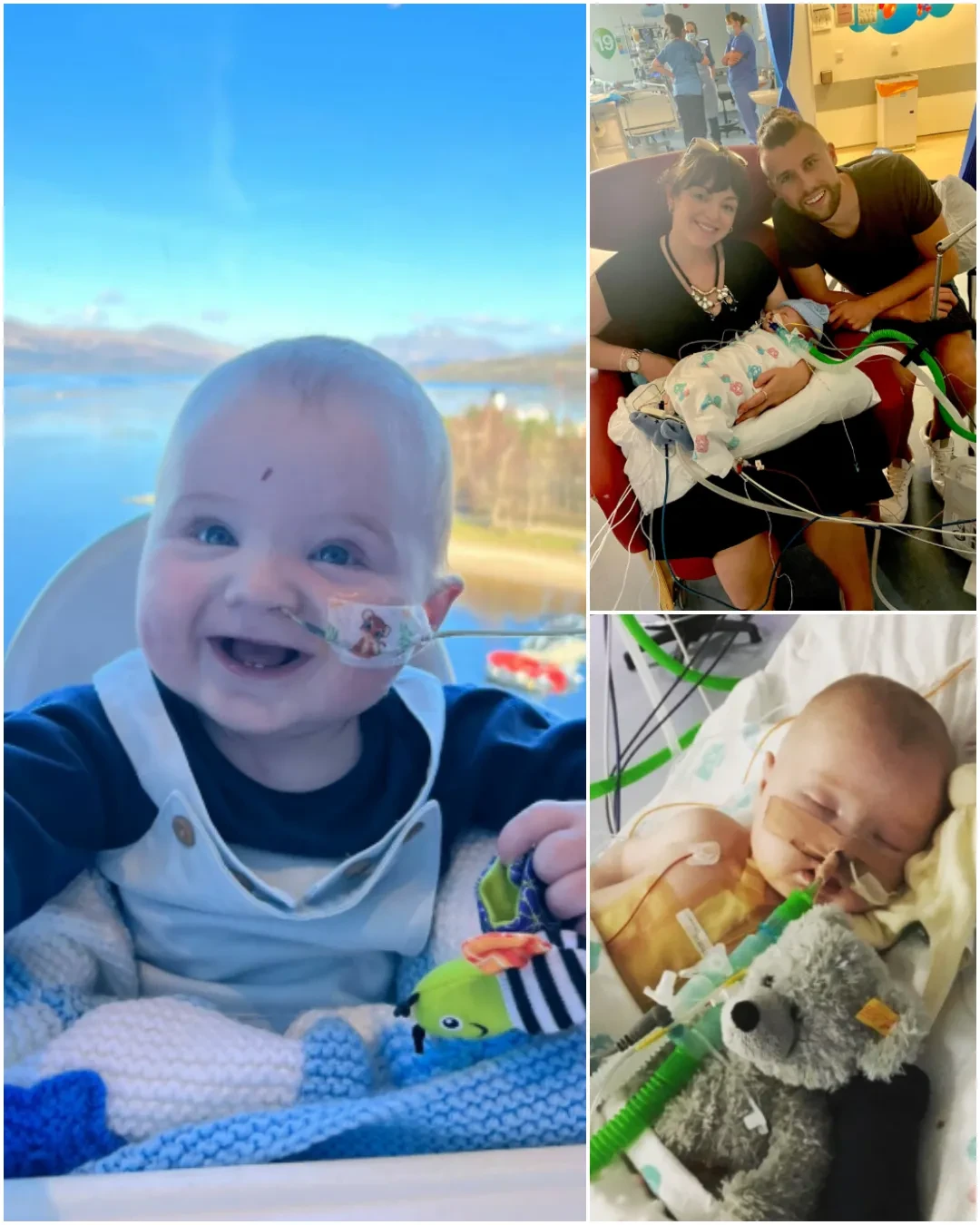
Noah Meth is a 6‑month‑old boy whose life has been shaped by one of the most serious forms of congenital heart disease.
He was born with Hypoplastic Left Heart Syndrome (HLHS) — a rare and complex heart defect in which the left side of the heart is severely underdeveloped and cannot pump blood effectively to the body.
Hypoplastic Left Heart Syndrome is a condition that affects the heart before birth, meaning crucial structures on the left side — including the left ventricle, mitral valve, aortic valve, and the aorta — don’t develop properly.
This results in the right side of the heart having to do the work of both sides to circulate blood, a burden that a normal heart never has to carry.
From before Noah’s birth, his parents knew this journey would be different.
During Haley Engwer’s pregnancy, doctors diagnosed Noah with HLHS while he was still in the womb, a prognosis that changed their expectations of pregnancy, birth, and the future they envisioned.
When Noah was born at Riley Hospital for Children, he weighed 8 pounds 3 ounces — a hopeful beginning amid the difficult diagnosis.
Soon after his birth, a cardiac surgical team led by Drs. Mark Rodefeld and Jeremy Herrmann performed the first stage of heart repair — part of a typical multi‑stage approach for HLHS that can involve several surgeries over the first years of life.
Babies born with HLHS often require three major reconstructive surgeries spaced out as they grow: the Norwood procedure shortly after birth, followed by the Glenn and then the Fontan procedures.
These surgeries help reroute blood flow so that a child’s right ventricle can support a functional circulation in the absence of a working left heart.
Noah also needed ECMO (extracorporeal membrane oxygenation) — a machine that temporarily takes over the work of the heart and lungs — to support his tiny heart after surgery.
After more than 70 days in the hospital, Noah achieved a milestone that many families dream of: he was discharged home.
For his parents, Haley and Ryan Meth, that short time at home was a moment of celebration, a taste of normal life they hoped could continue.
But that homecoming lasted only two days before Noah’s oxygen levels began to fluctuate dangerously.
An emergency department visit in his hometown of Evansville ended with his transport back to Riley — this time not for another staged surgery, but because Noah was in heart failure.
The decision was made to place Noah on the heart transplant list, a new and unexpected chapter in their journey.
Transplantation becomes necessary in HLHS when conventional staged repairs are not sufficient to sustain durable heart function, or when a child’s heart becomes too weak to meet the demands of the body.
Since being listed — 61 days and counting — Noah has become an expert at hospital life.
He charms nurses, doctors, and staff with smiles, wiggles, and moments of baby joy that bring light to his family’s difficult reality.
Noah’s hospital room is filled with familiar faces — nurses who say he’s their favorite part of the day, therapists who celebrate every milestone, and caregivers who treat him as if he were their own.
Haley often says the team doesn’t just care for Noah medically — they treat him like family.
Despite the transplant wait, Noah keeps reaching milestones that parents treasure.
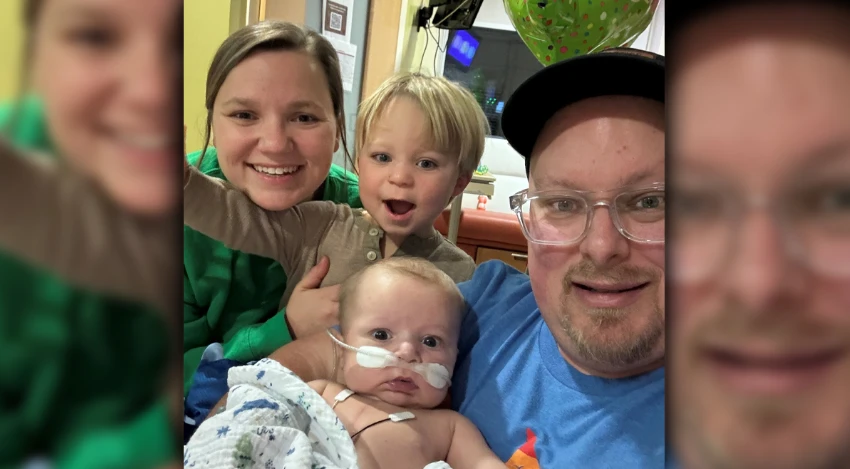
He rolled over for the first time, tasted pureed baby food (even if most of his nutrition still comes through a G‑tube), and continues to grow as best he can in the hospital environment.
Haley jokes that she never thought it possible to take more pictures of her second child than her first — but with Noah, there are so many moments to document that she laughs about always having her camera ready.
No one can say how long it will take for a donor heart that matches Noah to become available.
Heart transplant timing is unpredictable — governed by donor availability, compatibility, and the urgent needs of children like him who are waiting.
While the waiting brings anxiety, Haley and Ryan try to stay upbeat, leaning on a strong support system at home and focusing on Noah’s personality and resilience.
Some weeks are harder than others, she says, especially when symptoms like pain or teething (Noah is working on two teeth) challenge his comfort.
But they do their best to go with the flow, embracing the good days as they come and bracing for the tough ones with steadfast hope.
The courage of families navigating HLHS and heart transplant waits is immense.
Though there is no cure for HLHS, surgical repair and transplant offer a path that many children walk — facing risk, uncertainty, and recovery with resilience.
HLHS cannot be healed with a single operation; instead, it demands a series of complex interventions and lifelong care.
Some children with HLHS go on to live into adulthood after thorough surgical management, though they often face ongoing challenges that require specialized follow‑up.
For Noah’s parents, the hope of a “hero heart” — a donor heart that will give their son lasting life — is what keeps them going.
Until that day comes, they celebrate every moment Noah has with them, from his quiet smiles to his little victories of development and connection.
Even amid the uncertainty, they remain anchored by the love they feel for their child, finding reasons to be grateful in snapshots of everyday joy.