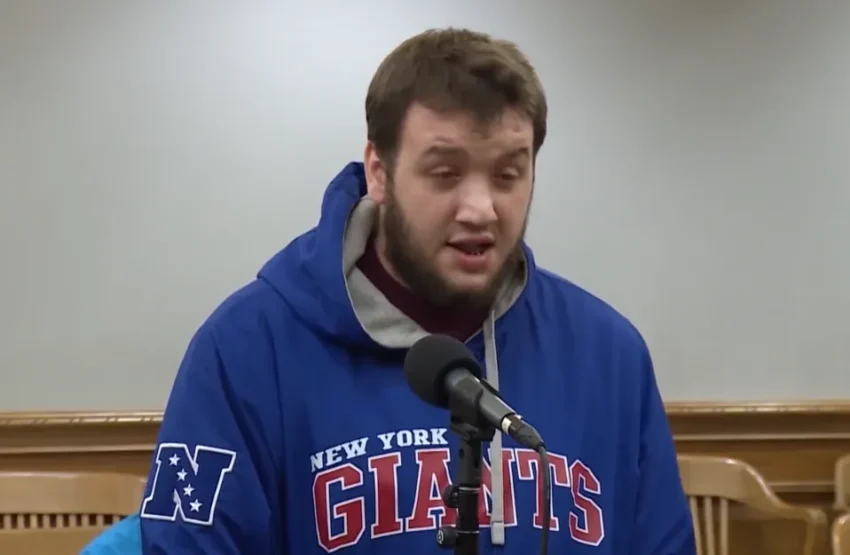
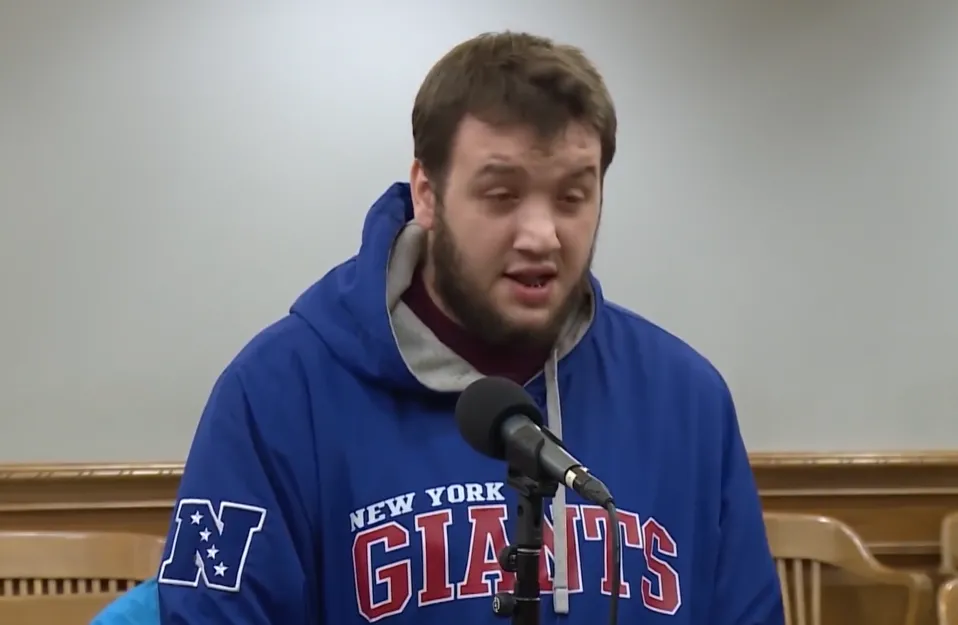
In an unexpected turn of events, Judge Caprio dismissed the two parking tickets issued to Jonathan Duqua on Chalkstone Avenue, sparking both legal discussion and football banter in the courtroom.
Jonathan Duqua arrived at court to face two parking tickets issued for his vehicle, but he came armed with evidence to defend himself. His argument? He wasn’t guilty. Duqua explained that the State of Rhode Island was repairing his usual parking lot, and he had been instructed to park across the street.
He presented the judge and Inspector Quinn with a notification letter from the city, along with photographs showing the ongoing construction of the parking lot.
However, there was a catch. Inspector Quinn quickly pointed out that the letter from the city was not without flaws. “The letter lacks a date, a specific time, and even a signature,” Quinn observed, adding that the letter only mentioned the repair would take “two to three days” without specifying the actual start or end date.
This detail raised concerns about the legitimacy of the notice and whether Duqua was being unfairly penalized.
Instead of focusing on the legal intricacies of the case, Judge Caprio surprised everyone by changing the subject to something entirely different: football. Judge Caprio, a known sports enthusiast, seized the opportunity to connect with Duqua on a personal level.
“Are you a fan of the New York Giants?” Judge Caprio asked Duqua, to which Duqua confidently responded, “Big time.”
This sparked a moment of nostalgia for Judge Caprio, who recalled that in 1960, the Giants were the only team broadcast on television in Rhode Island. He reminisced about legendary players like Y.A. Tittle, Frank Gifford, and Roosevelt Grier, who helped make the Giants a household name in the state. Duqua, eager to join the conversation, mentioned current players like Lawrence Taylor and Saquon Barkley.
As the banter continued, Inspector Quinn, a good sport about the playful exchange, noticed that Duqua was proudly wearing a Giants jersey. “Looks like you’re representing today,” Quinn joked.
The back-and-forth continued with Duqua playfully teasing Judge Caprio about the apparent “Giants’ domination” in the courtroom, even quipping that Tom Brady, the legendary quarterback for the New England Patriots (the Giants’ biggest rivals), might also be tuning into Judge Caprio’s court. Judge Caprio laughed, acknowledging Duqua’s boldness in challenging Brady, saying that Duqua certainly “had a lot of courage” to bring up the Patriots’ star in such a setting.
The courtroom, filled with laughter and shared sports memories, provided a lighthearted break from the usual seriousness of legal proceedings. Judge Caprio, always respectful of his courtroom participants, made sure to commend Duqua for his enthusiasm. He expressed admiration for Duqua’s choice to proudly wear his Giants gear, despite the rivalry with Brady’s Patriots.
“New York Giants is a great organization,” Judge Caprio remarked. “They’re owned by two great families, the Mara and Tisch families, who do a lot of charitable work.”
After a moment of camaraderie and football nostalgia, Judge Caprio returned to the case at hand. He acknowledged the arguments presented and, in his final ruling, decided to dismiss the two parking violations.
“These cases are dismissed,” Judge Caprio declared with a smile. He concluded the court session by thanking Jonathan Duqua for his good-natured participation, both in the legal matter and the delightful football discussion that had enlivened the courtroom.
This case, which began with a parking dispute, ended in an unexpected yet pleasant exchange, demonstrating the human side of the courtroom. Judge Caprio’s blend of humor and respect for both the legal process and his courtroom participants created an atmosphere of warmth, proving once again why his court is so beloved by those who appear before him.
Duqua, relieved by the dismissal of his charges, left the courtroom with a smile, knowing that, even in a legal setting, sports and shared experiences could lighten the mood and bring people together. The case may have started with a traffic violation, but it ended with a reminder of the power of connection through conversation and shared interests.