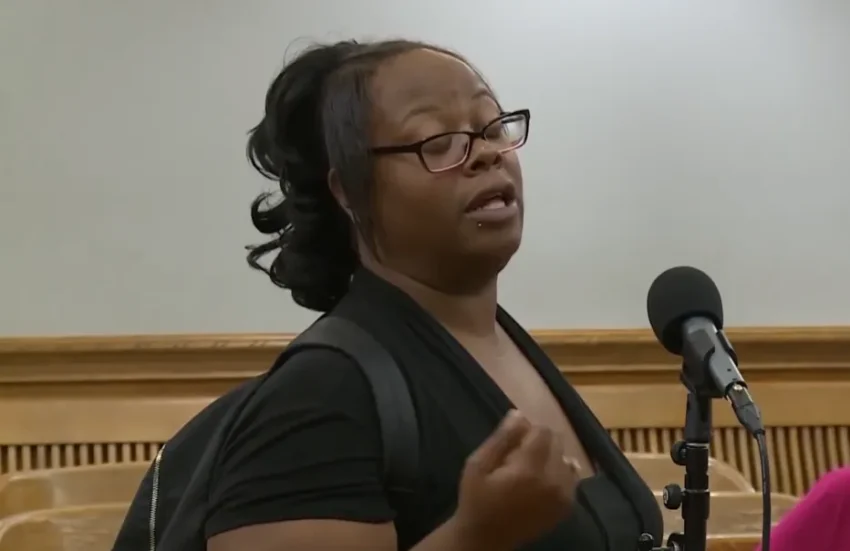
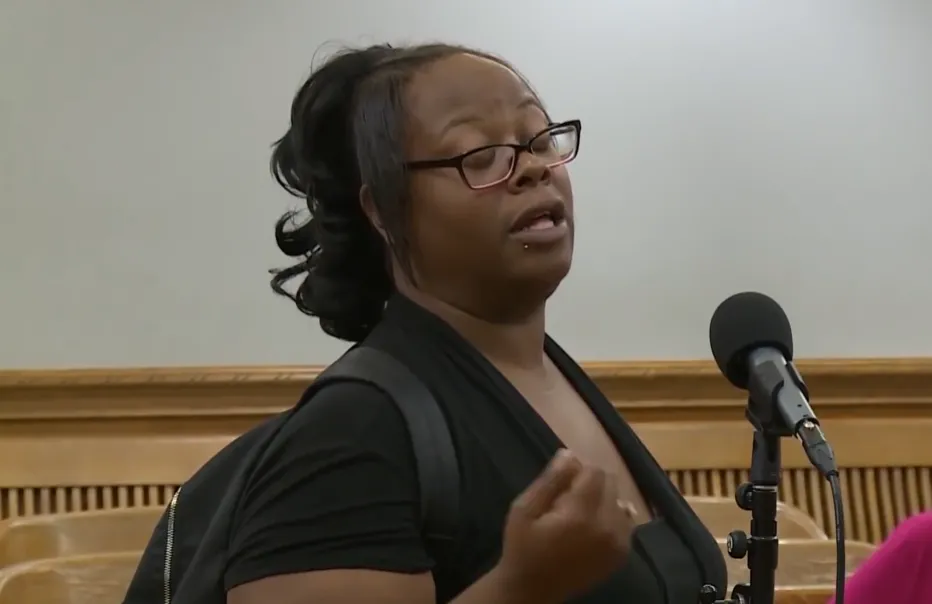
In a heartfelt courtroom moment, Shayna Sanders found herself facing two traffic violations, one from over a decade ago and the other from a recent red light infraction. Despite the circumstances that led to her troubles, Judge Caprio displayed his trademark compassion, ultimately granting Shayna a ruling that reflected both understanding and humanity.
Shayna Sanders had two main issues on the docket that day. The first was a parking ticket issued in 2003 for an infraction on Eddie Street. The second, and more recent, was a red light violation at the intersection of Dean Street and Route 10.
It was a case that seemed straightforward, but the circumstances surrounding her violations told a more complicated story.
Shayna’s defense for the red light violation was unexpected. She explained to the court that she had rented a car, and although the ticket was issued in her name, it wasn’t her who had run the red light.
Instead, she revealed that her friend, Kenny Barnes, had borrowed the car for a personal errand.
At the time, Kenny’s mother had just passed away, and Shayna, deeply moved by her friend’s loss, had agreed to help him. They rented a car to drive to Maryland and bring Kenny’s mother’s body back to Rhode Island for the funeral.
Kenny, during this difficult time, had borrowed the vehicle for a quick errand, and it was during this trip that he inadvertently ran the red light.
Shayna made a plea for Kenny to pay the fine, but to her disappointment, he had not done so, leading to their falling out. When asked about the state of their friendship, Shayna somberly admitted that they were no longer on good terms due to this financial burden. “We’re not friends anymore because of this ticket,” she explained with a mix of sadness and resignation.
Judge Caprio, known for his empathy and thorough understanding of human emotions, acknowledged that he had heard similar defenses many times before. People often try to blame their friends or family members when they are caught up in a situation.
However, he explained the legal reality: the person whose name appeared on the vehicle rental agreement remained legally responsible for any violations, regardless of who was driving at the time. He also made a poignant comment regarding the likelihood of Shayna ever recovering the money from Kenny.
“The chances of you ever getting that money back from Kenny are almost nonexistent,” the judge remarked, showing a clear understanding of the difficulty Shayna faced.
As the case continued, Judge Caprio noticed that Shayna appeared to be limping and in pain. Curious, he asked her about her injury. Shayna shared that her troubles went far beyond the traffic violations. When she was just 16, she had suffered a severe leg injury, breaking her bone and attempting to set it herself.
Over time, this injury worsened, leading to a degenerative condition in her left leg. Shayna had to undergo surgery, including a bone realignment and the insertion of screws. She confided that this had been an exceptionally tough year for her, with one hardship after another taking its toll on her physically and emotionally.
After hearing Shayna’s defense and learning more about her personal struggles, Judge Caprio considered all the factors at play. In a rare moment of leniency, he decided to dismiss the red light ticket entirely.
He explained that pursuing Kenny for the fine would only cause Shayna more stress, which she certainly didn’t need given her current emotional and physical state.
The parking ticket from 2003, which had accumulated additional late fees over the years, was also waved by the judge. Caprio noted that, while it had been a long time since the violation, continuing to penalize her for something so old would not serve any purpose.
In the end, Shayna only had to pay the original $30 fine for the parking ticket, a far cry from the financial burden she had feared.
As the case came to a close, Judge Caprio offered Shayna a few words of encouragement. He wished her the best of luck and advised her to focus on her well-being and recovery, both physically and emotionally.
He expressed his hope that things would get better for her in the future, and Shayna, overwhelmed by the judge’s kindness, expressed her heartfelt gratitude. With a smile, she thanked him for his understanding and support.
In a world where courtrooms often seem cold and impersonal, Judge Caprio’s compassionate ruling stood as a reminder that empathy can play a vital role in the legal process. For Shayna Sanders, the ruling not only eased her financial burden but also restored a sense of hope in a time of personal difficulty.
The case ended with Shayna walking out of the courtroom with a lighter heart, knowing that justice had been served with both fairness and compassion.