A Final Image, A Sudden Plea: The Case of Athena Strand Returns to Courtroom Focus
Not every case fades with time.
Some return—sharper, heavier, and more difficult to confront than before.
In a Texas courtroom this week, the case of 7-year-old Athena Strand resurfaced with renewed intensity, as prosecutors presented a newly revealed image from the day she was killed and the accused, Tanner Horner, entered an unexpected guilty plea.
The developments have shifted the trial dramatically—moving it away from determining guilt and toward a single, weighty question: what punishment should follow.
The events trace back to November 30, 2022, in Paradise, Texas—a small community northwest of Fort Worth.
On that day, Athena disappeared from her home, triggering an urgent search that quickly drew widespread attention. Within days, authorities identified a suspect: Tanner Horner, a delivery driver who had been at the property shortly before her disappearance.
Investigators later confirmed that Athena had been abducted, killed, and her body disposed of near the Trinity River.
The case shocked the region—not only because of the crime itself, but because of how quickly an ordinary moment turned into tragedy.
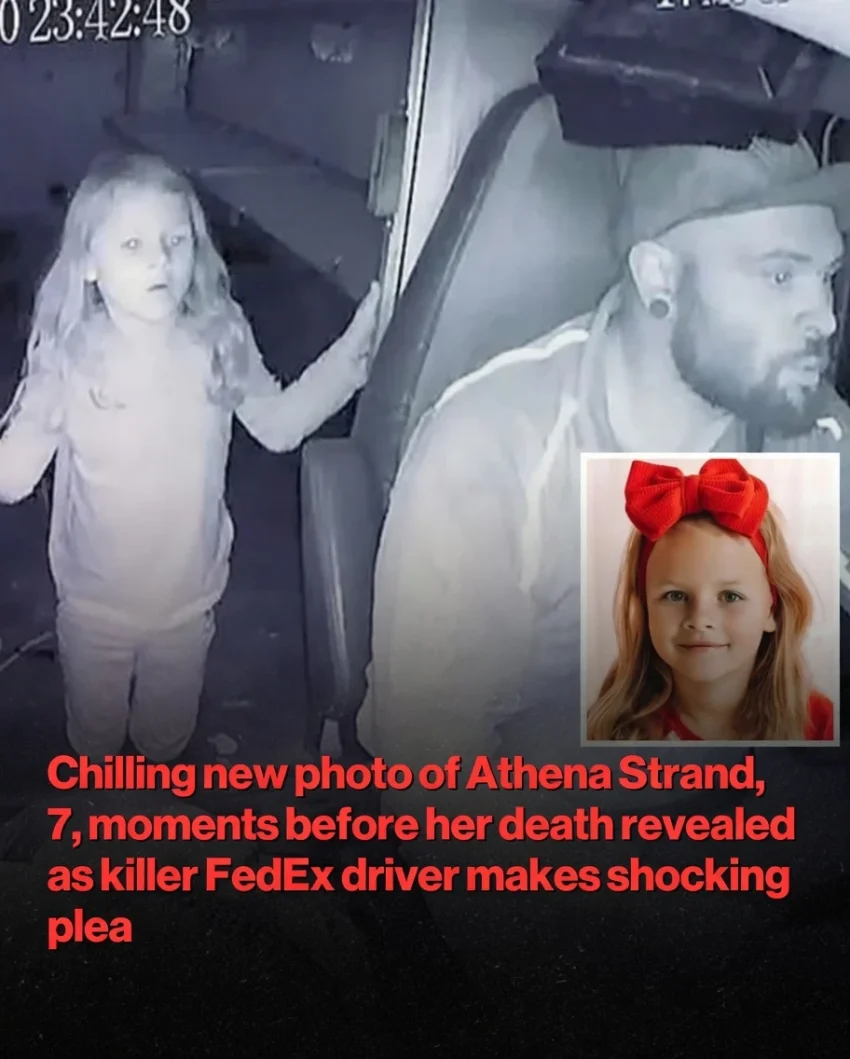
During proceedings this week at the Tim Curry Criminal Justice Center in Fort Worth, prosecutors introduced a previously unseen image taken from inside the delivery vehicle.
The black-and-white still, captured by an in-cab camera, showed Athena alive in the back of the van shortly after she was taken.
According to prosecutors, the image carries significant weight.
They argue it contradicts earlier claims made by the defendant—that the incident began as an accident followed by panic. Instead, the prosecution has framed the sequence of events as deliberate and escalating.
The image itself was not publicly displayed in full detail beyond the courtroom, but its description has already had a profound emotional impact on those present.
Perhaps the most unexpected moment came when Tanner Horner pleaded guilty to:
The plea came just as the trial was set to begin.
With that decision, the focus of the proceedings shifted immediately. The jury is no longer tasked with determining whether the crime occurred—but rather how the law should respond.
Possible outcomes include:
Judge instructions emphasized that jurors must now weigh evidence solely for sentencing purposes.
According to statements presented in court, Athena was taken from outside her home after an encounter involving the delivery driver.
Authorities say she was not seriously injured at the time of the initial contact. However, prosecutors allege that the situation escalated when the defendant feared being reported.
They contend that:
Investigators also stated that the defendant led police to her body two days after she was reported missing.
The prosecution has indicated that jurors may hear additional evidence, including audio recordings recovered during the investigation.
Officials have described this material as deeply distressing and central to understanding the final moments of the case.
Legal experts note that such evidence often plays a significant role in sentencing phases, particularly in capital cases where intent, awareness, and circumstances are closely examined.
Beyond the legal arguments, the case continues to resonate on a deeply human level.
Athena Strand was described by her family as a bright, energetic child with a strong personality and a love for life.
Her disappearance—and the way events unfolded—left a lasting impact not only on her family but on the wider community.
Cases involving children often carry an additional emotional weight, shaping how communities process grief, justice, and accountability.
With the guilty plea now entered, the case moves into its final phase.
The jury’s role will be to evaluate:
Their decision will determine whether the sentence results in execution or permanent imprisonment.
Legal analysts note that sentencing phases in capital cases can be as complex and consequential as trials themselves.
The reemergence of this case serves as a reminder of the realities behind headlines.
It highlights:
At the same time, it underscores the importance of due process—even in cases where emotions run high and outcomes seem clear.
The courtroom developments in the case of Athena Strand mark a significant turning point—but not an end.
The legal process continues.
The questions of accountability are being addressed.
And a jury will soon decide the final outcome.
What remains beyond the verdict is something less tangible, but no less real:
A life lost.
A family forever changed.
And a case that continues to echo far beyond the courtroom walls.