Molli and Robert had dreamed of a child for years before finally being blessed with their daughter, Ellie, a moment that felt like pure joy and fulfillment. That joy turned to heartbreak when Ellie was lost, leaving the couple with unimaginable grief, anger, and confusion.
The hospital treated her loss like any ordinary miscarriage, telling Molli to rest and assuring her it wasn’t serious because the baby wasn’t viable. Robert recalls the pain of burying a child without any closure and wondering why more effort wasn’t made to save her life.
Between losing Ellie and conceiving again, Molli experienced another miscarriage, yet within two weeks, they discovered she was pregnant with their son, Cullen. Doctors initially doubted the pregnancy due to the previous losses, but testing confirmed the new life, moving her under high-risk care.
A preventative cerclage was placed to protect the pregnancy, but fear never left their hearts, especially as minor bleeding began. Each day became a balance of prayer, hope, and fear that history might repeat itself.
While Robert was working offshore, Molli called saying her bleeding had increased, triggering panic and memories of past loss. The hospital sent her home again despite the severity, citing policy and protocol, leaving the family desperate.
After repeated episodes, the hospital considered removing the cerclage to save Molli, but she refused, holding firm to the promise that if Cullen fought, they would fight too. The neonatologist warned the couple that their son had only a 2% chance to survive and could be mentally handicapped, yet they pledged to love him unconditionally.
Refusing to accept hospital limitations, Robert called sixteen hospitals across three states until securing a transfer to the University of South Alabama in Mobile. There, a team of specialists immediately evaluated Molli and devised a plan to keep Cullen viable until at least 22 weeks.
At 12:01 a.m., when Molli reached 22 weeks, doctors treated the pregnancy as viable for the first time in weeks, igniting renewed hope. Robert focused on ensuring that Molli’s care was perfect, knowing that every moment counted for their baby’s survival.
Labor pains intensified as the cerclage could no longer hold, and blood clots forced the team into urgent action. The emergency C-section began, with the medical team simultaneously trying to save both mother and child.
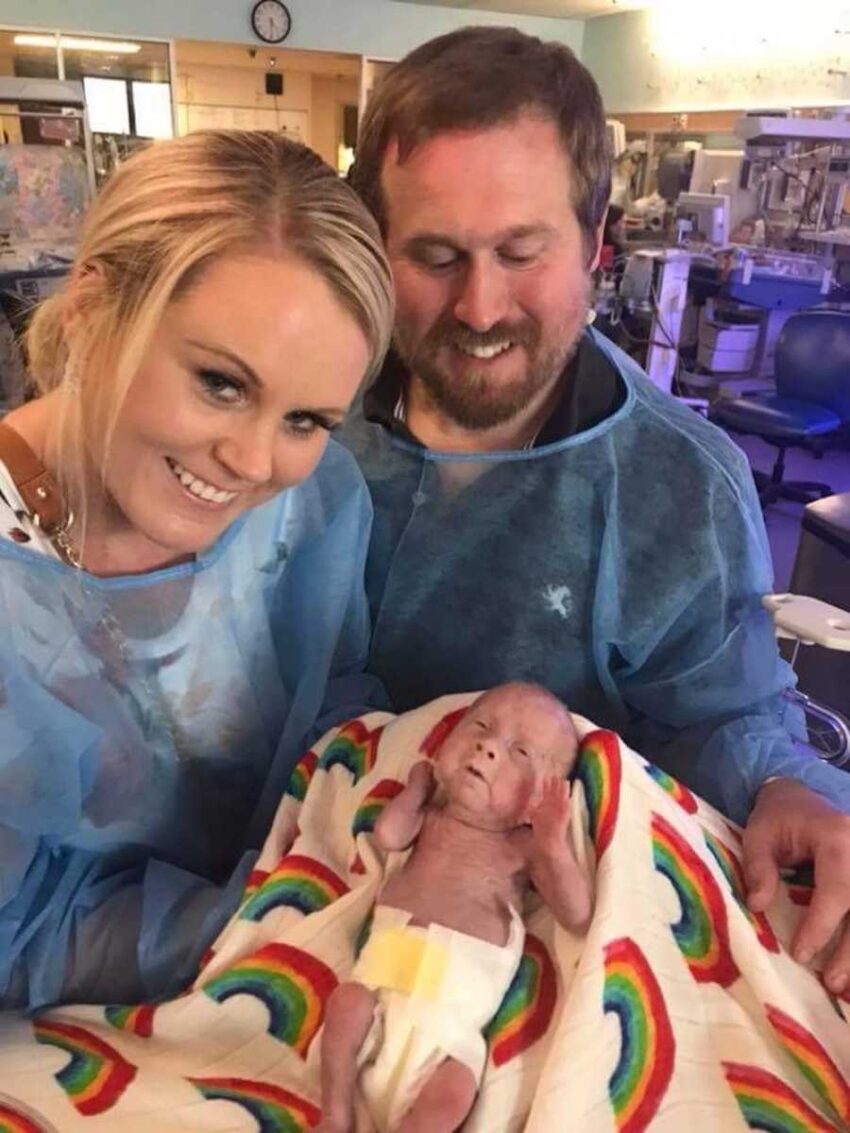
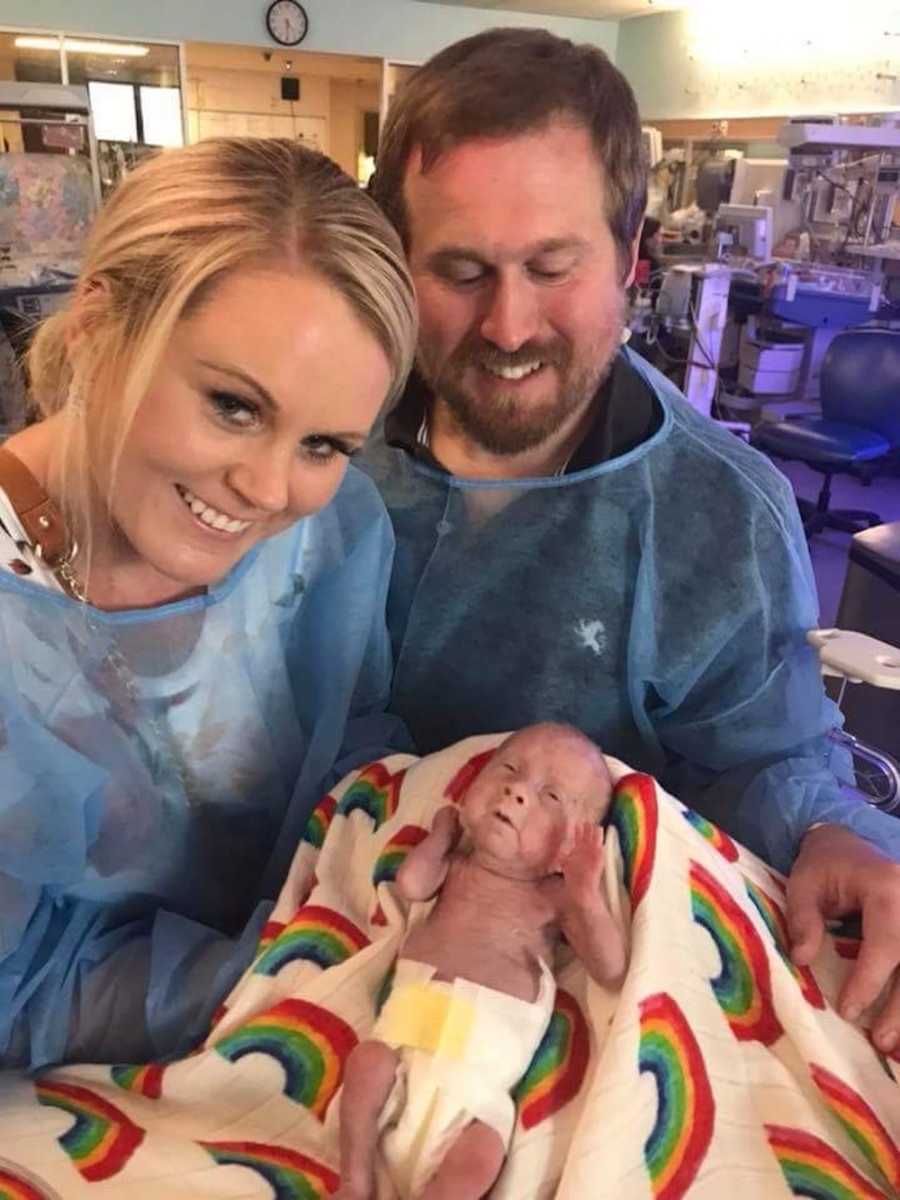
Cullen was born on March 14, 2018, at just 13.9 ounces and 10¼ inches long, a preemie far earlier than most believed possible. The NICU staff worked frantically to stabilize him while ensuring Molli’s safety, creating a delicate choreography of life-saving measures.
Robert experienced the longest hour of his life waiting to see his newborn in the NICU. When he finally held Cullen, emotions overwhelmed him—love, fear, awe, and relief all mixed into a single moment of pure intensity.
Cullen spent five months, 160 days, in the NICU, each day a delicate battle for survival. Molli drove daily from Florida to Alabama, often spending more time in traffic than beside her son, sacrificing everything for him.
Calls and check-ins became their lifeline, leaving pieces of their hearts behind while depending on the NICU staff’s dedication. Over time, the team became extended family, offering emotional support and expertise that helped the parents endure the endless days of uncertainty.
Finally, on August 21, 2018, Cullen came home healthy, marking the first time the family was together under one roof since his birth. Their oldest son, Kayden, finally met his baby brother, completing a long-awaited reunion full of joy and relief.
Robert shares this story to shed light on the difficulties families face in the NICU, the emotional toll, and the necessity of advocating for every chance at life. Hospitals refusing intervention before 24 weeks can inadvertently deny babies their only opportunity to survive.
Cullen’s survival is a testament to the power of parental advocacy, medical expertise, and relentless hope. Every day spent in the NICU became a small victory, reinforcing the importance of fighting for every child.
This story highlights the urgent need for policy change in hospitals regarding extremely premature births. Parents deserve full information and the ability to transfer to centers willing to provide aggressive care, giving babies like Cullen a fighting chance.
Cullen thrived, healthy and vibrant, proving that even the tiniest miracles are possible when hope, knowledge, and compassion intersect. His journey reminds the world that parents can be powerful advocates, challenging protocols to save their children.
For Robert and Molli, the experience redefined courage, patience, and parental devotion. Cullen became living proof that miracles can happen when love, determination, and medical support align.
They hope this story inspires other parents to fight for their children’s survival and encourages healthcare providers to recognize the immense value of each life. Every day in the NICU is exhausting, but with hope and proper care, babies like Cullen can grow strong and healthy.
Cullen’s life stands as a powerful reminder that resilience, love, and advocacy can overcome even the most daunting odds. The family’s journey shows that every child deserves a chance, and that miracles are possible when people refuse to give up.
This story is a tribute to hope, perseverance, and the relentless love of parents. Cullen’s fight became their fight, and his life a symbol of what courage, dedication, and compassion can achieve.