“FOR SUCH A TIME AS THIS?”: GRAHAM’S TRUMP–ESTHER COMPARISON IGNITES FAITH, POLITICS, AND GLOBAL TENSION
Never Miss a Word Again
These discrete, rechargeable hearing aids deliver crystal-clear sound and advanced noise cancellation. Perfect for watching the news, busy restaurants, or family gatherings.
Secure transaction via Amazon.com
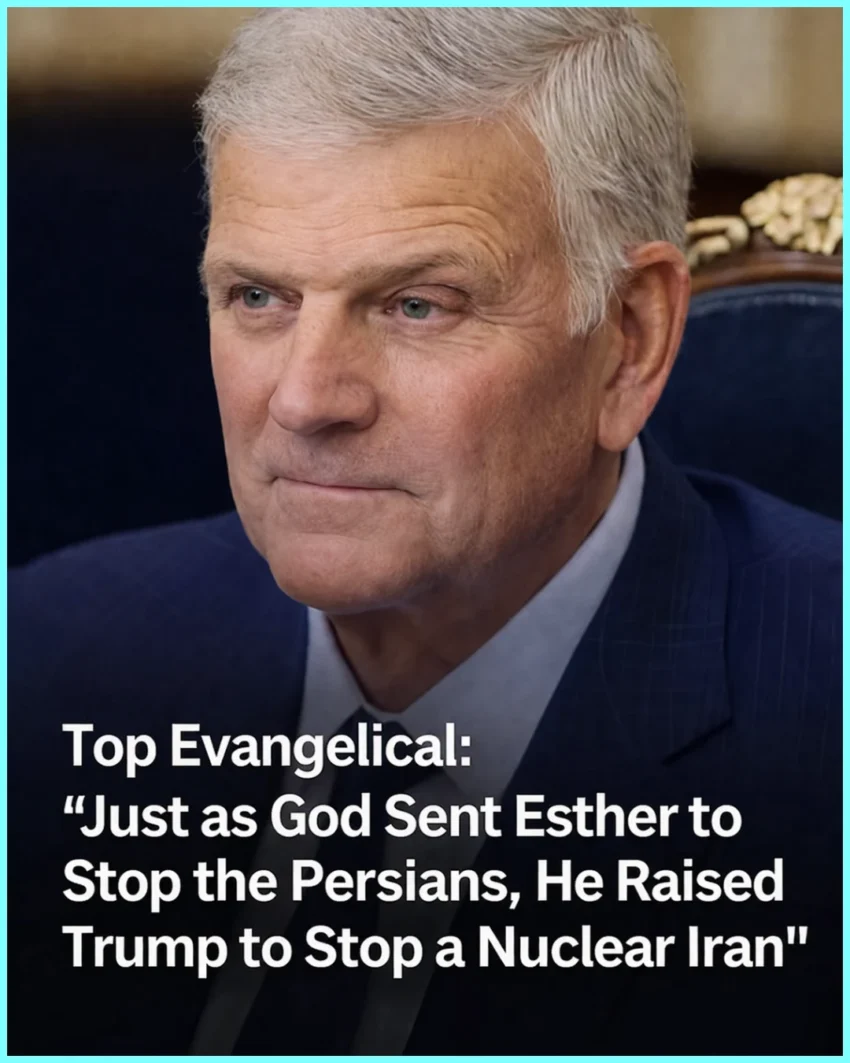
A fresh wave of debate is sweeping across the Christian world and beyond after evangelical leader Franklin Graham made a striking biblical comparison—one that has rapidly gained traction online and sparked intense reactions across political and theological lines.
In recent public remarks, Graham drew a direct parallel between former U.S. President Donald Trump and Queen Esther, one of the most compelling figures in the Old Testament. His statement, delivered amid rising geopolitical tensions, suggested that just as God positioned Esther at a decisive moment in history, He may have raised Trump to confront one of today’s most pressing global threats: Iran’s nuclear ambitions.
Never Miss a Word Again
These discrete, rechargeable hearing aids deliver crystal-clear sound and advanced noise cancellation. Perfect for watching the news, busy restaurants, or family gatherings.
Secure transaction via Amazon.com
The comparison is both bold and deeply symbolic. The Book of Esther tells the story of a Jewish woman who becomes queen in the Persian Empire and ultimately risks her life to save her people from destruction. Though God’s name is never explicitly mentioned in the text, His providence is widely understood to be at work behind the scenes, orchestrating events for a greater purpose.
By invoking Esther, Graham is tapping into a powerful biblical narrative—one that emphasizes divine timing, courage, and the idea that individuals can be placed in positions of influence “for such a time as this,” a phrase taken from Esther 4:14 that has echoed through centuries of Christian thought.
For Graham and many who share his theological perspective, this is not merely a metaphor. It reflects a broader belief that God actively intervenes in human history, raising up leaders to fulfill specific roles during critical moments. Within this framework, political leadership is not just a matter of elections or policy—it can also be understood as part of a divine plan.
Never Miss a Word Again
These discrete, rechargeable hearing aids deliver crystal-clear sound and advanced noise cancellation. Perfect for watching the news, busy restaurants, or family gatherings.
Secure transaction via Amazon.com
The timing of Graham’s remarks has only amplified their impact. The United States and Iran remain locked in a complex and sensitive relationship, with ongoing discussions surrounding nuclear development carrying significant implications for global stability. Israel, too, remains at the center of these concerns, heightening the stakes and drawing the attention of both political analysts and religious communities.
Against this backdrop, Graham’s statement has resonated strongly with some audiences while raising concerns among others. Supporters see it as a powerful affirmation of faith—a reminder that God can work through imperfect individuals to accomplish His purposes. They point to numerous biblical figures, including King David and Cyrus the Great, as examples of leaders used by God despite their flaws.
Critics, however, caution against drawing direct parallels between ancient biblical narratives and modern political figures. They argue that such comparisons risk oversimplifying complex geopolitical realities and may blur the line between spiritual conviction and political endorsement.
Never Miss a Word Again
These discrete, rechargeable hearing aids deliver crystal-clear sound and advanced noise cancellation. Perfect for watching the news, busy restaurants, or family gatherings.
Secure transaction via Amazon.com
This tension is not new. Throughout history, religious leaders and communities have wrestled with the question of how to interpret current events through the lens of Scripture. From times of war to moments of national crisis, the idea that God raises up leaders for specific purposes has both inspired hope and fueled controversy.
What makes Graham’s statement particularly significant is his influence. As one of the most recognized evangelical voices in America, his words carry weight far beyond the pulpit. For millions of believers, his interpretation of events can shape how they understand the intersection of faith and public life.
At the same time, the broader Christian community remains diverse in its perspectives. While some embrace the idea of divine appointment in political leadership, others emphasize caution, urging believers to avoid equating any individual leader with a biblical mission. They highlight the importance of discernment—recognizing that while God may work through leaders, no human figure should be elevated beyond accountability.
The story of Esther itself offers a nuanced lens through which to view this debate. Esther did not seek power for its own sake, nor did she act without risk. Her decision to approach the king was marked by humility, courage, and a willingness to sacrifice for the sake of others. It is this complexity that makes her story both inspiring and difficult to apply directly to modern contexts.
As Graham’s remarks continue to circulate, the conversation has extended beyond theological circles into mainstream discourse. Social media platforms have become a battleground of interpretations, with users debating not only the validity of the comparison but also its broader implications.
Some view the statement as a call to recognize God’s sovereignty in uncertain times, while others see it as a reminder of the need to separate faith from political allegiance. In many ways, the reaction reflects deeper divisions—not only within Christianity but within society as a whole.
Yet, amid the noise, one theme remains constant: the enduring human desire to find meaning in moments of uncertainty. Whether through Scripture, tradition, or personal belief, people continue to seek understanding in the face of complex global challenges.
Graham’s words, regardless of one’s stance on them, have undeniably struck a chord. They have reignited longstanding questions about divine purpose, leadership, and the role of faith in shaping how we interpret the world around us.
And then, in a moment that has quickly become the focal point of the entire discussion, Graham delivered a line that many are now calling one of his most powerful statements yet—one that is spreading rapidly and leaving audiences both intrigued and divided.
As reactions continue to pour in, one thing is certain: this is more than a headline. It is a conversation that reaches into the heart of belief, power, and the search for purpose in a rapidly changing world.
“THE TRUTH HAS FINALLY COME TO LIGHT” — Nick Vujicic BREAKS HIS SILENCE ON A PRIVATE HEALTH BATTLE THAT LEFT MILLIONS STUNNED AND DEEPLY MOVED
For months, something felt different.
The absence wasn’t sudden enough to alarm — but it was noticeable. Fewer public appearances. Longer gaps between messages. A quiet shift in rhythm that many of Nick Vujicic’s supporters couldn’t quite explain, but couldn’t ignore either.
Questions began to surface.
Was he resting?
Taking time off?
Or facing something more serious behind the scenes?
At first, there were no answers.
Only silence.
And for someone whose voice had long been a source of strength and clarity for millions around the world, that silence carried weight.
Now, that silence has been broken.
In a deeply personal and carefully delivered message, Nick Vujicic has chosen to speak — not as a global figure, not as a speaker on a stage, but as a man opening a window into one of the most challenging chapters of his life.
“The truth,” he said quietly, “is that some battles aren’t meant to be fought in public.”
Those words marked the beginning of a revelation that has since resonated far beyond the moment it was shared.
For the first time, Nick acknowledged that his recent absence was not coincidental. It was intentional. Necessary. A decision shaped by circumstances that required time, focus, and strength away from the spotlight.
While he did not frame it with dramatic language or clinical detail, the message was clear: he had been facing a serious health challenge — one that tested him not just physically, but emotionally and spiritually.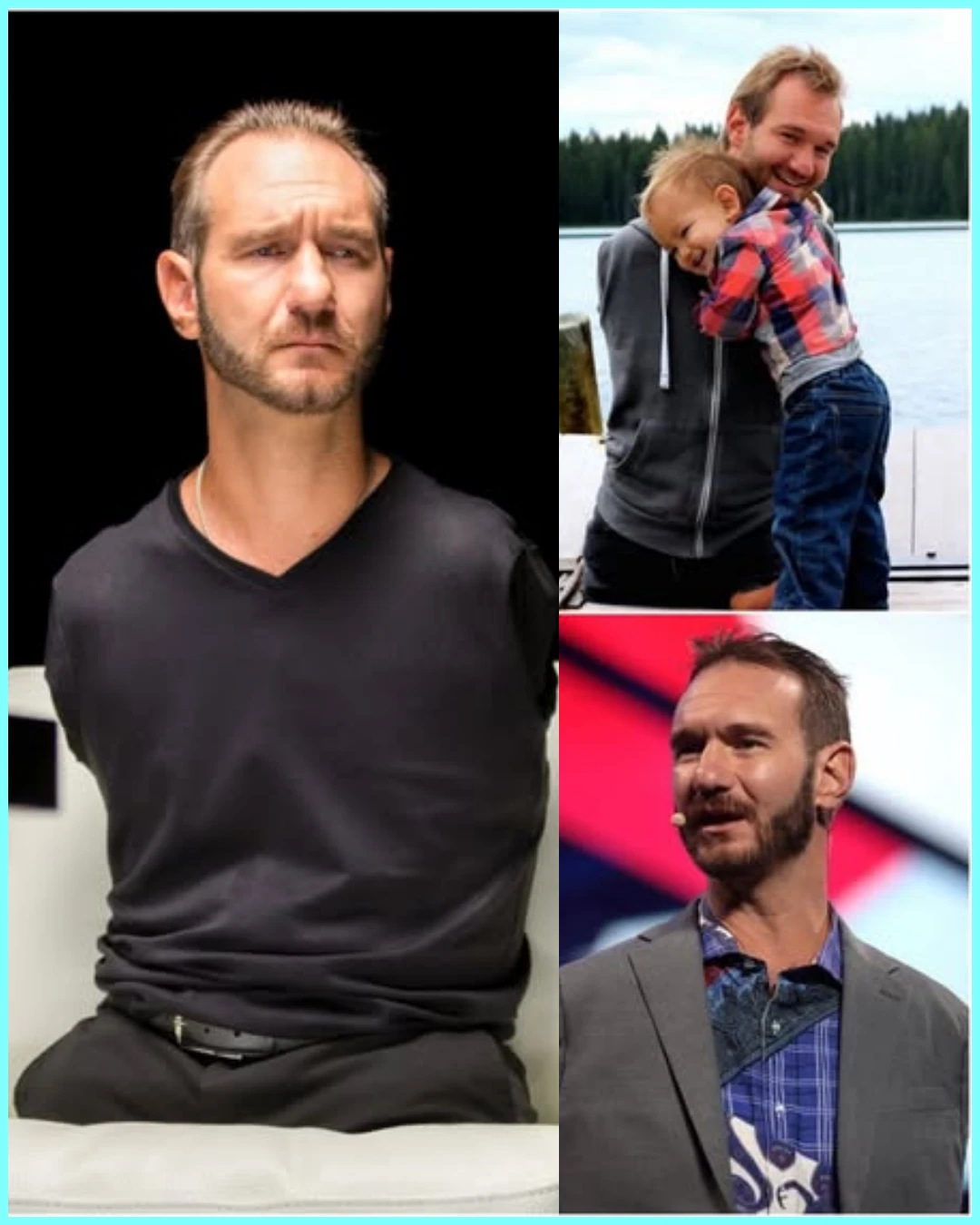
And for someone who has spent decades encouraging others to overcome adversity, this was a different kind of challenge.
A quieter one.
A more personal one.
“It wasn’t something I could explain in a single message,” he continued. “And it wasn’t something I wanted people to worry about without understanding.”
Those close to him had known.
His inner circle. His family. His wife, Kanae Miyahara, who had stood beside him through every visible and invisible moment of the journey.
But to the world, there had only been glimpses.
Moments of reflection.
Short messages that hinted at something deeper without fully revealing it.
Now, those pieces are beginning to make sense.
Nick described a period marked by uncertainty — days when progress felt slow, when answers weren’t immediate, when the path forward wasn’t as clear as it had been in the past.
“There were mornings,” he shared, “when I didn’t feel like the person people see on stage.”
It was a rare admission.
Not of weakness — but of humanity.
Because for someone so often seen as a symbol of resilience, the idea that he, too, faced moments of doubt and exhaustion added a new dimension to his story.
This wasn’t the story people expected.
It was deeper than that.
More real.
More complex.

Supporters around the world responded almost immediately. Messages of encouragement, prayer, and gratitude flooded social platforms, not in panic — but in solidarity.
Because the revelation didn’t just answer questions.
It created connection.
A shared understanding that strength doesn’t always look the way we imagine it.
Sometimes, strength is quiet.
Sometimes, it’s choosing to step back.
To heal.
To reflect.
To rebuild.
Nick spoke about that process with clarity and calm.
“I’ve learned,” he said, “that stepping away doesn’t mean giving up. Sometimes, it’s the only way to keep going.”
Those words echoed far beyond his personal situation. For many, they became a reminder — permission, even — to recognize their own limits and honor them without guilt.
Throughout the message, one theme remained constant: faith.
Not as a concept, but as an anchor.
“It’s in the quiet moments,” he explained, “when you don’t have the answers, that your faith becomes something more than words.”
For Nick, this period was not just about physical recovery.
It was about realignment.
Reconnection.
With purpose.
With family.
With himself.
He spoke about the importance of those closest to him — the presence of his wife, the support of his children, the role they played in grounding him when everything else felt uncertain.
“They reminded me,” he said, “that who I am is not defined by what I do, but by who I’m with… and what I believe.”
It was a perspective that resonated deeply with those listening.
Because it shifted the focus away from achievement and toward meaning.
From visibility to presence.

As his message came to a close, Nick didn’t offer a dramatic resolution.
He didn’t claim that everything was fully behind him.
Instead, he offered something more honest.
“I’m doing better,” he said. “I’m taking it one day at a time.”
Simple words.
But powerful.
Because they reflected progress without pretending perfection.
Strength without denying struggle.
Since then, the response has continued to grow. Not as a reaction to a headline, but as a response to a story — one that feels both deeply personal and universally understood.
Nick Vujicic has spent his life reminding others that circumstances don’t define destiny.
Now, in sharing this chapter, he has added something even more meaningful to that message:
That even those who inspire millions still face battles of their own.
And that those battles, when faced with honesty, faith, and support…
don’t diminish their strength.
They reveal it.
Because sometimes, the most powerful truth isn’t found in overcoming something publicly.
It’s found in enduring it quietly — and choosing, when the time is right…
to share it with the world.