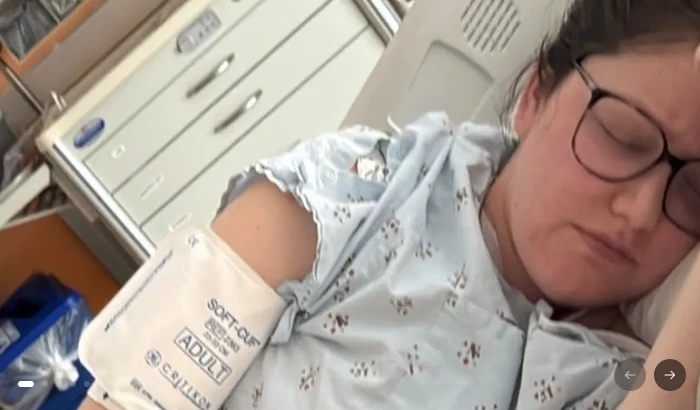
My granddaughter Alissa has been caught in a medical storm that no family should ever have to face.
What began as ordinary days full of laughter and life has become weeks filled with uncertainty, long hospital corridors, endless tests, and specialists working around the clock to find answers.
Doctors have discovered lesions on her brain and her spine, along with fluid building up on her brain — a combination of findings so complex and unusual that even the most experienced physicians are struggling to pinpoint a clear diagnosis.
Alissa’s symptoms have been worsening, not easing, leading to extensive testing and consultations with neurologists, neurosurgeons, and other specialists.
Every scan, every blood draw, every minute in that hospital room has been a reminder that her body is under attack from something not yet fully understood.
For her family, every day without a clear answer feels like navigating a maze with no exit in sight.
Because Alissa remains in the hospital, she cannot work, she cannot pay her normal bills, and she cannot manage daily living expenses.
Her family has stepped in to support her in every way possible, but the costs — rent, utilities, daily necessities, and medical bills that insurance does not cover — are accumulating faster than anyone can keep up with.
Every day is a new challenge. Every night is filled with hope and fear.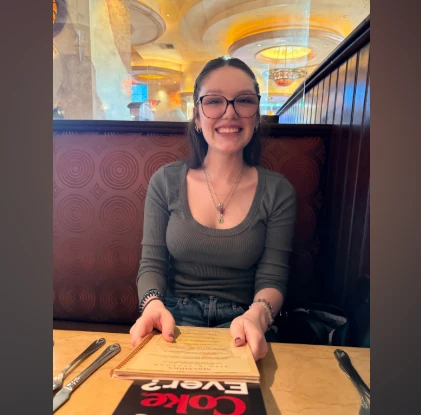
In the midst of this, the family has watched Alissa undergo treatment after treatment, procedure after procedure, all in pursuit of a cause and a treatment that can help her heal.
Over the past few weeks, she has endured two rounds of PLEX therapy, treatments designed to filter her plasma and hopefully reduce inflammation and immune activity that may be affecting her nervous system.
After that, doctors decided to place a shunt, a device meant to serve as a more permanent solution to drain excess spinal fluid that had built up on her brain — fluid that can increase pressure within her skull and contribute to symptoms like headaches, fogginess, and difficulty moving.
Following that procedure, a small improvement was seen — she was able to move her legs a little more, a sign that some things were responding to treatment.
But she still cannot walk, and activities that many take for granted — like sitting up or simple posture changes — remain very challenging for her.
Her speech is often slurred, and she can seem “loopy” or disconnected at times — but her doctors believe this may be related to her medications rather than directly from her lesions.
This case is considered extremely rare, one that some specialists cannot easily categorize.
Doctors have tested for nearly everything imaginable — autoimmune disorders, genetic conditions, infectious causes, metabolic diseases, chronic inflammatory disorders, and more — but so far, nothing has definitively explained her symptoms.
Many conditions that resemble portions of what Alissa is experiencing typically respond to steroid treatments, but in her case, the lesions have not improved and, troublingly, a few more have appeared in follow‑up imaging.
That’s why her care team decided that a biopsy was necessary — to obtain actual tissue samples from the affected areas of her brain, spinal fluid, and perhaps blood vessels or muscle — so they could examine them under a microscope and get closer to an answer without simply guessing.
A biopsy is a major step — it means doctors believe they have reached the limits of non‑invasive testing and need to see the very cells affected to understand what is truly happening inside her nervous system.
After the procedure was performed, she remained in a groggy, disoriented state — a common outcome following anesthesia and the shock of invasive sampling.
And even now, as she rests with family by her side, the results of the biopsy are still pending, leaving everyone holding their breath as they wait for direction.
This past week has been a roller coaster of emotions for everyone who loves her.
One moment is filled with hope, the next with fear.
One day brings small signs of improvement, the next brings questions that keep the family awake at night.
Her condition — rare, complex, and not easily defined — has forced every physician, every specialist, every nurse who steps into her hospital room to pause and think deeply about what could be causing her body to behave this way.
It is not a simple injury or a known infection.
It is not something that can be monitored and watched passively.
It is something that challenges the very limits of how much doctors can predict or comprehend about neurological disease.
The family has remained strong through it all.
Her partner Brooks has been a source of steadfast support — calm, loving, present at her bedside, providing strength in moments when everything else feels shaky.
Her mother and father have shown resilience beyond measure — managing hospital stays, advocating for her care, navigating complex medical terminology, and standing firm through the ups and downs.
The exhaustion is real, but so is their commitment to her recovery.
Messages, prayers, calls, and networks of support have been a lifeline — not just financially, but emotionally.
Every message of encouragement, every moment of connection from loved ones near and far brings a sense of compassion that helps carry the family through the long hours and hard nights.
In the world of neurology and medicine, there are many conditions that can involve lesions in the brain and spinal cord, each representing a different possible disease process that may require a different treatment approach.
Some conditions, like inflammatory demyelinating diseases, cause lesions that can affect movement, sensation, and autonomic function.
Others, like syringomyelia, involve fluid‑filled cavities in the spinal cord or brain stem and can disrupt nerve signaling.
There are autoimmune or vasculitic conditions that affect blood vessels and tissue throughout the central nervous system, leading to symptoms that mimic multiple sclerosis, stroke, or chronic infections.
Still others involve fluid accumulation that compresses tissue, akin to normal pressure hydrocephalus, where excess cerebrospinal fluid puts pressure on delicate structures in the brain and affects neurological function.
What all of these conditions have in common is that they can disrupt the way the brain and spinal cord communicate with the rest of the body — and they often require specialized imaging, biopsy, and collaborative specialist input just to define what is happening.
Right now, Alissa is somewhere in the middle of that journey — in the space between uncertainty and clarity — where each result brings the possibility of an answer, and each day brings fluctuations that remind her family that nothing about her condition can be taken for granted.
Even as doctors continue to evaluate her biopsy results and decide on the best course of action, her family finds themselves adjusting to a new normal — a reality where tomorrow may not look like yesterday, but where hope, love, and perseverance remain the forces that propel them forward.
Every day spent in that hospital room is a testament to her strength — to her will to endure, to fight, to identify a path forward even when the answers are not immediately clear.
And while the finish line in her healing journey remains out of sight, the progress she has made — even in limited movements, even in brief moments of clarity or recognition — fuels the belief that one day, with the right diagnosis and treatment plan, she may once again stand, speak, walk, and perhaps one day leave that hospital behind.