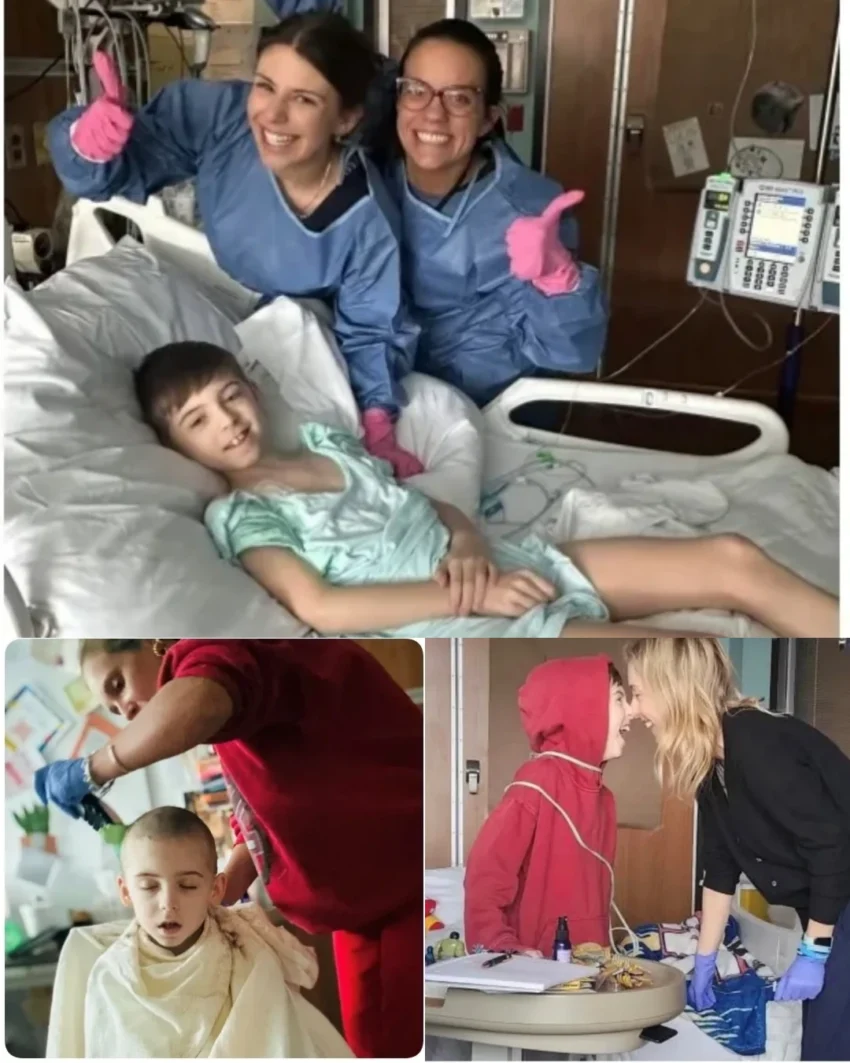
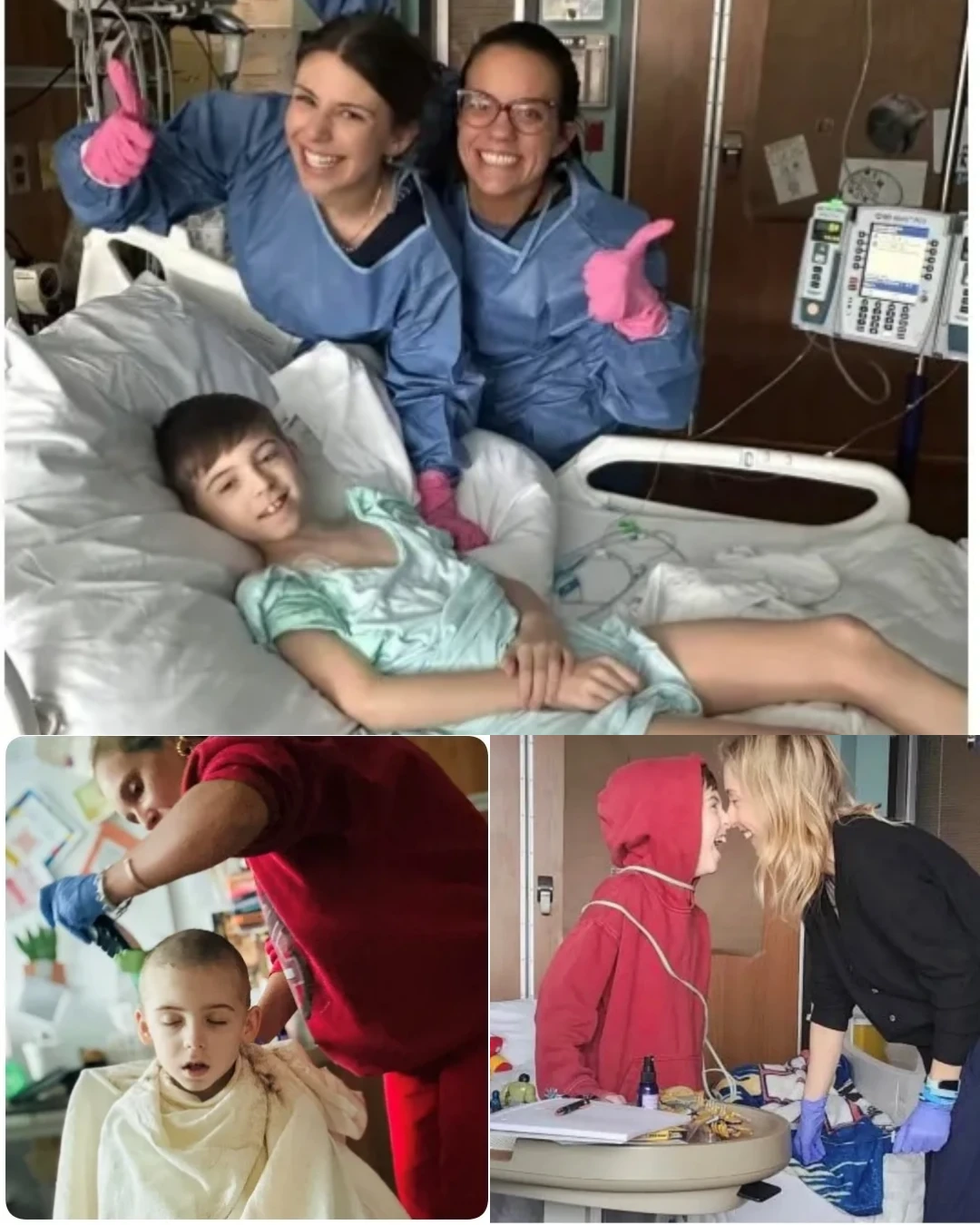
He’s the quiet kid in the room, the one who prefers building galaxies out of Legos instead of standing at the center of attention, the one who listens more than he speaks and smiles softly when someone mentions Star Wars.
But his fight has been anything but quiet, and at just eight years old, John Lucas Scott has already faced battles that would shake grown adults to their core.
Before cancer, before hospitals and transplant plans, John Lucas was navigating a world shaped by autism, learning routines and rhythms that helped him feel steady when everything around him felt too loud.
His parents watched him find comfort in structure and imagination, building intricate Lego creations with hands that preferred patterns over unpredictability.
Autism was never something they saw as a limitation, but as part of the unique way he experienced the world, a lens that made him thoughtful, observant, and deeply focused on the things he loved.
They celebrated every milestone he reached, knowing that progress for him sometimes came differently, but no less meaningfully.
Then came the diagnosis that no family ever prepares for, words spoken in an exam room that replaced everyday worries with something far heavier. B-cell lymphoma, a type of childhood cancer that immediately shifted their lives from school schedules and playdates to oncology floors and treatment plans.
Chemotherapy entered his life before he had fully learned how to explain what he was feeling, and hospital rooms replaced playgrounds with a swiftness that left everyone breathless.
John Lucas did not complain loudly or demand to know why; he simply endured, clutching his favorite toys and retreating into quiet focus when the world around him felt overwhelming.
His parents learned to decode his silences, to understand that strength does not always roar and that courage sometimes looks like sitting still while medicine drips into your veins. They watched their eight-year-old face needles and nausea with a calm that felt almost otherworldly, as though he had decided early on that fear would not dictate his response.
There were nights when exhaustion wrapped around the family like a heavy blanket, when the uncertainty of treatment outcomes pressed against their hearts. Yet even then, John Lucas found small joys, a new Lego set to assemble in his hospital bed, a Star Wars movie playing softly in the background as nurses checked his vitals.
Slowly, against the odds and through months of relentless therapy, the cancer retreated. Doctors used the word remission carefully, aware of its power, and his parents allowed themselves cautious hope for a future that once again included ordinary childhood moments.
But relief was short-lived, because follow-up testing revealed something even rarer and more complex than what they had just conquered. Beneath the surface of his recovery lay a genetic immune disorder, a hidden vulnerability that meant his body could not protect itself the way it should.
The news felt like déjà vu wrapped in disbelief, another storm gathering just as the sky had begun to clear. Doctors explained that without intervention, the disorder could undo everything they had fought so hard to achieve.
The only cure was a bone-marrow transplant, a procedure as daunting as it was necessary, requiring a donor match from somewhere in the vast registry of strangers willing to give a piece of themselves to save a child. His parents held onto that possibility like a lifeline, praying that somewhere across the world, someone would be a match for their quiet, resilient boy.
While the search unfolded, John Lucas continued being exactly who he had always been, building, imagining, persevering. He did not dwell on statistics or probabilities; he focused on what he could control, one Lego piece at a time.
The call finally came, a donor halfway across the world had matched, a person whose name they might never know but whose generosity would alter their son’s future. Gratitude and fear intertwined, because a transplant is not a simple fix but the beginning of another long and uncertain chapter.
The days leading up to the procedure were filled with preparation and intense treatment designed to make room for the new marrow. His body endured conditioning therapy that left him fragile and tired, yet he faced it with the same quiet steadiness that had carried him through cancer.
Just days ago, John Lucas received new marrow, cells that now travel through his bloodstream with the potential to rebuild his immune system from within. The procedure itself was not dramatic to the outside eye, a transfusion that looked almost ordinary, yet it carried the weight of everything.
Now comes the hardest part, the waiting, the delicate days when doctors monitor for signs of engraftment and watch carefully for complications. Each lab result feels monumental, each subtle change analyzed with hope and caution intertwined.
He remains in isolation, protected from infection, surrounded by medical teams who understand the fragility of this stage. His parents sit beside him, speaking softly, holding his hand, reminding him that this waiting is part of the fight.
Through it all, he remains the quiet kid, not demanding attention or praise for what he has endured. He asks for his Legos, for stories about distant galaxies, for small pieces of normalcy in a world that has asked so much of him.
And he is not fighting alone, because his little brother Silas carries the same diagnosis, the same genetic shadow looming over his future. The reality that two sons share this burden deepens both the fear and the resolve within their family.
Silas watches his older brother with wide eyes, absorbing lessons about courage without fully understanding the magnitude of what lies ahead for him as well. Their bond has strengthened in ways words cannot fully capture, two boys united not just by blood but by shared battles.
For their parents, the weight is immense, yet so is their determination. They navigate hospital corridors and specialist appointments with a resilience born from necessity, refusing to let despair take root in a home built on love and perseverance.
Two boys, one family, endless courage is not just a phrase but a daily reality lived out in whispered prayers and steady presence. It is found in the way they celebrate small victories and hold each other tightly through setbacks.
John Lucas Scott may be quiet, but his story echoes loudly in the hearts of everyone who hears it. His fight is not defined by volume or spectacle, but by unwavering endurance and a refusal to give up, even when the road ahead is uncertain.
As his body begins the slow process of accepting new marrow, his family waits with a mixture of hope and vigilance. They know there are no guarantees, only the choice to keep showing up, day after day, for whatever comes next.
In a world that often equates strength with noise, John Lucas teaches a different lesson, that resilience can be soft-spoken and still unshakable. And as he builds another Lego starship in a hospital room far from ordinary childhood life, he reminds us that the quietest warriors sometimes carry the greatest courage of all.