Isabella Veras, a vibrant 13-year-old who loved music, art, and learning, had been a normal, healthy child until 2018. At just seven years old, she suddenly began complaining of eye pain and, within 24 hours, lost vision in her right eye, prompting an emergency visit to Bascom Palmer Eye Institute.
During the initial evaluation, Isabella could only detect hand movements, and she reported a week-long history of fever and light sensitivity. Dr. Byron Lam diagnosed her with optic neuritis, or swelling of the optic nerve, and started treatment with steroids to reduce inflammation.
Isabella had never experienced any health complications before, making the sudden vision loss terrifying for her family. Her mother, Elizabeth Veras, recalled the fear and uncertainty, trusting that she was in capable hands.
A month later, Isabella’s symptoms worsened, with loss of appetite, muscle pain, and recurring vision issues. She was admitted to Holtz Children’s Hospital, where monoclonal antibody therapy was initiated to target the underlying autoimmune response.
Dr. Roberto Lopez, a pediatric neurologist at Holtz Children’s, performed a lumbar puncture to test spinal fluid, revealing neuromyelitis optica. This rare condition causes the immune system to attack the optic nerves and spinal cord, creating life-altering neurological symptoms.
Bascom Palmer ophthalmologists and Holtz Children’s neurologists and rheumatologists collaborated to create a comprehensive care plan. Isabella underwent routine MRIs and immunosuppressive treatment with chemotherapy medications from 2019 to 2022 to control disease activity and prevent relapses.
The decision to start long-term treatment was difficult, given the uncertain prognosis. Dr. Lam emphasized that a multidisciplinary approach was essential to provide Isabella with the best possible care and monitoring throughout her treatment.
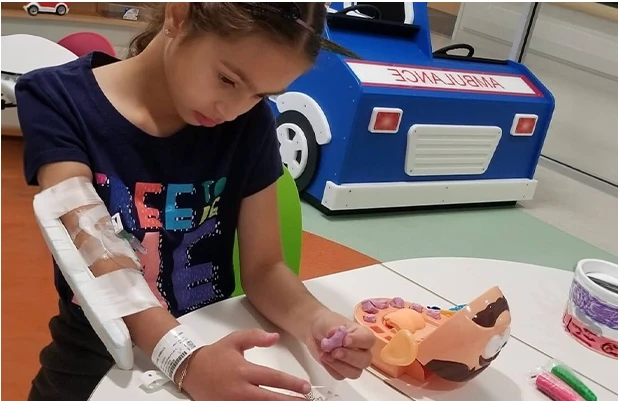
While hospitalized, Isabella found solace in music therapy and the support of Child Life specialists. Playing instruments and singing became a source of normalcy and emotional resilience, helping her cope with the challenges of living with a rare disease.
Through group music therapy, Isabella forged friendships with other pediatric patients, learning to play the ukulele together. These shared experiences fostered community and hope, giving her moments of joy amid her medical treatments.
Elizabeth expressed gratitude for the holistic care Isabella received, noting that the therapy team helped maintain a sense of childhood and normalcy. The combination of emotional support, music therapy, and skilled medical care was critical to her well-being during prolonged hospital stays.
In addition to vision support, Dr. Lopez treated lesions on Isabella’s spinal cord, alleviating abnormal sensations and preventing further neurological complications. The integrated approach ensured that Isabella remained asymptomatic for five years, demonstrating the effectiveness of specialized, coordinated care.
Dr. Lopez emphasized the importance of expert involvement when treating complex cases involving the brain, optic nerves, and spinal cord. He credited the dedicated faculty and staff at Holtz Children’s for their experience and comprehensive knowledge in managing intricate pediatric autoimmune disorders.
Now thriving in middle school, Isabella continues to pursue her passions in art and music while maintaining her medical regimen. She enjoys listening to Taylor Swift, painting, and learning, embracing her childhood despite ongoing treatments, MRIs, and checkups.
Isabella remains optimistic about her future, aspiring to earn a college degree and find a fulfilling career. She values her independence and normalcy, determined to live life fully while managing the unique challenges of her medical condition.
Her journey illustrates resilience, hope, and the transformative impact of multidisciplinary pediatric care. Isabella’s story highlights how comprehensive medical support, emotional guidance, and therapeutic interventions can help children overcome rare, life-altering diseases.
By balancing rigorous medical treatment with creative therapy and social support, Isabella was able to maintain her sense of identity and childhood joy. Her experience demonstrates the crucial role of holistic, patient-centered care in pediatric medicine.
From the onset of sudden vision loss to years of treatment and rehabilitation, Isabella Veras has navigated a complex medical journey with courage and determination. Her recovery and continued growth underscore the importance of specialized care for rare autoimmune diseases in children.
Isabella’s story also highlights the value of collaboration between medical specialists, therapists, and families in managing chronic and complex conditions. The coordinated effort allowed her to live a fulfilling childhood while minimizing the impact of neuromyelitis optica.
Through music, therapy, and personalized care, Isabella was empowered to regain a sense of normalcy and hope. Her progress serves as an inspiration to other children facing rare diseases and the families supporting them through challenging medical journeys.
Despite ongoing treatments and monitoring, Isabella approaches life with optimism, creativity, and ambition. Her journey exemplifies how resilience, professional expertise, and emotional support can transform the lives of children facing serious health conditions.
Isabella’s experiences remind us that childhood can still be vibrant and meaningful, even in the face of chronic illness. Her story demonstrates the extraordinary potential of comprehensive pediatric care to support children physically, emotionally, and socially.
The dedication of Holtz Children’s staff, from neurologists to music therapists, played a crucial role in maintaining Isabella’s growth and quality of life. Their collaborative approach enabled her to continue learning, creating, and dreaming, proving that rare diseases do not have to define a child’s future.
Isabella Veras continues to thrive academically, socially, and creatively, embodying hope and determination. Her journey is a testament to the transformative power of pediatric healthcare, multidisciplinary teamwork, and unwavering family support in the face of adversity.