At just 19 weeks pregnant, Yelsi Consuelo Sosa Fermín received devastating news: her unborn son’s heart had a critical defect. During a routine ultrasound at The Women’s Hospital at Jackson Memorial, doctors noticed an unusually rapid heartbeat, prompting further evaluation.
Dr. Jaime Alkon, a fetal and congenital heart disease cardiologist at Holtz Children’s Hospital, performed an echocardiogram. The results revealed severe tricuspid valve regurgitation, a condition causing leakage between the right atrium and ventricle that could weaken the heart over time.
Sosa, only 19, was overwhelmed by the diagnosis but maintained faith in God and the medical team. She committed to frequent visits with Dr. Alkon, meeting three times a week for monitoring and guidance throughout the second half of her pregnancy.
As the pregnancy progressed, the risk of in utero heart failure decreased slightly, though the threat remained high after birth. In early January, doctors observed excessive blood leakage and decided an emergency C-section was necessary to save the baby.
Immediately after delivery, the infant was rushed to the cardiac catheterization lab. Dr. Satinder Sandhu successfully performed a balloon atrial septostomy, creating a small opening between the upper chambers of the heart to improve oxygenation.
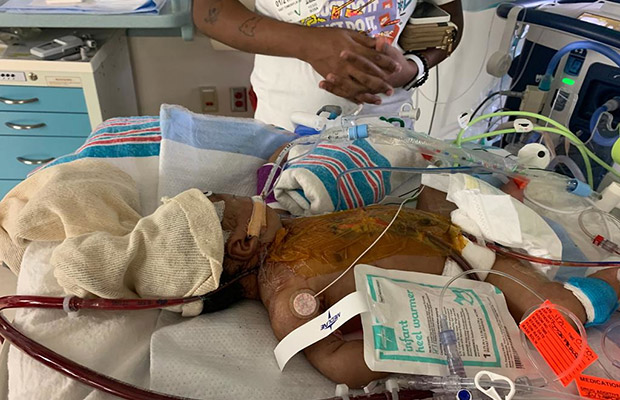
The procedure initially helped, but the baby experienced cardiac arrest a few days later. Dr. Sandeep Sainathan placed him on extracorporeal membrane oxygenation (ECMO) and a breathing tube to allow the heart and lungs to rest while maintaining oxygenated blood flow.
Once the breathing tube was removed, the infant went into cardiac arrest a second time. The pediatric team performed CPR and immediately transported him to the operating room for urgent intervention.
Lead surgeon Dr. Leonardo Mulinari worked tirelessly to repair the tricuspid valve. Through delicate surgical techniques, the team reduced the leakage, significantly increasing the newborn’s chances of survival.
Throughout the ordeal, Sosa managed constant stress with her faith, her mother’s support, and the guidance of nurses who explained each step of the complex procedures. Maylene Gonzalez, a pediatric cardiac ICU nurse, stayed closely involved, connecting with Sosa as a young mother facing uncertainty.
“Having my own children helped me empathize,” Gonzalez said. “We provided reassurance and ensured she knew every action was for her son’s safety and future.”
After months of intensive care and multiple interventions, Dr. Alkon determined the baby was physically and neurologically healthy. On April 4, the family celebrated his discharge from the hospital.
Though David will require ongoing monitoring and may eventually need a valve replacement, he is thriving. Sosa cherishes every moment, embracing the small victories and progress her son makes each day.
Sosa’s faith guided her throughout the journey, inspiring the name David after the biblical shepherd who overcame immense challenges. She believes her son has a purposeful life ahead, reflecting resilience and divine protection.
The success of David’s treatment highlights the critical importance of specialized prenatal and neonatal cardiac care. Coordinated interventions, rapid responses, and expert surgical techniques were crucial in transforming a high-risk birth into a survival story.
Holtz Children’s multidisciplinary team combined fetal cardiology, neonatal intensive care, and pediatric cardiothoracic surgery to provide seamless care. Their expertise ensured both immediate survival and long-term developmental outcomes.
From initial detection of tricuspid valve regurgitation to post-operative stabilization, every step demonstrated precision, collaboration, and patient-centered decision-making. David’s journey underscores how specialized interventions save lives even in complex congenital cases.
Sosa emphasized gratitude for every professional involved, from doctors and surgeons to ICU nurses and support staff. Their guidance, compassion, and technical skill transformed fear and uncertainty into hope and life-saving care.
The story also illustrates the emotional burden on young parents facing high-risk pregnancies. With support, education, and consistent communication, families can navigate overwhelming medical challenges with confidence and resilience.
David’s survival demonstrates the life-saving potential of balloon atrial septostomy, ECMO, and precise valve repair in neonatal congenital heart disease. Each milestone reflects collaborative care, expert intervention, and family advocacy.
His progress and development showcase the ability of pediatric cardiac teams to not only save lives but also preserve neurological and physical function. David’s thriving condition affirms the success of specialized neonatal care and comprehensive follow-up.
Through ongoing monitoring and compassionate support, David’s family is empowered to navigate future health considerations. Faith, family engagement, and medical excellence remain integral to his continued growth and well-being.
From prenatal diagnosis to neonatal intensive care and successful surgical repair, David’s story exemplifies hope, courage, and the transformative impact of expert pediatric cardiac care. His journey serves as inspiration for families facing congenital heart defects worldwide.
Each step of the treatment, from emergency interventions to post-operative care, reinforces the importance of early detection, rapid response, and multidisciplinary coordination. David’s survival is a testament to the dedication of healthcare teams committed to preserving life against the odds.
Sosa’s experience emphasizes the combination of faith, parental advocacy, and medical expertise in achieving successful outcomes. Her trust in Holtz Children’s staff allowed her to navigate uncertainty with confidence and hope.
David’s life now continues with joyful milestones, family bonds, and the support of a medical team prepared for long-term care. His story highlights the extraordinary difference that specialized pediatric cardiac care can make for newborns with severe congenital conditions.