At just seven years old, Scarlett Selby was having an ordinary day of playing with her toys — unaware that it would turn into one of the most terrifying moments of her young life.
The incident began not as a tragedy, but as childhood curiosity, a small moment that would have devastating consequences.
Scarlett had taken a popular NeeDoh squishy toy — a colorful, gel‑filled stress cube enjoyed by children across the country — and had left it in the freezer overnight.
The next day, she picked it up, now rock solid, and decided to put it in the microwave to make it more pliable, mimicking something she had seen in videos online.
No one in her family imagined that simple act could lead to the worst kinds of injury.
In a matter of seconds, as Scarlett removed the toy from the microwave, the contents exploded violently, showering her face, chest, and neck with scalding hot goo from inside the cube.
The internal substance of the toy became molten and blisteringly hot — a dangerous result of heating a material that was never designed for such use.
Scarlett screamed instantly — a sound her family would never forget.
Her father, Josh Selby, recounted hearing a “blood‑curdling scream” and rushing to his daughter’s side as she stood covered in the sticky burning gel.
In the chaos that followed those terrifying moments, Josh desperately tried to wipe the goo off Scarlett’s skin, only to find it too thick and sticky to remove easily.
Her shirt became entangled with the burning material, sticking to her body and making the rescue even more urgent.
In a frantic bid to help, he ripped her shirt off her tiny frame to prevent further injury, knowing every second counted.
Scarlett was then rushed toward St. Louis Children’s Hospital, her parents racing against time as she continued to scream in pain.
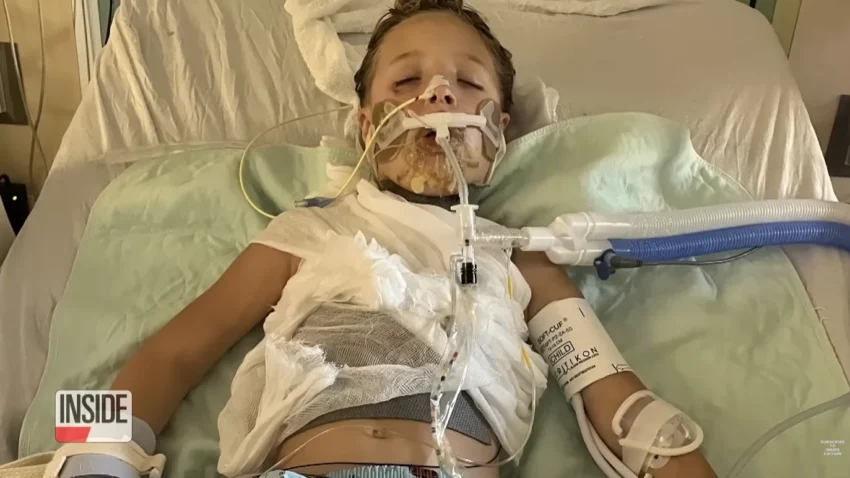
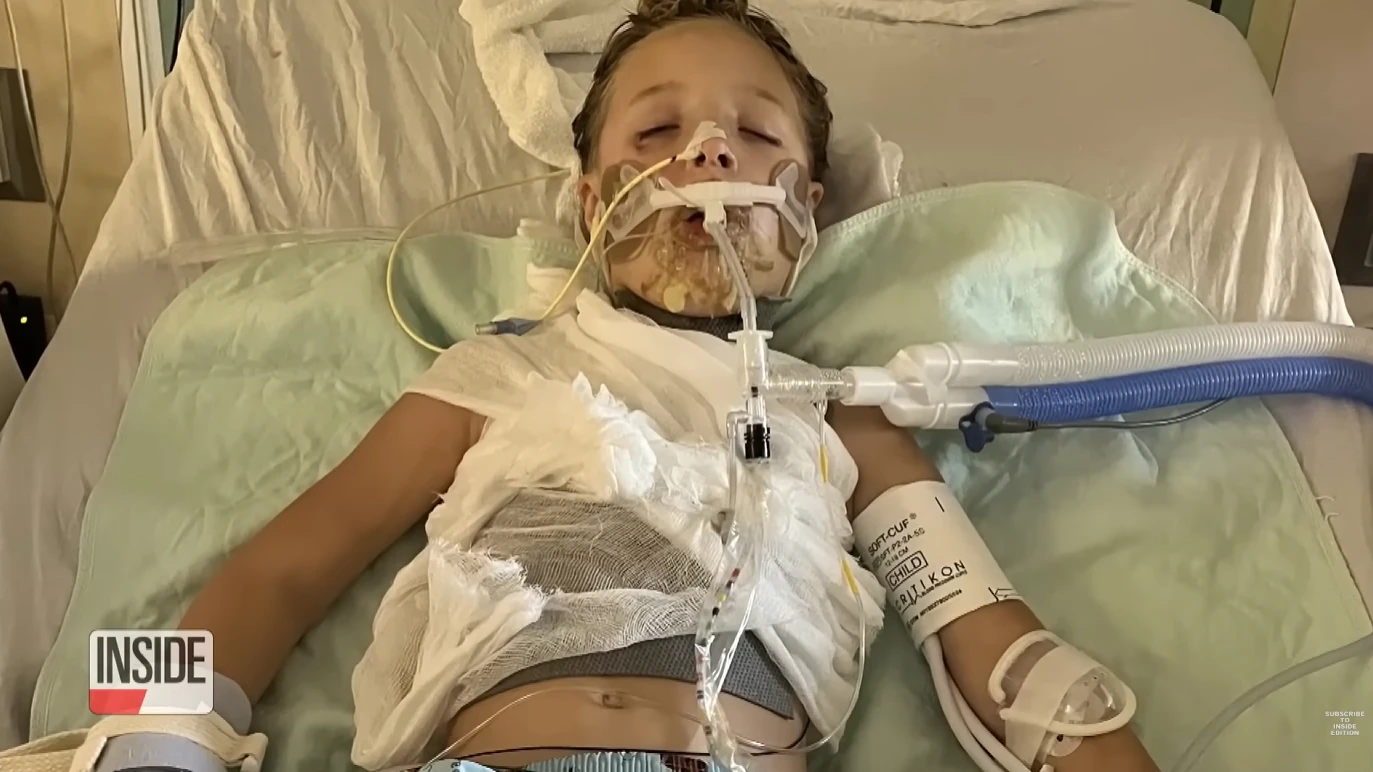
Doctors, fearing the burns around her mouth could cause dangerous swelling and airway obstruction, placed Scarlett into a medically induced coma for three days to protect her breathing and allow her body to begin healing.
The burns were so severe that she required a feeding tube during her week‑long hospital stay because her lips and mouth were too badly injured.
Medical experts categorized parts of her injury as second‑ and third‑degree burns, affecting not just the surface of her skin but the underlying tissues as well.
Once the immediate risk of swelling and airway compromise was stabilized, doctors decided not to perform a skin graft during that initial hospitalization, choosing instead to wait and observe how her body healed over time.
Scarlett’s recovery was slow, painful, and emotional — not just for her body, but for her spirit and those who cared for her.
Her face and chest bore profound scars from the incident, scars that stuck up off her skin and reminded her each day of the accident she could not have foreseen.
Her mother, Amanda Blankenship, shared that Scarlett sometimes felt self‑conscious about her scars, especially when questions from classmates made her more aware of them in public.
“I see her trying to cover her scar up with her shirt when we’re out in public sometimes,” her mother said, describing how others’ reactions affected her young daughter’s confidence.
But the emotional journey was just as complex as the physical one.
Scarlett’s injuries were a constant reminder of how quickly something so ordinary — a toy — could become dangerous when misused.
Her parents explained that their daughter had been copying videos she had seen on social media, including TikTok and YouTube, where others showed the squishy toy being frozen and microwaved as part of a trend.
Neither the toy’s packaging nor its official warnings indicated that heating it would be dangerous — yet manufacturers now warn that putting such products in a microwave, freezer, or any form of heat “may cause personal injury.”
The gel inside the toy — often a mix of maltose or polyvinyl alcohol, depending on the product — becomes dangerously hot and sticky, creating a substance much like heated glue that can adhere to skin and clothing and inflict severe burns.
Once the substance is in contact with skin, it can be almost impossible to remove without causing further damage, making initial treatment and clean‑up especially challenging.
As Scarlett’s family navigated the aftermath of that day — from emergency care through weeks of healing — they also began to understand the wider implications of viral trends and how easily children can be influenced by what they see online.
The scars she received are not just physical — they are a reminder of the power of visual influence, of how a child innocently following what seemed like a fun experiment could end up enduring one of the most painful experiences of her life.
Scarlett’s case isn’t alone; hospital burn units across the country have reported injuries tied to similar incidents where young children attempted to heat or modify squishy stress toys after seeing content online.
Healthcare professionals repeatedly warn that what looks like a harmless trend can have dire consequences, particularly when involving heat and materials not designed for it.
For Scarlett, even after leaving the hospital, the journey of recovery was ongoing.
Her parents continued applying creams and silicone ointments daily in hopes that the scars would soften and blend into her skin as she grows.
There remains a possibility, as her body develops over the next few years, that she may require skin grafts to help address the scars if they do not stretch and adapt naturally with her growth.
Emotionally, Scarlett’s path forward includes learning to embrace her body as it heals, to feel confident among her peers, and to grow into a strong young girl who has already survived something no one her age should endure.
Her parents — while deeply shaken by the accident — use the story to teach caution and awareness, not just about toys, but about how children interact with trends and how critical it is to understand the risks before trying something unfamiliar or dangerous.
Scarlett’s experience underlines a stark reality of modern childhood: influences seen online can translate into real‑world harm, sometimes in the blink of an eye.
Though she survived, the memory of that explosive moment — the pain, the fear, the unexpected journey into a hospital bed — remains etched not just on her skin but in her family’s collective memory.
Her story is a cautionary tale, a reminder of the hidden dangers that can lurk beneath the surface of viral trends and everyday curiosity — and the importance of understanding that not all “fun experiments” are safe, especially when they involve heat, chemicals, or untested behavior based on social media clips.