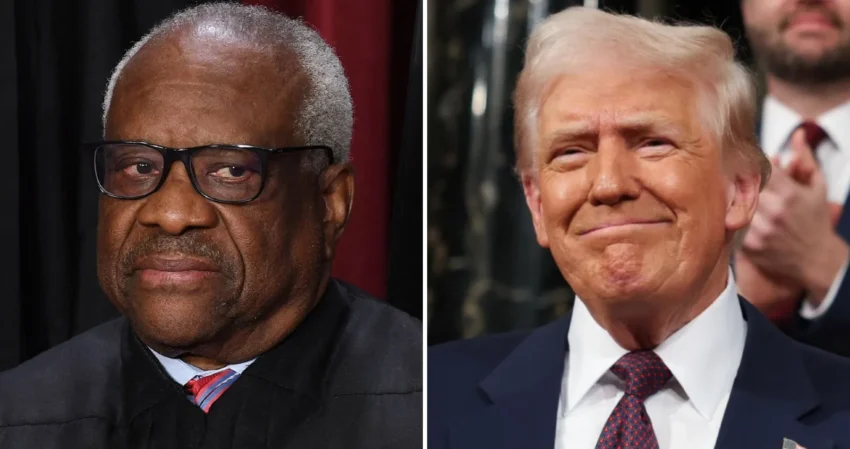
WASHINGTON, D.C. — The U.S. Supreme Court ruled 6-3 to block President Donald Trump from utilizing the International Emergency Economic Powers Act (IEEPA) to impose sweeping tariffs on U.S. trading partners without congressional authorization. The decision halts a central mechanism of the administration’s current economic and trade agenda.
The Legal Arguments and Lower Court Rulings
The case centered on whether the executive branch has the authority to use an emergency statute to bypass Congress when enacting broad, revenue-raising tariffs.
The Administration’s Defense: Department of Justice lawyers argued that the IEEPA permits the president to respond to “unusual and extraordinary threats.” The administration categorized long-standing, sustained trade deficits as a national emergency justifying the tariffs, warning that striking them down would leave the U.S. defenseless against trade retaliation.
The Plaintiffs’ Case: Challengers argued that the IEEPA had never been used to levy tariffs in its 50-year history. They contended that decades-long trade deficits do not meet the legal threshold for a sudden “emergency,” and that allowing the tariffs would improperly transfer Congress’s constitutional taxing authority to the executive branch.
Prior Precedent: The Supreme Court’s decision upholds previous rulings from both the U.S. Court of International Trade and the U.S. Court of Appeals for the Federal Circuit, which had previously rejected the administration’s interpretation of the IEEPA.
The Dissenting Opinions
Justices Clarence Thomas, Brett Kavanaugh, and Samuel Alito dissented from the majority, outlining both constitutional and practical objections to the ruling.
Justice Thomas on Statutory Text: Thomas argued that historical precedent supports the executive action. “Congress authorized the President to ‘regulate… importation.’ Throughout American history, the authority to ‘regulate importation’ has been understood to include the authority to impose duties on imports,” he wrote. He further argued that Congress has regularly delegated similar powers to the president “with this court’s blessing” without violating the nondelegation doctrine.
Justice Kavanaugh on Practical Consequences: Kavanaugh’s dissent focused heavily on the logistical and financial fallout of the decision, particularly regarding the refunding of illegitimately collected tariffs. He noted that the U.S. may be required to refund billions of dollars to importers who have already passed those costs on to consumers, warning that navigating the refund process will likely be a “mess.”
Alternative Avenues for Trade Policy
While the ruling restricts the use of the IEEPA, legal experts note that the administration maintains other statutory mechanisms to pursue its economic policies. George Washington University law professor Jonathan Turley observed that the White House still has “plenty of runway” in this area.
“The administration has other tools in its toolbox,” Turley stated. “It can actually impose tariffs under other statutes”.