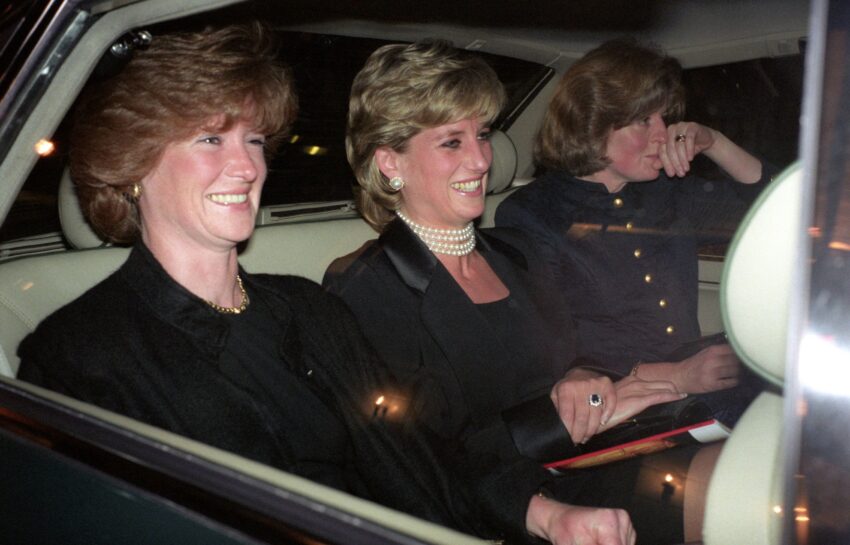
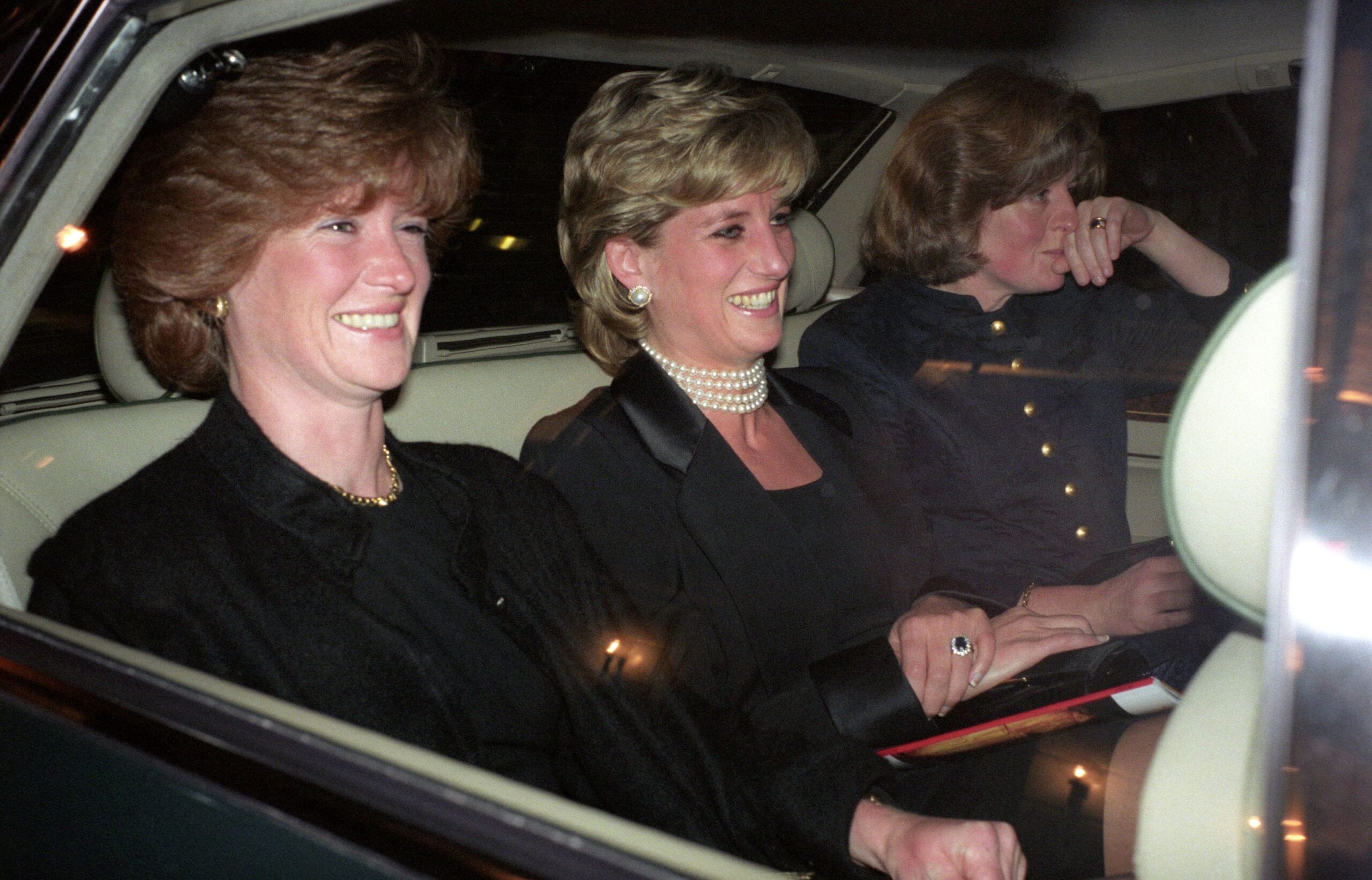
Before she was the most photographed woman in the world, before she became a global symbol of compassion and grace, Lady Diana Spencer was simply the youngest of three daughters — quiet, shy, and, in the eyes of everyone around her,
the least likely to ever wear a crown.
Among the Spencer sisters, Diana was never the obvious choice for royalty. She didn’t dazzle like her eldest sister, Sarah, nor command quiet respect like the middle sister, Jane. Yet history, with its poetic sense of irony, chose
her — the “ordinary” girl — to become the most extraordinary princess the modern world had ever known.
Before Diana ever met Prince Charles, it was her sister
Lady Sarah Spencer who was considered the perfect match.
Sarah was charismatic, intelligent, and confident — a natural fixture in London’s upper-class circles. When she and Charles began dating in the late 1970s, society pages buzzed with anticipation. The pairing seemed destined.
They skied together in Switzerland, attended balls, and dined at Sandringham. The royal family appeared to approve. For a brief moment, everyone believed Sarah would one day become Princess of Wales.
But one careless remark changed everything.
During an interview, a reporter asked her about her relationship with the heir to the throne. With the blunt honesty of youth, Sarah replied:
“I wouldn’t marry Charles if he were the dustman or the King of England.”
Those words — innocent in tone, disastrous in effect — sealed her fate. When Charles read the interview, he was reportedly humiliated. The romance ended abruptly.
In later years, Sarah laughed about it, saying she had introduced Charles to Diana and therefore could “always claim to be Cupid.” But deep down, she knew the truth: her chance to make history had vanished with a single sentence.
If Sarah was the bold one, Lady Jane Spencer was her opposite — calm, polished, and dignified. She married Robert Fellowes, an assistant private secretary to Queen Elizabeth II, and slipped quietly into royal-adjacent life.
Lady Jane understood the workings of the palace better than anyone in her family. Behind her soft manners was a keen awareness of how fragile life at court could be — the politics, the pressure, the lack of privacy.
When her younger sister Diana became engaged to Prince Charles, Jane is said to have cautioned her against rushing into marriage.
She had seen the toll royal life could take, even from a distance. But Diana, swept up in the whirlwind of fairy-tale romance, didn’t want to listen. She was nineteen, in love, and believed — as all young dreamers do — that love could conquer everything.
Jane, out of loyalty, stood by her anyway. On Diana’s wedding day, she read a passage from the Bible — words that would later seem heartbreakingly prophetic about love, endurance, and faith.
Diana Frances Spencer was different.
She wasn’t the most studious — her teachers at West Heath described her as “sweet, kind, but not academically outstanding.” She wasn’t the most worldly or the most confident. In fact, she often blushed, spoke softly, and preferred the company of children to adults.
Her sisters moved through London’s high society like swans. Diana was still finding her place. She dreamed of becoming a ballerina, loved animals, and volunteered at a kindergarten. She had the kind of warmth that didn’t demand attention — it simply drew people in.
When she first met Prince Charles at Althorp, she was just 16. He was dating Sarah at the time. Their paths crossed again years later — after Sarah’s romance with Charles had ended — and this time, something unexpected sparked.
Charles found Diana’s innocence refreshing. She found his world fascinating.
Within months, the shy girl who once felt invisible among her sisters was suddenly the center of a royal fairy tale.
When Charles proposed after only 13 meetings, many thought it was too soon. But the engagement was announced, the sapphire ring glittered, and Diana — the quiet Spencer girl who’d never stood out — was about to become the most famous woman on Earth.
No one could have imagined what would follow.
She might not have been the clever Sarah or the composed Jane, but Diana had something neither of them did — emotional instinct.
She could read people, feel their pain, and connect with strangers in ways that defied royal etiquette.
What the monarchy saw as naïveté was, in truth, empathy.
What the palace viewed as weakness became her greatest strength.
She didn’t just shake hands; she touched hearts.
She didn’t just wear crowns; she wore humanity.
And that was something no protocol could ever teach.
Looking back, there’s a certain poetry in the story of the Spencer sisters.
Sarah had the charisma. Jane had the composure. But it was Diana — the quiet, uncertain girl — who had the soul that could move the world.
She was the one who turned her pain into purpose, who transformed royal aloofness into warmth, who showed that being royal isn’t about bloodlines — it’s about being real.
Even now, decades after her death, Diana remains the most beloved royal of all time.
Not because she was born for it. But because she grew into it — through heartbreak, courage, and a love for humanity that outshone the crown itself.
There are moments in history when power does not shout.
It simply decides.
No crowds gathered outside palace gates. No bells rang. No official ceremony marked the shift. Yet behind closed doors, a line was crossed—quietly, irrevocably—and two children were placed on the far side of royal history.
Prince Archie and Princess Lilibet.
To some, they were symbols. To others, complications. To their parents, they were simply children. And yet, in the machinery of monarchy, even childhood can become collateral.
What unfolded was not merely a procedural adjustment. It was something colder, sharper, and far more personal. A reminder that in the House of Windsor, blood alone has never been enough.
The British monarchy has endured wars, abdications, scandals, and revolutions not because it bends easily—but because it knows when not to.
For centuries, the Crown has survived by enforcing one unyielding principle:
No individual matters more than the institution.
That doctrine was invoked again when King Charles III, according to sources close to the Palace, delivered his final position with unmistakable firmness. The words may have been measured, but the message was not.
The rules apply to all.
No one is above the monarchy.
Not even family.
It was a declaration that echoed through generations—one Diana herself once feared, and one her youngest son now knows intimately.
Princess Lilibet is too young to understand lineage charts or constitutional hierarchy. Archie is old enough to sense tension, confusion, and loss—but not old enough to understand why.
And yet, their names were spoken in rooms where decisions are not guided by emotion.
They did not speak. They did not argue. They did not defend themselves.
Still, they paid the price.
In stripping titles and privileges, the Palace did more than revise protocol—it rewrote belonging. It signaled that these children, though born of royal blood, would not be shaped by royal destiny.
To critics, it felt punitive.
To supporters of the Crown, it felt inevitable.
To many Americans watching from across the Atlantic, it felt deeply unsettling.
Because whatever one believes about monarchy, children have always been sacred ground.
If there was one figure who did not flinch, it was Meghan Markle.
Those familiar with the moment describe her as still, composed, and resolute—icy not from arrogance, but from exhaustion. The exhaustion of a woman who has spent years being told to soften, to smile, to endure.
This time, she did not.
Take everything else, she reportedly said.
But not our voice.
Not our spirit.
For Meghan, the battle has never been solely about titles. It has been about autonomy—about refusing to let her children inherit silence as their legacy.
In American eyes, her stance resonates. It mirrors a deeply ingrained belief: that identity is not granted by institutions, and dignity cannot be revoked by decree.
For Prince Harry, the moment carried a particular cruelty.
This was not merely a political reckoning. It was personal. He has spent his entire life walking the fragile line between duty and humanity—between the son his mother raised and the son the Crown required.
Witnesses say his voice trembled. That he barely spoke.
They are my children.
In that sentence lies Harry’s entire conflict.
He is the grandson of a queen who embodied restraint.
The son of a woman destroyed by exposure.
The brother of a future king bound by destiny.
And the father of children he swore to protect from the very system that shaped him.
The agony was not theatrical. It was quiet. And therefore, devastating.
For many in the United States, this story strikes a nerve not because of royalty—but because of power.
Americans understand institutions that protect themselves first. They understand families fractured by ideology, hierarchy, and public judgment. They understand what it means when systems claim neutrality while inflicting very real harm.
In the US, lineage does not define worth. Titles do not confer humanity. And when children become symbols in adult conflicts, public sympathy shifts fast.
That is why this moment has not faded.
Why it continues to dominate headlines, feeds, and conversations.
Why it feels less like gossip—and more like a warning.
From the Palace’s perspective, the move may have been strategic. A line drawn to prevent precedent. A signal to future generations that departure from royal life carries consequences.
But history shows us something uncomfortable:
Institutions often underestimate the emotional cost of control.
By enforcing the rules so publicly, the monarchy may have reinforced its authority—but it also hardened perceptions of coldness, detachment, and inflexibility.
In protecting tradition, it risked appearing unmerciful.
And mercy, once lost, is rarely regained.
The Sussex legacy, as defined by titles and ceremony, may be fractured. But legacy is not solely inherited—it is created.
Archie and Lilibet will grow up outside palace walls. Without curtsies. Without rigid protocol. Without being molded into symbols before becoming people.
They may lose royal privilege.
But they gain something else: choice.
And in a world increasingly skeptical of inherited power, that may prove far more valuable than a title ever was.
After the decision, the Palace returned to routine.
The Crown moved forward.
The system held.
But silence has weight.
And those who know royal history understand that silence often precedes consequence. The abdication of Edward VIII. The unraveling after Diana. The quiet resentment that builds when voices are ignored too long.
This story does not feel finished.
It feels paused.
Today, the Sussex family stands outside the institution that once defined them. Their status altered. Their path uncertain.
But history has taught us this:
When the monarchy draws hard lines, it often forgets that public memory is longer than royal decrees.
The Crown may have closed one chapter.
But the world is watching the next one form—slowly, deliberately, and with far more attention than the Palace may realize.
And if this was meant to be the end of the Sussex story…
why does it feel like the beginning of something far more powerful?