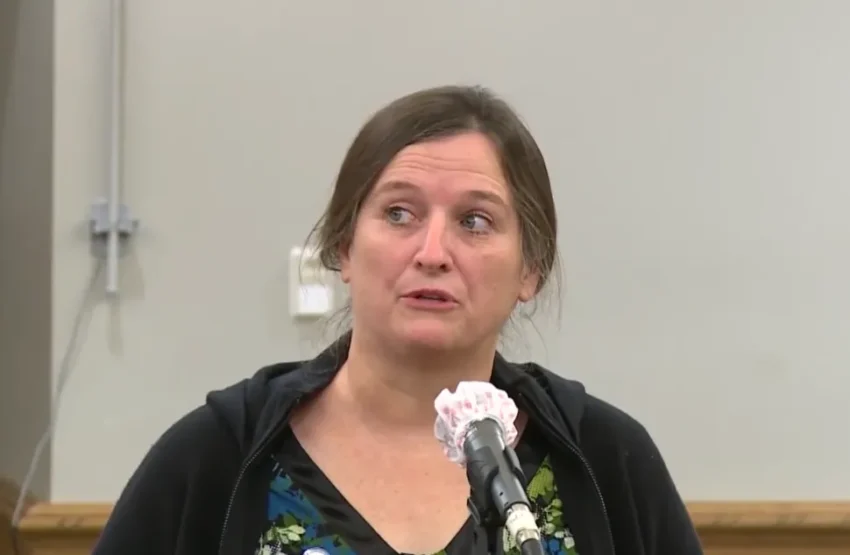
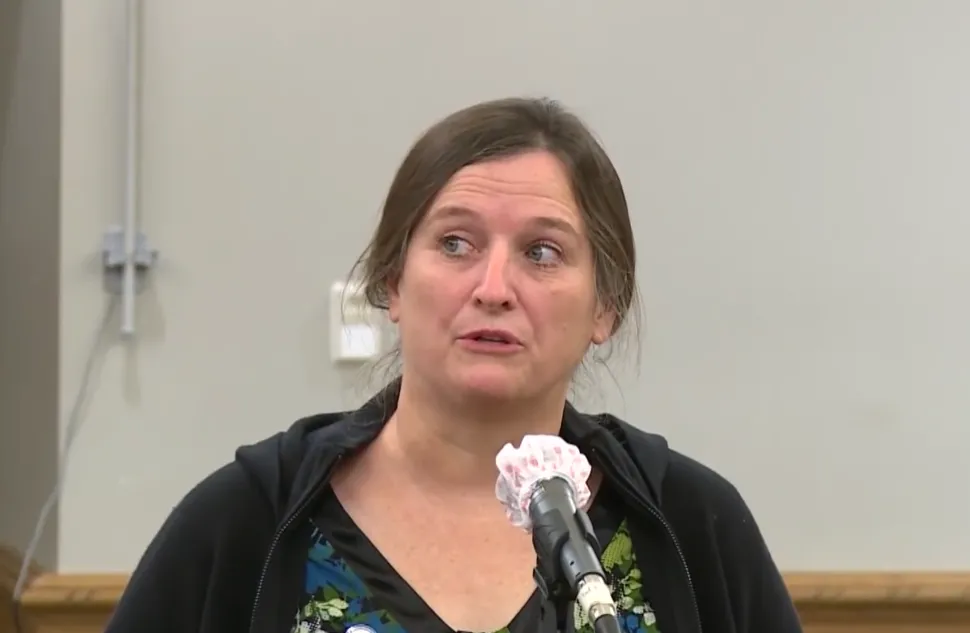
In a heartfelt courtroom moment, Judge Frank Caprio dismissed a red light violation case, showing deep empathy toward the defendant, Mary Beth Lamar, who was dealing with the sudden loss of her brother. The violation occurred on a day that would change her life forever.
The incident unfolded on the streets of East Providence, where Mary Beth was caught running a red light on her urgent journey to Rhode Island Hospital. What seemed like a typical traffic violation case soon turned into a story of loss, love, and a deeply human connection.
Mary Beth, a nurse by profession, was rushing to see her brother, Gregory, one last time. Gregory, a firefighter and paramedic in East Providence, had just passed away unexpectedly following a surgery.
Mary Beth explained to the court that she had been informed that her brother’s body was about to be moved from the hospital and she had only minutes to reach his side. Overcome with grief, she made the desperate decision to rush to the hospital without considering the red light.
The urgency in her voice and the pain in her eyes were evident as she shared her story with Judge Caprio.
“I was just trying to be there for him,” Mary Beth said, fighting back tears. “I had no idea how much time I had left with him. I was only thinking about getting to him before it was too late.”
The judge, known for his compassion and fairness, listened intently to Mary Beth’s explanation. In an effort to ease the heavy mood in the courtroom, Judge Caprio asked her to share a memory of her brother, Gregory.
The question led to a tender moment where Mary Beth reminisced about her childhood and the protective nature of her late brother.
“He was always there for me,” Mary Beth recalled, her voice softening as she spoke of her brother. “When I had a bike accident as a kid, he was the one who picked me up. He always carried band-aids in his wallet, ready to help anyone in need. Even though he was young, he was always a caretaker. It was just who he was.”
Judge Caprio, clearly moved by the story, reflected on Gregory’s life and character. “It sounds like your brother was a protector and a healer, someone who always put others first,” the judge commented. “A man of service, both in his profession as a paramedic and in his personal life.”
The emotional weight of the moment continued to hang in the air as Mary Beth explained how her brother’s legacy had influenced her own life choices. “I just finished my nursing degree, and I’m joining the team of nurses to fight against COVID-19,” she shared. “It’s something I know he would have been so proud of.”
In a decision that reflected his understanding of the deep sorrow Mary Beth was experiencing, Judge Caprio announced that he would not review any video evidence related to the red light violation. He had heard enough — the pain of losing a loved one, especially under such tragic circumstances, was all too apparent.
Judge Caprio’s ruling was swift: he dismissed the case immediately, extending his condolences and sending his well wishes to Mary Beth and her family. “I can’t in good conscience impose any penalty here today,” he stated. “Your grief is more than enough for one person to bear.”
In an unusual courtroom moment, the audience, who had been quietly observing, seemed to collectively exhale as Judge Caprio offered a few kind words. “I’m deeply sorry for your loss. My thoughts are with you and your family as you go through this difficult time.”
Mary Beth, though still struggling with the weight of her grief, expressed her gratitude for the judge’s understanding. “Thank you, Your Honor,” she whispered. “I didn’t know what to expect coming here today, but this means so much to me.”
The courtroom, which had initially been filled with the typical hustle of legal proceedings, was now filled with an air of solemn respect. Judge Caprio, known for his compassion in the courtroom, had once again demonstrated the human side of justice — a reminder that even in the face of law, there is room for empathy, understanding, and kindness.
As Mary Beth left the courtroom, her heart heavy but comforted by the judge’s decision, the audience witnessed a rare moment of justice tempered with compassion. In this case, the law was not just about the violation — it was about acknowledging the pain of a person and offering a chance for healing.