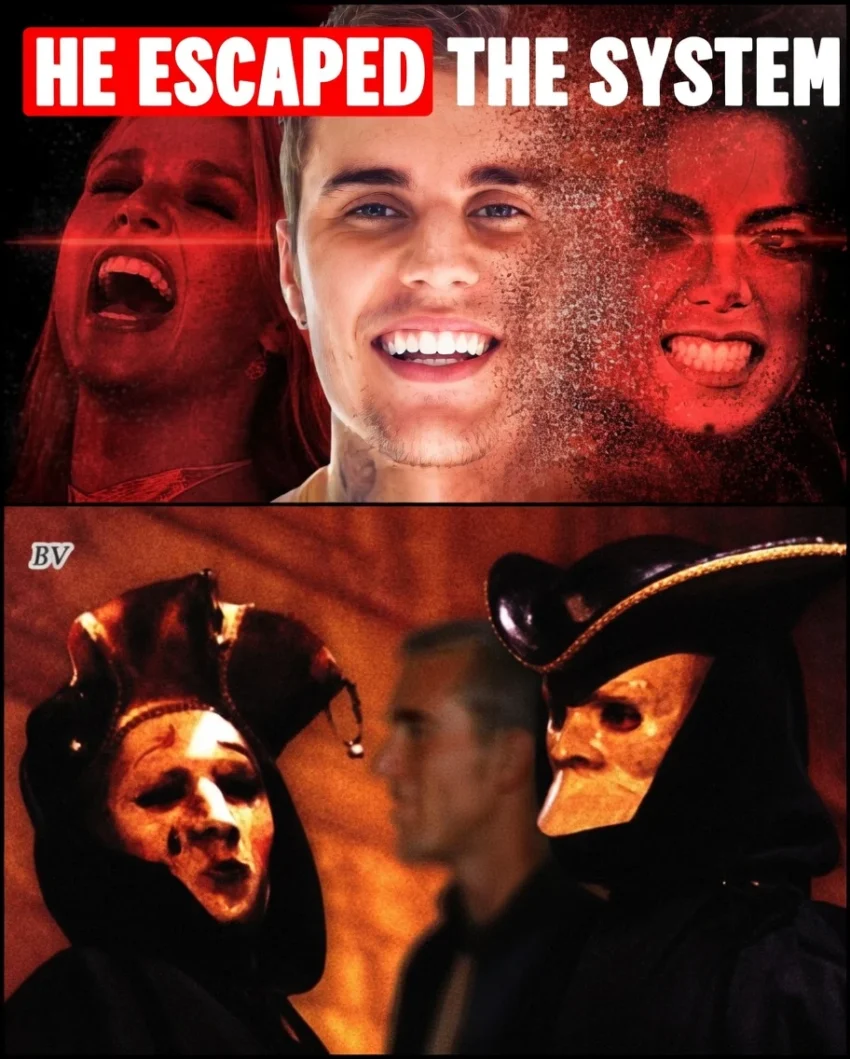
At first glance, the story feels familiar.
A teenage superstar rises too fast, burns too bright, and eventually begins to unravel under the weight of fame. Headlines turn darker. Rumors multiply. The public watches, speculates, and—often—moves on to the next spectacle.
But in the case of Justin Bieber, the narrative may be more complicated than a simple rise-and-fall arc. What appears, on the surface, to be another cautionary tale of celebrity excess could also be interpreted as something else: a prolonged confrontation between a human being and an industry designed to consume attention at any cost.
And perhaps, more recently, a quiet attempt to take that power back.
To understand the intensity of Bieber’s journey, it helps to revisit how early it began.
Discovered on YouTube and propelled into global stardom before his teenage years were fully formed, Justin Bieber quickly became one of the most recognizable faces on the planet. By his mid-teens, he wasn’t just a pop artist—he was a cultural phenomenon, a brand, and a constant presence in global media cycles.
This level of exposure, particularly during formative years, is difficult to contextualize. Unlike traditional celebrities of previous generations, Bieber’s rise coincided with the explosion of social media—an environment where visibility is constant, feedback is immediate, and privacy is almost nonexistent.
The result is a kind of hyper-fame that few before him had experienced in quite the same way.
One of the more persistent threads in recent narratives surrounding Bieber involves resurfaced footage from his early career—particularly clips featuring Sean Combs.
In one widely circulated video, a teenage Bieber is seen spending time with Combs, with remarks that, in hindsight, have been interpreted by some as suggestive or ambiguous. These interpretations gained traction amid legal controversies involving Combs, leading to renewed speculation about Bieber’s early exposure to the industry.
However, context remains critical.
Bieber’s representatives have publicly denied any suggestion that he was involved in or affected by the allegations connected to Combs. Yet, in the current media environment, denial does not always end speculation—it often coexists with it.
This reflects a broader phenomenon: the reinterpretation of past events through the lens of present controversies. What once seemed innocuous can, years later, be reframed as something more ominous.
Whether that reframing is accurate or speculative often becomes secondary to its viral impact.
In 2022, Bieber made a major financial decision—selling the rights to his music catalog for a reported $200 million.
Catalog sales have become increasingly common among artists, particularly in an era where streaming dominates revenue models. For some, such deals represent strategic moves—locking in value while markets are favorable.
For others, they raise questions.
In Bieber’s case, speculation quickly emerged. Was this a calculated business decision, or a response to financial pressure?
Reports surrounding the cancellation of portions of his tour—linked to health issues—suggested significant financial consequences, including production costs and lost revenue. Additional rumors pointed to disputes involving his former manager, Scooter Braun.
Yet the full financial picture remains unclear.
What is evident is how quickly financial narratives can shift. Wealth, particularly at the scale associated with global celebrities, is often perceived as limitless—until signs of vulnerability appear.
And when they do, they become part of the story.
Perhaps the most visibly documented challenges in Bieber’s recent years have been related to his health.
In 2020, he revealed a diagnosis of Lyme disease. Two years later, he publicly shared his experience with Ramsay Hunt syndrome, a condition that caused partial facial paralysis.
Images and videos of these moments spread rapidly online.
For many, they were expressions of empathy. For others, they became material for speculation—fueling narratives about decline, instability, or deeper issues.
This dynamic highlights a tension inherent in modern celebrity: visibility invites both support and scrutiny.
Every appearance becomes evidence. Every absence becomes a question.
Bieber’s trajectory is often compared to other figures who experienced early fame.
Artists like Britney Spears, Michael Jackson, Macaulay Culkin, and Lindsay Lohan have all, in different ways, navigated the psychological and structural pressures of growing up in the public eye.
Their stories, while distinct, share certain themes: loss of privacy, intense media scrutiny, and the challenge of forming identity under constant observation.
In Bieber’s case, these pressures were amplified by digital culture—where attention is not only constant, but monetized.
By early 2025, the prevailing narrative surrounding Bieber seemed firmly established: a former teen idol struggling under the weight of his past.
But narratives, like people, can change.
In mid-2025, Bieber released a new album—Swag—with little prior promotion. The project diverged from polished pop formulas, leaning instead into introspection, experimentation, and vulnerability.
It did not dominate charts in the traditional sense. But it resonated.
Listeners and critics noted its rawness, its willingness to engage with discomfort rather than avoid it. It felt less like a commercial product and more like a personal document.
Shortly afterward, Bieber launched a fashion brand—SKYLRK—positioned as an independent creative venture. The release strategy, aesthetic, and tone suggested a shift toward autonomy.
Rather than relying solely on traditional industry structures, Bieber appeared to be building parallel channels of expression.
One of the most notable aspects of this period was how Bieber engaged with his audience.
Through livestreams and informal content, he offered glimpses into his creative process—unfiltered, unscripted, and less mediated than traditional celebrity output.
This approach contrasts sharply with earlier phases of his career, where image management was tightly controlled.
It suggests a different kind of relationship with visibility—not as something imposed, but something navigated.
Bieber’s story also invites a broader reflection on the entertainment industry itself.
The system that produces global stars is also the system that benefits from their struggles. Headlines about breakdowns, controversies, and personal crises generate engagement—and engagement drives revenue.
This creates a paradox.
The same forces that elevate individuals can also contribute to their destabilization.
In this context, Bieber’s recent actions—whether in music, fashion, or public communication—can be interpreted as attempts to renegotiate that relationship.
So what does Bieber’s current chapter represent?
It may not be a complete transformation. The rumors have not disappeared. Questions about finances, health, and past associations continue to surface.
But it does suggest movement.
From reaction to intention.
From narrative subject to narrative author.
This does not erase the past. But it changes how the present is constructed.
Ultimately, the story of Justin Bieber is not just about one individual.
It is about a system that creates visibility at scale, and the human cost that can accompany it.
It is about how narratives are built—by media, by audiences, and sometimes by the individuals at their center.
And it is about the possibility—however uncertain—of stepping outside those narratives, even if only partially.
Bieber’s journey is still unfolding.
Whether his recent reinvention marks a lasting shift or a temporary phase remains to be seen. What is clear, however, is that the story is no longer as simple as it once seemed.
It is not just about a fall.
And it is not just about a comeback.
It is about what happens in between—and who gets to define it.