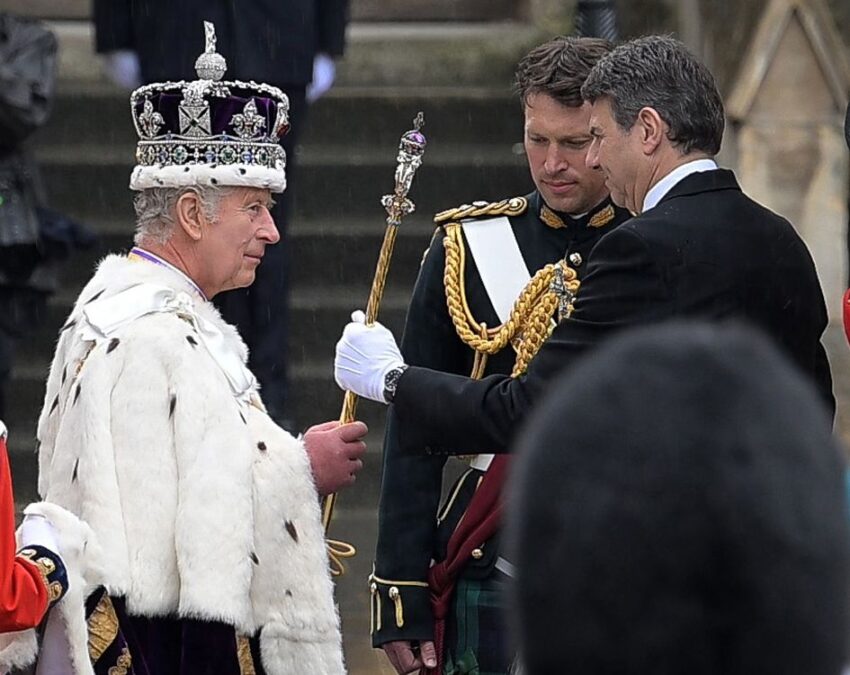
For Americans, the British monarchy often feels like a beautifully staged drama — ornate ceremonies, rigid tradition, and a family frozen in time. But beneath the pageantry lies something far more familiar to the American psyche: power, strategy, and survival.
That is why recent claims involving Jonathan Thompson, a senior and trusted aide to King Charles III, have sparked such intense interest across the U.S. media landscape. The speculation suggests that Queen Elizabeth II may have quietly taken a personal role in shaping Catherine Middleton — not through affection, but through deliberate preparation.
If true, this wasn’t favoritism.
It was formation.
Americans understand mentorship. We understand apprenticeships, power grooming, and the quiet transfer of institutional knowledge. From politics to Silicon Valley, the most influential leaders are rarely self-made — they are chosen, trained, and tested long before they rise.
So when whispers emerge that the Queen herself may have invested privately in Catherine, American audiences don’t hear fairy tales. They hear succession planning.
And suddenly, Catherine’s calm, restraint, and near-unbreakable composure begin to look less like personality — and more like training.
This is the question Americans ask first.
Why not louder figures?
Why not more glamorous entrants?
Why not those who demanded attention rather than avoided it?
Royal watchers suggest the answer lies in temperament.
Catherine entered the royal family without scandal, without haste, and without rebellion. She endured public breakups, years of waiting, tabloid cruelty, and intense scrutiny — and she did so without retaliation.
To an American audience, this might look passive. But within monarchy logic, it signals something rare: emotional endurance.
Elizabeth II did not reign for seven decades by accident. She survived abdication crises, political upheaval, family betrayal, and global change — all by mastering one skill above all others: containment.
Insiders long claimed that the Queen valued those who could withstand pressure without flinching. Catherine, observers argue, demonstrated this long before she married Prince William.
If the Queen did guide her privately, it likely wasn’t through warmth — but through example:
• When to stay silent
• When to absorb criticism
• When to never explain
• When endurance outlasts confrontation
For Americans raised on expressive leadership, this approach feels cold. But for monarchy survival, it is lethal in its effectiveness.
No discussion for U.S. readers is complete without acknowledging Meghan Markle — because she represents the counterpoint to Catherine.
Meghan spoke openly. She confronted publicly. She narrated her experience in real time.
To many Americans, that was strength.
To the monarchy, it was rupture.
The contrast between Catherine and Meghan is not about right or wrong — it is about institutional compatibility. And it explains why Catherine may have been seen as the vessel for continuity.
Jonathan Thompson is not a celebrity royal. He is an operator. His career has been built on discretion, logistics, and trust.
That is why any speculation associated with him — even indirectly — carries weight with royal watchers. He represents the machinery of monarchy, not its face.
If insiders connected to that machinery suggest the Queen took Catherine under her wing, Americans read this as something they recognize well: elite succession grooming.
In American culture, silence is often misread as weakness. But in institutions of power, silence is currency.
Catherine has rarely responded to scandal. Rarely explained herself. Rarely corrected narratives.
Instead, she outlasted them.
For U.S. readers, this feels alien — until it doesn’t. Because American institutions quietly reward the same traits, even if they celebrate louder ones publicly.
If the claims are true, then Elizabeth II wasn’t just preparing Catherine to support William.
She was preparing her to stabilize the monarchy after herself.
That is no small task.
The Queen understood something Americans intuitively grasp: institutions do not collapse from one crisis — they collapse from cumulative instability.
Catherine, by every visible measure, represents stability.
But there is a darker side Americans should not ignore.
Being forged means sacrifice.
It means emotional restraint at personal cost.
It means swallowing injustice without response.
It means existing as a symbol before a self.
If Catherine was trained, it likely came with expectations few could bear.
And that raises an uncomfortable question: What does monarchy demand of women to survive?
Because America is questioning power everywhere.
Who gets prepared?
Who gets discarded?
Who gets protected?
Who is expected to endure in silence?
Catherine’s story — real or interpreted — sits at the intersection of all these questions.
To be clear: there is no official confirmation that Queen Elizabeth personally mentored Catherine in secret.
But the belief that she could have done so tells us something profound about public perception.
People believe Catherine’s strength looks learned — not accidental.
If Queen Elizabeth truly shaped Catherine, then her greatest lesson may have been this:
Power does not always roar. Sometimes, it survives quietly.
For Americans watching the monarchy evolve, Catherine represents a form of leadership that feels old-fashioned — and yet, strangely effective.
Whether forged or favored, one thing is clear:
Catherine did not simply arrive at this moment.
She endured her way into it.
Read deeper, reflect carefully, and decide for yourself — because the future Queen may already be revealing the lessons she was taught long ago.
Nijoro teo anoloan’ilay trano tsotra i Emiliano, tsy niteny, tsy nihetsika.
Tamin’ny endriny dia niseho mazava ny fisalasalana sy ny fihetseham-po tsy fantatra anarana.
Tsy tahotra, tsy fangorahana fotsiny — fa zavatra hafa lalina kokoa, toy ny fihetseham-po efa ela nipetrahany nefa tsy nohazavainy mihitsy.
Ny trano dia tsotra, rindrina nisy triatra, varavarana metaly efa harafesina.
Tsy nisy famantarana hoe misy olona manankarena na misongadina monina ao anatiny.
Nefa teo amin’ny tokotany kely dia hita fa nisy tànana be fitiavana niaro azy: voninkazo kely amin’ny siny, hazo kafe iray maniry amin’ny tany lena, ary lamba madio maina mihantona amin’ny tady.
Nisintona rivotra lalina i Emiliano, nitady herim-po.
Tamin’ny fomba rehetra teo amin’ny fiainany, dia zatra ny olona tonga amin’ny fotoana voalahatra, amin’ny toerana voaomana, amin’ny teny voahevitra.
Tsy mbola nisy fotoana toy izao — izy, tompon’orinasa lehibe, mitsidika trano kely feno vovoka amin’ny maraina mangina.
Tok-tok-tok.
Nokapohiny moramora ny varavarana hazo.
Tsy nisy valiny.
Naveriny indray, somary mafimafy kokoa.
Ary avy ao anatiny, re ny feo manjavozavo, malefaka, toa saro-takarina:
— Iza izany azafady?
Feon’i Julia.
— Izaho izany, Julia… Emiliano — hoy izy, somary menatra — ny… ny tompon’ny trano.
Nangina vetivety.
Nihainoana fotsiny ny fiporian’ny rivotra.
Avy eo, nihaino toy ny fiporitsahan’ny hidy notsoahana.
Nisokatra moramora ny varavarana.
Ary teo, teo am-baravarana, niseho i Julia, mitafy lobaka fotsy tsotra, volo mifatotra amin’ny satroka kely, maso mitraka nefa feno hakiviana.
— Don Emiliano… tsy nampoiziko… — hoy izy, somary taitra — … tsy nilaza ianao fa ho tonga.
Niezaka nitsiky i Emiliano:
— Tsia… tiako fotsiny hojerenao aho, tsy misy antony manokana. Nampanahy ahy kely ianao tato ho ato, ka hoy aho hoe tsara angamba raha mandalo.
Tsy niteny i Julia.
Niala kely teo amin’ny varavarana izy, nanasa azy hiditra.
Tsy nampoizin’i Emiliano izay hitany tao anatiny.
Ny trano dia kely, fa madio, milamina, misy hafanana tsy hita amin’ny trano lehibe misy azy.
Tao amin’ny efitra fandraisam-bahiny nisy latabatra hazo efa antitra, sarin’ny ankizy kely amin’ny rindrina, ary boky vitsivitsy miparitaka.
Tamin’io fotoana io, nitsiky i Julia, somary maivamaivana:
— Miala tsiny raha tsy ampy ny toerana, Don Emiliano. Tsy dia manan-javatra firy aho.
— Aza miantso ahy “Don”, azafady — hoy izy moramora. — Antsoy fotsiny hoe Emiliano.
Niposaka ny tsikiny voalohany avy amin’i Julia, tsiky kely nefa avy amin’ny fo.
Ary i Emiliano, tsy fantany akory, dia nahatsapa hafanana tao am-po tsy mbola tsapany hatramin’ny ela.
Nanodidina ny masony izy, nahatsikaritra sary iray lehibe teo amin’ny rindrina.
Nisy vehivavy tanora, mitazona zazavavy kely manodidina ny roa taona, samy mitsiky amin’ny masoandro.
— Io ve… ianao? — hoy i Emiliano tamim-pitandremana.
Nitsiky i Julia, nefa nisy ranomaso kely nanjelanjelatra:
— Eny. Izaho sy ny zanako vavy, Sofía.
Nangina i Emiliano.
Tsy mbola fantany akory fa manan-janaka i Julia.
— Tsy hitako mihitsy izy tao amin’ny tranoko.
— Tsy tonga miaraka amiko izy. Mipetraka amin’ny reniko amin’ny ankamaroan’ny andro.
Ny vola azoko amin’ny asa no alefako ho azy.
Tampoka teo, nivoaka ny ankizy kely avy ao an-dakozia, mitondra kilalao vita amin’ny hazo.
Taitra kely i Emiliano.
— Sofía… izao no lehibeko, — hoy i Julia tamim-pihomehezana, manandrana manamaivana ny hafaliana sy ny henatra.
Niondrika ny zazavavy, nanonona tamim-pahamendrehana:
— Manao ahoana, señor.
Ny feony dia toy ny feon’ny rivotra maneno amin’ny varavarankely.
Tsy niteny i Emiliano, fa nitsiky, ary nihotsaka ny masony.
Nampian’i Julia azy nipetraka, ary nandray kaopy kafe.
— Fantatro fa tsy tokony ho tonga tampoka aho, — hoy izy tamin’ny farany. — Fa tato ho ato, hitako fotsiny fa reraka ianao, Julia. Niainga aho tsy te hahita anao mijaly.
Julia nijery azy, toy ny tsy fantany raha tokony hino na tsia.
Nangina vetivety izy, avy eo nilaza tamin’ny feo malefaka:
— Misaotra anao amin’ny fiahiana, señor Emiliano. Tsy mora ny miaina amin’ny zavatra tsy ampy.
Fa fantatrao ve, indraindray, ny olona manan-karena indrindra no tena manirery indrindra. Ary indraindray koa, izahay sahirana no tsy manan-karena amin’ny vola, fa manan-karena amin’ny zavatra hafa.
Nangina i Emiliano.
Nijery an’i Julia sy ilay zaza kely milalao tany amin’ny zorony, ary tao am-pony dia nisy zavatra nivadika.
Nitsangana izy, nandeha nanatona ilay zazavavy, ary niandrandra azy tamin’ny masony feno fitiavana.
— Inona no lalaovanao, anjely kely?
— Manamboatra trano ho an’ny reniko aho, — hoy i Sofía tamim-pireharehana. — Rehefa lehibe aho dia hanana trano lehibe ho azy. Tsy hiasa lavitra intsony izy.
Tsy nahay namaly i Emiliano.
Nitsiky fotsiny izy, fa tao anatiny, ny teny dia toy ny sabatra nanindrona ny fony.
Tsy hoe ny teny tamin’ny zazavavy ihany, fa ny fahatsiarovana.
Tamin’ny fahazazany, namoy ny reniny ihany koa izy, izay niasa ho mpanadio trano tamin’ny manankarena iray — lehilahy tsy nisy fangorahana.
Tsapany ankehitriny ny antony nanosika azy hankany amin’i Julia.
Tsy fitiavana, tsy fahalianana, fa fitadiavana fanonerana.
Toa nitady ny sarin’ny reniny very tamin’ny tavany i Julia.
Nandritra ny ora maro, niresaka tamin’ny fo madio izy roa.
Nihaino i Emiliano, tsy amin’ny maha-tompo, fa amin’ny maha-olona mahatsapa fahalemena sy fitoviana.
Tamin’ny farany, rehefa handeha izy, nitsangana i Julia, nitrotro ny zanany, ary nilaza tamim-pitiavana:
— Tsy mila mampalahelo anao ny fahitanao anay eto. Tsy olon-tsy manana izahay, fa manana fitia sy fahendrena, izay tsy ho azo amin’ny vola mihitsy.
Nangina i Emiliano.
Nesoriny tamin’ny tanany ny famantaranandro lafo vidy, natsipiny teo amin’ny latabatra, ary niteny:
— Raha izao no maha-manankarena, dia aleoko manankarena toy ny fianakavianao.
Nitodika izy, nandeha niala tamim-pahanginana, ary rehefa nivoaka dia niova ny masony, toy ny olona vao nahita ny lanitra ho voalohany indray.
Tamin’io andro io, niverina tany amin’ny orinasany i Emiliano tsy toy ny teo aloha.
Nitsahatra nanenjika tombony, nanomboka nanangana tetikasa ho an’ny mpiasa ambany karama, nandoa vatsim-pianarana ho an’ny zanak’izy ireo.
Ary isaky ny manakaiky maraina, maka fotoana mitsidika an’i Julia sy Sofía izy — tsy amin’ny maha-tompony, fa amin’ny maha-fianakaviana naverin’ny fiainana indray.
Indraindray, ny fahendrena lehibe indrindra dia hita ao amin’ny tranonkely feno fitiavana, tsy amin’ny birao feno harena.
Farany.