A Self-Inflicted Shock? How Viral Narratives About Trade Wars, Lost Jobs, and Global Winners Reveal More About Media Ecosystems Than Economic Reality
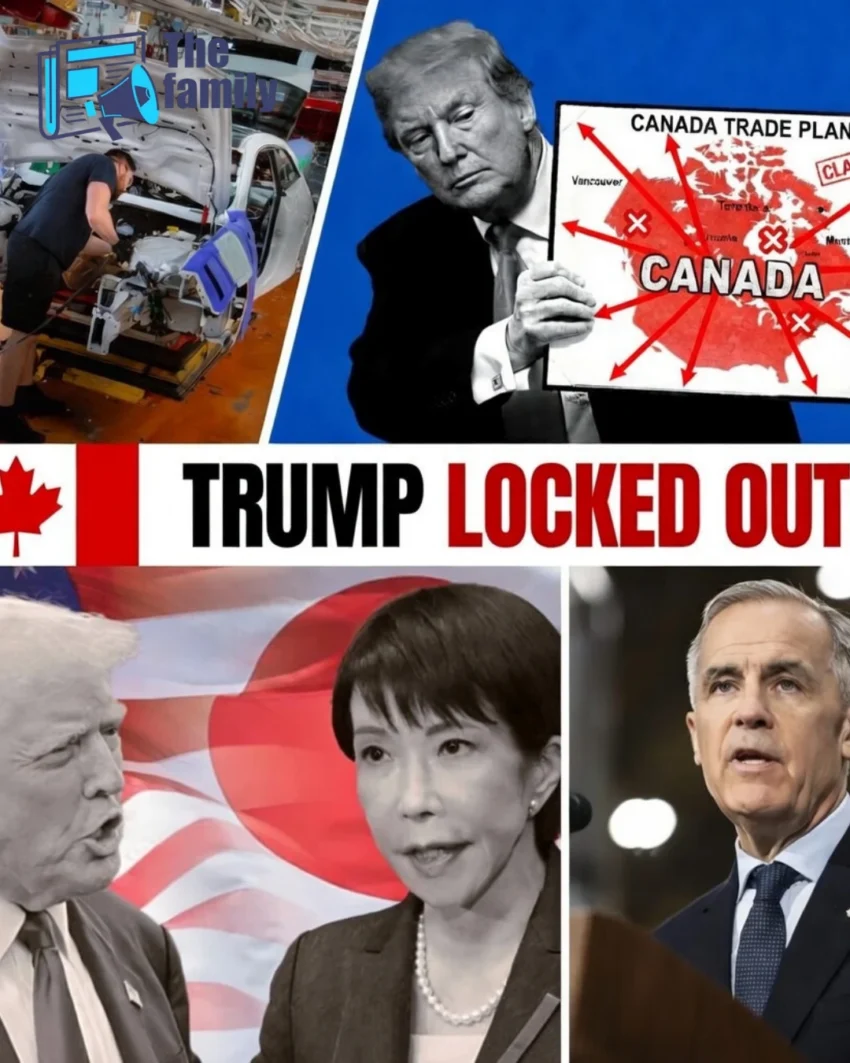
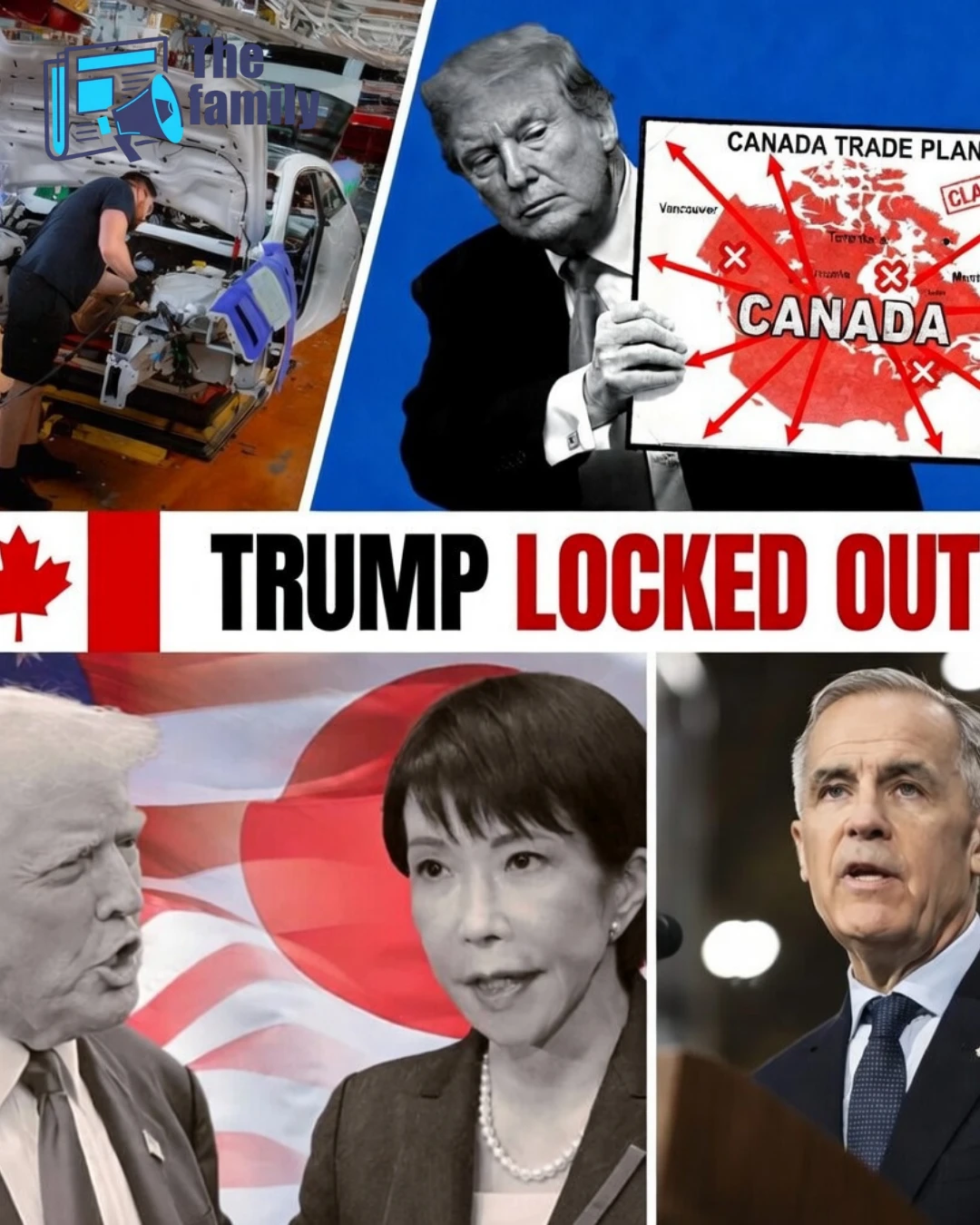
In the age of algorithm-driven information, stories about economic collapse and geopolitical shifts can spread globally within hours, often outpacing verification. One such narrative has recently gained traction: a dramatic account claiming that aggressive trade policies tied to Donald J. Trump triggered the sudden loss of over 40,000 jobs, devastated major automakers like Nissan and Subaru, and handed a sweeping economic victory to Canada under Justin Trudeau.
At first glance, the story reads like a cautionary tale of economic nationalism gone wrong—a stark warning about the unintended consequences of protectionism. But a deeper examination reveals something more complex: not just questions about trade policy, but about how narratives are constructed, amplified, and believed in a fragmented media environment.
This is not merely a story about tariffs or factories. It is a story about perception, plausibility, and the thin line between analysis and amplification.
The viral claim follows a familiar and compelling structure:
From a storytelling perspective, it is highly effective. It compresses a complex global system into a cause-and-effect chain that is easy to understand and emotionally resonant.
But real-world economics rarely operates with such immediacy or simplicity.
One of the first cracks in the narrative appears when examining the timeline. Donald J. Trump left office in January 2021. Any claim that attributes immediate, present-day economic shocks in 2026 directly to his “current” decisions raises an immediate inconsistency.
Trade policies do have long-term effects. Tariffs introduced years earlier can influence supply chains, investment decisions, and geopolitical relationships over time. However, the idea that a single policy move—especially one not newly implemented—could trigger the collapse of multiple factories “within 48 hours” stretches beyond typical economic behavior.
Industrial systems, particularly in the automotive sector, operate on long planning cycles. Decisions about plant closures involve months, often years, of financial forecasting, labor negotiations, and logistical coordination. The notion of a near-instantaneous collapse suggests either an extraordinary, unprecedented shock—or a narrative compression designed to heighten drama.
The global automotive industry is among the most interconnected economic ecosystems in the world. Companies like Nissan and Subaru do not operate in isolation within a single country. Their production networks span continents, involving:
When disruptions occur—whether due to tariffs, pandemics, or semiconductor shortages—they typically manifest gradually. Production slows. Costs rise. Investment shifts. But sudden, simultaneous shutdowns across multiple facilities are rare and usually tied to extraordinary events such as global crises or severe financial insolvency.
Even during the 2008 financial crisis or the COVID-19 pandemic, factory closures unfolded over weeks and months, not hours.
This discrepancy suggests that the viral narrative may be compressing time to create urgency, rather than reflecting the actual pace of industrial change.
The figure of “40,000 jobs lost in under 48 hours” is another key element that invites scrutiny.
Large-scale layoffs do occur in the automotive sector. However, they are typically announced in advance, often accompanied by restructuring plans, government negotiations, or union involvement. A sudden loss of tens of thousands of jobs without prior signals would represent an extraordinary breakdown in corporate governance and communication.
Moreover, such an event would likely dominate global financial news, prompting immediate reactions from markets, governments, and international organizations.
The absence of corroborated reporting from established economic institutions or major financial media outlets raises questions about the origin and reliability of the claim.
The story positions Canada as the primary beneficiary of the alleged collapse, with Justin Trudeau swiftly attracting investment and capturing a significant share of the North American auto market.
There is a kernel of plausibility here. Canada has long maintained a strong automotive sector, particularly in Ontario, and has actively pursued policies to attract manufacturing investment. In times of instability, capital and labor do shift toward more stable environments.
However, the claim that Canada could capture “15% of the North American auto market within 18 months” suggests a level of rapid transformation that would require massive infrastructure expansion, workforce scaling, and supply chain realignment.
Such shifts are possible—but they typically unfold over years, not months.
The portrayal of Canada’s response as immediate and decisive may reflect an aspirational narrative rather than a fully substantiated economic projection.
Perhaps the most compelling aspect of the story is its human dimension. The image of workers standing outside shuttered factories, expressing regret and uncertainty, taps into broader anxieties about globalization, job security, and political trust.
These elements are not inherently false. Economic transitions do create real hardship. Communities built around manufacturing can be deeply affected by shifts in trade policy and industrial strategy.
However, in viral narratives, these human stories are often used to anchor broader claims, lending emotional weight to assertions that may not be fully verified.
The result is a powerful combination: data that may be questionable, reinforced by experiences that feel undeniably real.
To understand the plausibility of the narrative, it is important to examine the real impact of trade policies associated with Donald J. Trump.
During his presidency, tariffs—particularly on Chinese goods—did reshape certain aspects of global trade. They:
However, economists have consistently noted that these effects are complex and often indirect. While some industries benefit, others face higher input costs. Job gains in one sector can be offset by losses in another.
Most importantly, these changes unfold over time. Companies adapt gradually, reallocating resources and adjusting strategies in response to evolving conditions.
The idea of a single, immediate collapse contradicts the incremental nature of these processes.
The rapid spread of this narrative highlights a broader phenomenon: the transformation of how economic information is produced and consumed.
In traditional media, economic claims are typically vetted through multiple layers of verification, including data analysis, expert consultation, and editorial review.
In contrast, digital platforms prioritize speed and engagement. Stories that are dramatic, emotionally charged, and easy to understand are more likely to be shared, regardless of their accuracy.
This creates an environment where:
The viral trade collapse story fits this pattern. It offers a clear villain, a dramatic consequence, and a satisfying narrative arc.
It would be misleading to dismiss the entire story as pure fiction. Trade tensions, industrial restructuring, and global competition are real forces shaping the modern economy.
The United States, Canada, and Japan are all engaged in ongoing negotiations and strategic positioning within a rapidly evolving global landscape. Companies like Nissan and Subaru continuously adjust their operations in response to these dynamics.
However, the specific claims presented in the viral narrative appear to blend elements of truth with significant exaggeration and speculative interpretation.
This blending is precisely what makes such stories compelling—and potentially misleading.
At its core, the story raises an important question: how do people evaluate economic information in an era of information overload?
For many, trust is no longer anchored solely in traditional institutions. Instead, it is shaped by:
This shift creates both opportunities and risks. On one hand, it democratizes access to information. On the other, it increases the likelihood of misinformation spreading unchecked.
The trade collapse narrative illustrates this tension. It resonates because it aligns with existing concerns about globalization, inequality, and political decision-making. But its factual basis remains uncertain.
The claim that 40,000 jobs vanished overnight due to trade policies linked to Donald J. Trump, while Canada surged ahead under Justin Trudeau, is less a confirmed economic event and more a reflection of how modern narratives are constructed.
It reveals the power of storytelling in shaping perceptions of reality. It highlights the challenges of verifying information in a fast-moving digital landscape. And it underscores the importance of critical thinking when engaging with complex economic issues.
In the end, the most significant takeaway may not be whether the story is entirely true or false, but what it reveals about the world in which it circulates—a world where the line between analysis and amplification is increasingly blurred, and where understanding requires not just information, but interpretation.
As global economies continue to evolve, the need for careful, nuanced analysis becomes more urgent. Because in a system as intricate as the modern global market, the truth is rarely as simple—or as immediate—as it appears.