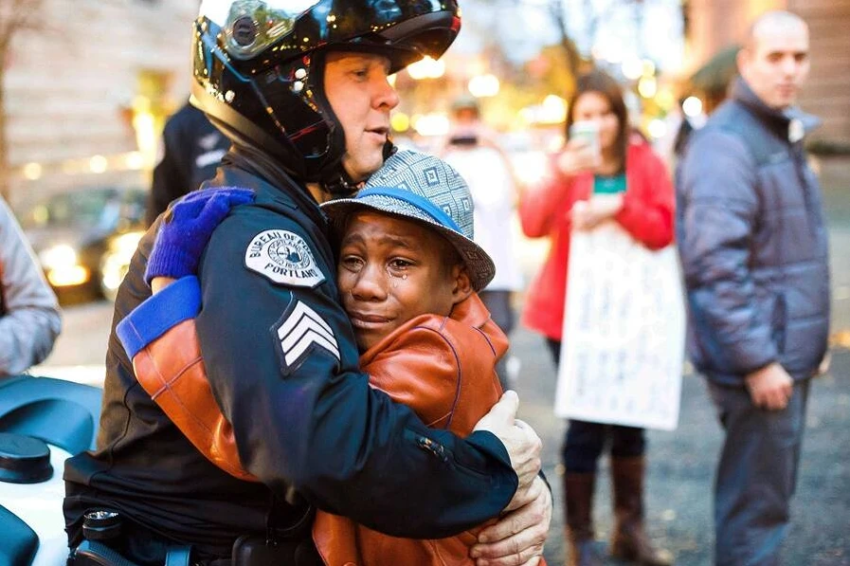
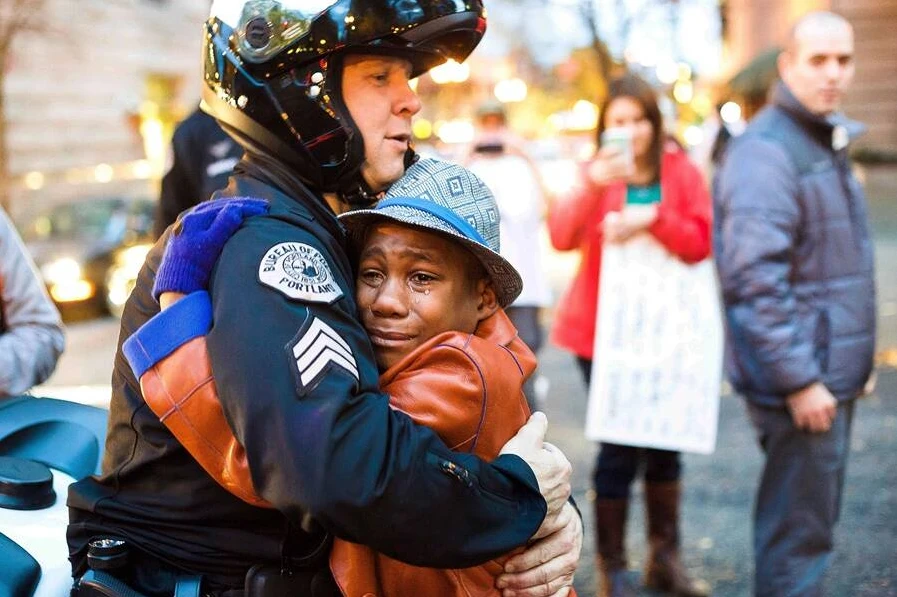
In a gut-wrenching bombshell that crushed millions of hearts, the boy whose tearful 2014 embrace with a police officer sparked global hope has become the face of one of America’s most horrifying family disasters. Devonte Hart’s famous photo exploded across the internet, showing the young Black boy sobbing in a white officer’s arms during Portland protests. It was hailed as a powerful symbol of kindness cutting through tension, shared endlessly as proof that one hug could heal divides. But fast-forward to 2018, and Devonte’s name detonated in headlines for the worst reasons—tied to a deliberate 100-foot cliff plunge that wiped out his entire adoptive family in a suspected murder-suicide nightmare.
Devonte was just 12 when that emotional image captured the world’s attention. His gentle eyes, knit cap, and raw vulnerability turned him into an overnight sensation. People flooded social media with praise, calling it a beacon of humanity amid chaos. The Hart family looked like the ultimate success story on the surface—two moms, Jennifer and Sarah, proudly raising six adopted Black children, posting smiling road trips, big hugs, and messages of love and unity. Devonte often stole the show, the same kid whose viral moment gave everyone a feel-good boost.
Behind the perfect posts, though, a terrifying darkness was building to a deadly climax. On March 26, 2018, authorities found a GMC Yukon SUV smashed to pieces at the bottom of a rugged California cliff along the Pacific Coast Highway in Mendocino County. The vehicle had rocketed straight off the edge with zero braking marks. Inside the wreckage and scattered along the rocks lay the bodies of both adoptive mothers and several of the six children. Rescue teams later recovered two more bodies from the shoreline. Three kids were initially missing, but the ultimate shock hit hard: only Devonte’s body was never found, leaving a chilling mystery that still haunts investigators and the public today.
The crash scene screamed intentional horror. No skid marks, high speed, and evidence pointing to Jennifer Hart at the wheel with alcohol and drugs in her system. Officials ruled it a deliberate murder-suicide, with the mom driving the family off the cliff in a final, fatal act. The revelation shattered the fairy-tale image the Harts had carefully built online. What looked like a loving, activist household quickly unraveled into accusations of years of hidden abuse that spanned multiple states.
Teachers, neighbors, and child welfare workers later spilled details of repeated red flags that were ignored for too long. Kids were reportedly starved as punishment, sneaking to neighbors’ homes begging for food. Devonte himself was allegedly seen asking strangers for snacks near the family house. One child told teachers that Jennifer used belts for harsh beatings and withheld meals to control them. The children were allegedly forced to fake big smiles for every photo and public appearance, terrified of punishment if they showed any cracks. Despite multiple complaints to child protective services across states, the family kept packing up and slipping away, dodging deeper scrutiny each time.
Tensions boiled over in Washington state. Neighbors grew suspicious when the kids suddenly vanished from sight. One boy made a desperate escape, climbing out a window and running to a nearby house, pleading for food and claiming the whole family was being punished by starvation. That neighbor called authorities right away. But before officials could arrive for a welfare check, the Harts disappeared. Days later, the horrific cliff discovery rocked the nation.
Data from the wrecked SUV painted a grim picture: deliberate acceleration off the edge, no attempts to stop. The family that once posed as champions of equality had crumbled under the weight of alleged secret torment. Neighbors later admitted sensing something was off—the kids seemed withdrawn, scared, and underfed—but the moms always had polished excuses ready. The case exploded into furious debates about how such warning signs could be missed for so long.
The Hart tragedy ripped open massive failures in the system. Reports of abuse piled up, yet the family stayed intact until that deadly drive. Child welfare experts pointed to it as a brutal reminder of how monsters can hide behind glowing public images while kids suffer in silence. Social media allowed the Harts to curate a picture-perfect facade—happy trips, inspiring quotes—while real life allegedly involved fear, control, and isolation. Why didn’t earlier alarms trigger real intervention? How did the family evade accountability time after time?
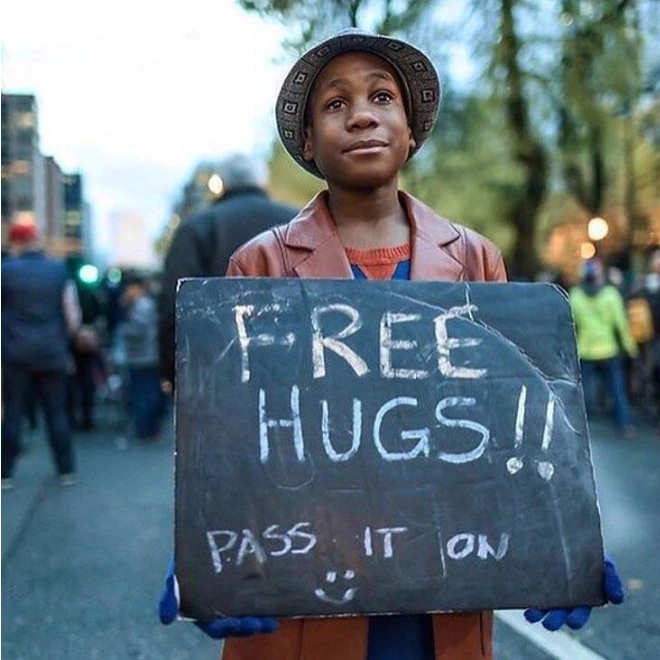
Devonte’s disappearance adds the cruelest twist. Search efforts along the rocky coastline found nothing. Some speculate he might have escaped the vehicle before the plunge, but no evidence ever surfaced. His body remains missing, turning the case into an open wound that refuses to heal. That 2014 hug photo, once shared with hopeful tears, now triggers heartbreak and questions: Was that crying boy not just reacting to the moment, but silently begging for rescue all along? Did the world miss the fear behind his famous smile?
Years later, the Hart story still sends chills down spines. It forced tough talks about adoption oversight, hidden family secrets, and the gap between online perfection and private pain. The moms had built a narrative of love and activism, but investigators uncovered a darker reality of control and alleged torment. The viral hug that united strangers now symbolizes lost innocence and preventable tragedy.
America fell hard for Devonte’s emotional embrace in 2014, seeing it as a bright spot in tough times. The 2018 cliff crash flipped everything upside down, exposing how easily hope can shatter into horror. Neighbors who once waved at the smiling family now wrestle with guilt for not pushing harder. Officials across states face scrutiny for letting the family slip through cracks despite clear danger signals.
The final drive off that foggy California cliff didn’t just end six young lives and two adults—it left a nation grappling with uncomfortable truths. Could faster action have saved those children? Did the spotlight on Devonte’s feel-good photo accidentally protect the family from tougher questions? What really happened in those last terrifying seconds inside the speeding SUV?

This case stands as a stark warning: polished images can mask real danger, and warning signs demand action before it’s too late. Devonte Hart’s gentle smile once bridged divides and lifted spirits. Today, his name evokes sorrow for what was lost and the questions that linger without closure. Somewhere along that wild Pacific coast, the story of a boy who touched millions ends in unimaginable loss, with no body to bury and no final answers.
The Hart family collapse ripped away the illusion of perfection and exposed raw vulnerabilities in how society protects vulnerable kids. From the viral high of that 2014 hug to the devastating low of the 2018 plunge, Devonte’s journey reminds us how quickly light can turn to darkness when secrets stay buried. America still feels the sting of this tragedy, a painful lesson in looking closer at the families behind the smiles. The questions refuse to fade: How many other hidden horrors lurk behind charming posts? And will Devonte’s mystery ever be solved? The cliff’s deadly secret continues to haunt, keeping the nation gripped in shock and sorrow.