There are moments in life when endings are meant to be beginnings.
A signed document.
A decision to move forward.
A quiet, difficult step toward independence.
For 61-year-old Susan Lane-Fournier, serving divorce papers was supposed to mark the start of a new chapter. A new life after years of marriage. A fresh beginning rooted in self-determination.
Instead, prosecutors say, that act of courage became the spark for violence.
She did not step into freedom.
She was found wrapped in a tarp in the woods.
And now, 72-year-old Michel Fournier stands charged with second-degree murder — accused of shooting his wife and hiding her body in a forest near their Oregon home.
In November 2024, Susan Lane-Fournier was reported missing.
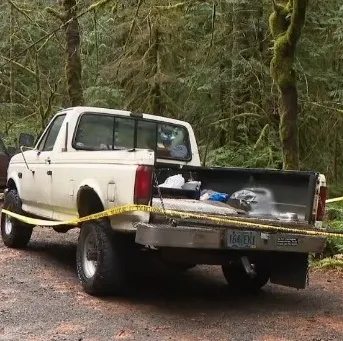
Her truck was discovered abandoned in Mount Hood National Forest — a vast, wooded area known for its rugged beauty and winding roads. But for her family, that beauty meant nothing.
A vehicle left alone in the forest does not signal peace. It signals fear.
Search efforts began. Deputies combed through wooded terrain. Loved ones waited, clinging to the possibility that she had simply left to clear her head.
But the timeline grew darker.
Days passed without contact.
No calls. No messages. No signs of voluntary disappearance.
Then came the discovery.
Deputies with the Clackamas County Sheriff’s Office located Susan’s body in the Welches area near East Highway 26 and East Miller Road. She had been wrapped in a tarp and left in the woods.
Shortly after the discovery, Michel Fournier was arrested.
According to prosecutors, the motive was not random.
It was personal.
It was emotional.
It was tied to the moment Susan chose to leave.
Deputy District Attorney John Millar told jurors during opening statements that instead of beginning a new chapter, Susan “ended up wrapped in a tarp and dumped in the woods.”
Those words were not poetic. They were stark. Clinical. Final.
Prosecutors allege that Fournier shot his wife after she served him with divorce papers. In recorded jailhouse calls to her son, he allegedly admitted that he “lost it.”
Two words.
“Lost it.”
They suggest a moment of uncontrolled emotion. A flash of rage. A decision made without pause.
But the prosecution’s narrative suggests something more layered — not just anger, but entitlement.
Family members and prosecutors have described Fournier as “narcissistic.” They allege that he did not want to lose the property the couple shared.
Divorce can threaten identity, financial stability, and control. For some individuals, it feels like humiliation. For others, it feels like loss of power.
In healthy separations, that pain is processed legally and emotionally.
But when pride overrides restraint, legal disputes can become personal battles.
Prosecutors argue that Fournier did not want to divide assets. Did not want to relinquish shared property. Did not want to accept the end of the marriage.
In that moment, according to the state’s case, he chose violence over negotiation.
The phrase “I lost it” is often used to minimize harm.
It frames an act as impulsive rather than intentional.
It suggests temporary emotional overwhelm rather than deliberate choice.
But even in moments of anger, actions require steps.
A weapon must be retrieved.
A trigger must be pulled.
A body must be moved.
A tarp must be found.
A location must be chosen.
Each step involves decision-making.
Each step extends beyond a fleeting emotion.
In courtrooms, juries are asked to weigh not only what happened, but whether it was intentional, reckless, or reactive.
In this case, Fournier is charged with second-degree murder — a charge that implies intentional killing without premeditation.
The trial will determine how those legal definitions apply.
It is crucial that Susan Lane-Fournier not be reduced to the circumstances of her death.
She was 61 years old.
A woman who reached a point in life where she chose change.
Divorce later in life often requires enormous courage. It means reimagining finances, routines, friendships, and future plans. It means stepping into uncertainty.
Susan had reportedly served the papers.
She had taken that step.
Instead of moving into a new chapter, her story was cut short.
Her family will now forever associate that turning point with tragedy.
Mount Hood National Forest spans thousands of acres.
It is a place where people hike, camp, and find quiet.
In this case, it became a site of concealment.
Allegedly hiding a body in a forest suggests an attempt to delay discovery. To create confusion. To distance the act from immediate suspicion.
But nature rarely keeps secrets indefinitely.
The forest gave her back.
And with that discovery came accountability.
When one life ends in violence, the impact extends beyond two people.
Susan’s family must now live with both grief and betrayal.
A marriage that once represented partnership ended in accusation.
Her son now listens to recorded calls in which the man accused of killing his mother allegedly says he “lost it.”
The emotional complexity of that reality is immeasurable.
Grief becomes layered.
Loss becomes entangled with anger.
Memories are reexamined through a new lens.
The term “narcissistic” carries psychological weight.
In everyday language, it often describes someone self-centered or ego-driven.
In clinical contexts, it refers to traits that include grandiosity, entitlement, and lack of empathy.
In domestic disputes, entitlement can become dangerous.
When someone views a partner as property — emotionally or financially — separation can feel like theft.
That distorted mindset can lead to the belief that drastic action is justified.
But nothing justifies violence.
Not pride.
Not property.
Not fear of losing status.
Michel Fournier now stands trial.
He is presumed innocent until proven guilty in a court of law.
The legal process will weigh evidence, testimony, and forensic findings.
If convicted, sentencing will follow.
But justice, even when delivered, does not restore what has been taken.
It does not allow Susan to step into the life she was preparing for.
It does not give her family back the years ahead.
It does, however, establish accountability.
And accountability matters.
This case underscores a sobering reality: domestic violence does not only occur in young relationships or volatile public disputes.
It can unfold in long-term marriages.
It can occur later in life.
It can be triggered by separation.
Statistics consistently show that the period surrounding divorce or separation is one of the most dangerous for victims of domestic violence.
Threats escalate.
Control is challenged.
Power shifts.
The risk rises.
Susan’s case highlights the importance of recognizing that leaving — while courageous — can be the moment when protection is most critical.
When media coverage fades, families remain.
Susan’s loved ones will navigate anniversaries and holidays without her presence.
They will remember the courage it took for her to file for divorce.
They will grapple with the knowledge that what was meant to be a new beginning became a violent ending.
They will carry both pride in her decision and sorrow for its cost.
A marriage ended on paper.
But it ended in tragedy in the woods.
An alleged confession of “losing it” cannot undo the chain of decisions that followed.
A property dispute cannot outweigh a human life.
A tarp in a forest cannot erase the truth.
As the trial unfolds, jurors will examine facts.
The community will watch.
And at the center of it all is a woman who chose to start over — and paid the ultimate price.
May Susan Lane-Fournier be remembered not only for how her life ended, but for the strength it took to seek something different.
And may her story deepen the conversation about domestic violence, control, and the critical importance of safety during separation.
Because no new chapter should ever begin in fear.
And no one should end up wrapped in a tarp for daring to leave.