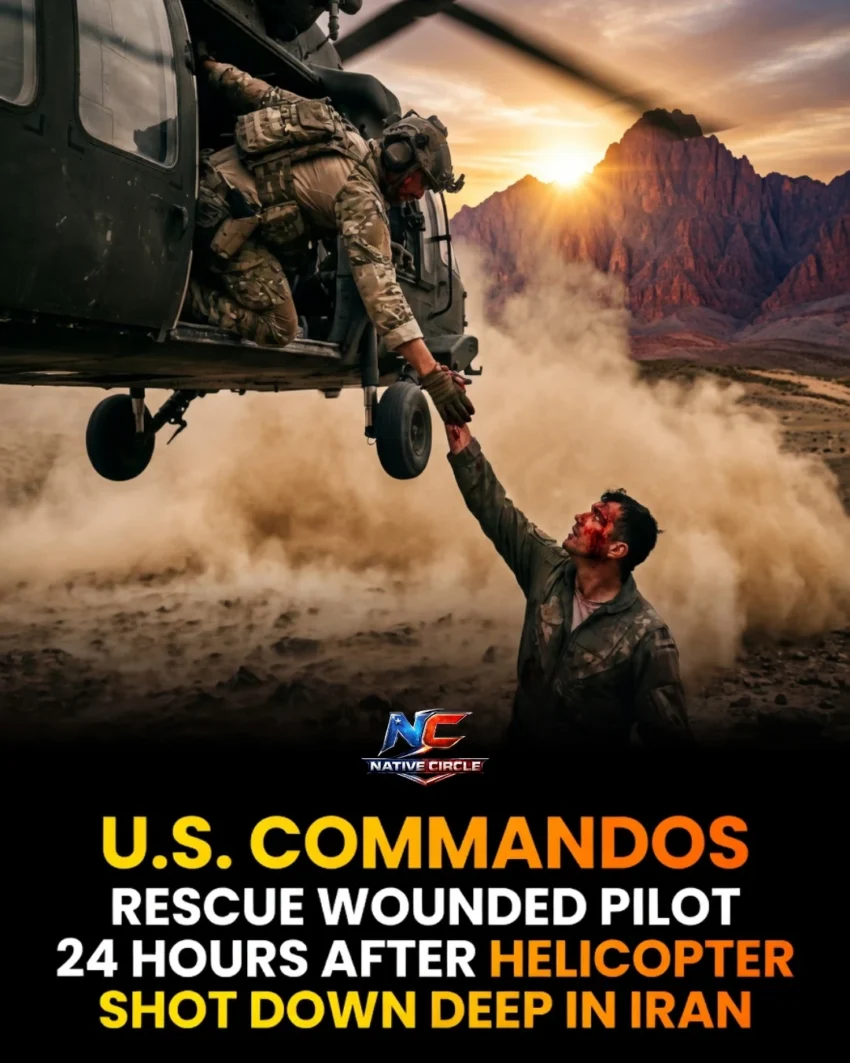
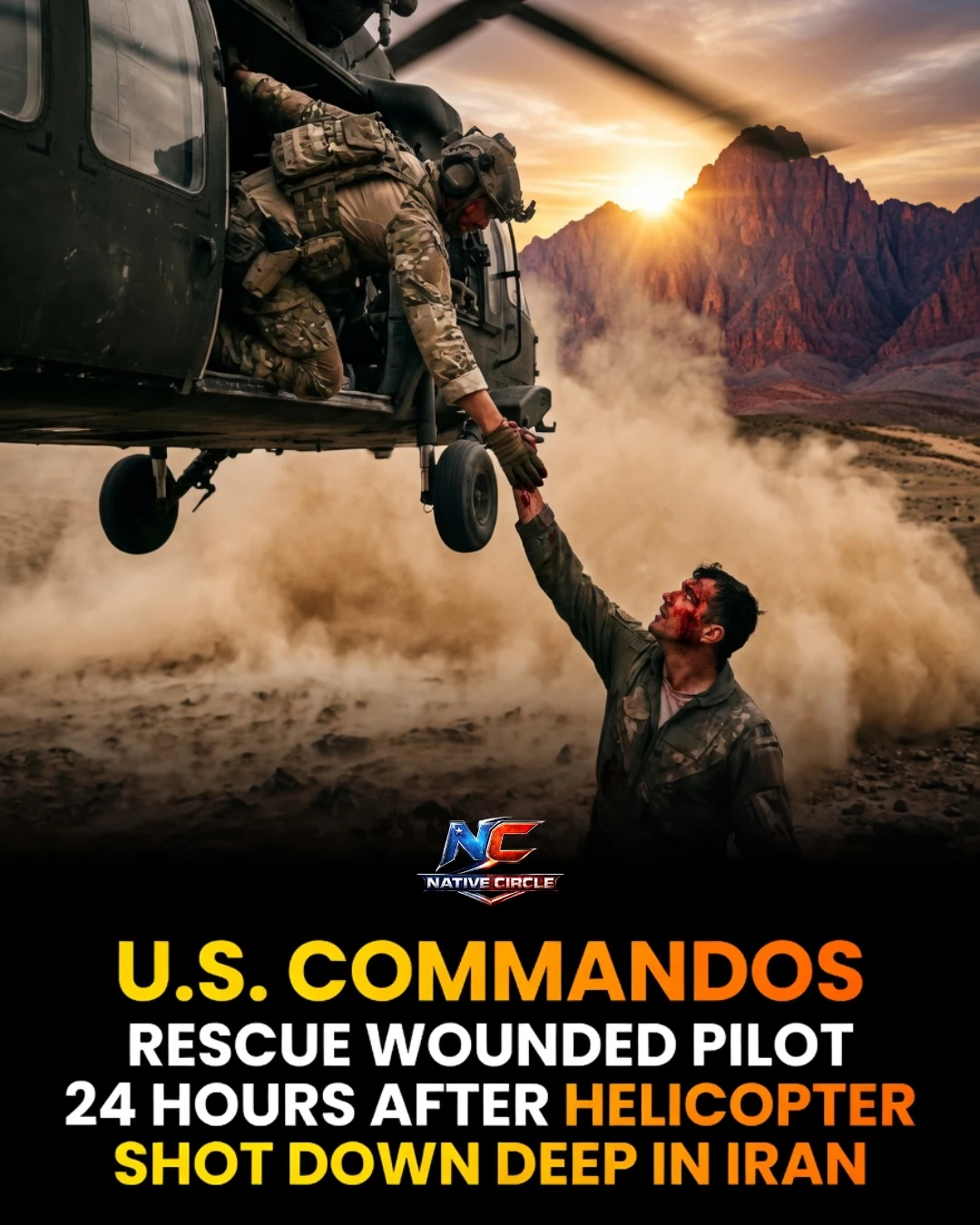
DOWNED OVER IRAN: WOUNDED U.S. PILOT RESCUED AFTER 24 HOURS HIDING FROM IRGC FORCES
A dramatic combat rescue story has emerged from the escalating conflict involving the United States and Iran, capturing the attention of military observers and global audiences alike. According to circulating reports, a U.S. fighter aircraft was shot down over Iranian territory, triggering a high-risk search-and-rescue mission that ultimately saved the life of a wounded American airman.
The aircraft involved was reportedly a F-15E Strike Eagle, one of the most powerful multirole fighters operated by the United States Air Force. Known for its ability to conduct deep precision strikes and survive in heavily contested environments, the F-15E typically carries a crew of two: a pilot and a weapons systems officer.
According to the reports, the aircraft was struck by hostile fire while operating over Iran, causing it to go down in mountainous terrain. Analysts suggest the jet may have been targeted by advanced air-defense systems, although no official confirmation has yet clarified the exact cause of the shootdown.
Both crew members successfully ejected from the aircraft before it crashed.
In the chaotic moments following the ejection, the two aircrew members were separated as they descended into the rugged terrain below.
One of the airmen was reportedly located and recovered relatively quickly. U.S. rescue teams operating in the region were able to reach him the same day and transport him to safety.
The second airman, however, faced a far more dangerous situation.
After ejecting, he reportedly landed injured in a remote mountainous region and found himself alone in hostile territory. With Iranian forces searching for him, the wounded pilot had to rely on survival training and instinct to remain hidden.
For more than 24 hours, the downed airman reportedly evaded capture while Iranian troops searched the area. Reports suggest that units from the powerful Islamic Revolutionary Guard Corps were actively hunting for the missing pilot.
Survival in such conditions is extremely challenging. Downed pilots are trained in escape-and-evasion tactics, but injuries, terrain, and enemy patrols can quickly turn a survival situation into a life-or-death struggle.
The mountains of Iran are notoriously harsh. Steep ridges, rocky slopes, and limited cover make it difficult to move unnoticed while also complicating rescue operations.
Despite these obstacles, the pilot managed to remain hidden long enough for U.S. forces to organize a recovery mission.
As the situation became more urgent, American commanders began planning a complex combat search-and-rescue operation.
These missions are among the most dangerous military operations, requiring rescue teams to enter hostile territory, locate isolated personnel, and extract them under the threat of enemy attack.
Elite U.S. special forces units were reportedly assigned to carry out the mission.
Supported by intelligence surveillance and possibly aircraft overhead, the rescue team moved into the mountainous region where the pilot was believed to be hiding.
According to accounts circulating among defense observers, American forces encountered Iranian troops during the operation. A firefight reportedly broke out as the rescue team pushed toward the pilot’s location.
Despite the danger, the team successfully reached the wounded airman.
He was then evacuated from the area and transported to safety.
Reports also claim that the rescue mission was closely monitored in Washington.
According to those accounts, then-president Donald Trump followed the operation from the White House Situation Room, where U.S. leaders typically observe sensitive military missions in real time.
The Situation Room is the command center where American presidents receive live intelligence updates during major national security events.
High-risk operations such as hostage rescues or special forces missions are often monitored from there by top political and military leadership.
The reported rescue highlights a central principle of the U.S. military: no service member should be left behind.
Because pilots often operate deep inside hostile territory, the U.S. military invests heavily in combat search-and-rescue capabilities. Specialized units train extensively to locate and extract downed aircrews under extreme conditions.
These operations typically involve coordination between intelligence teams, aircraft, helicopters, and ground forces.
Even with advanced planning and technology, however, such missions remain extremely dangerous.
While many details about the incident remain unconfirmed, the reported rescue has already become a powerful story of survival and determination.
A wounded pilot, alone in hostile mountains, evading enemy patrols for more than a day before help finally arrived.
For the men and women who fly combat missions, scenarios like this are part of the reality of modern warfare.
And for those who train to rescue them, the mission is simple and unwavering: bring them home.